


Large Asian Wall Charger
A large asian wall charger brings bold scale and intricate hand-painted or enamelled artistry directly to a room.
Large Asian Wall Charger
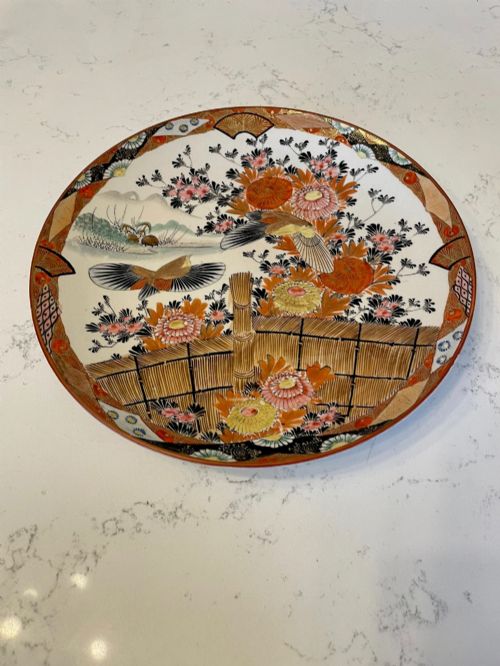
When you search for a large asian wall charger, you encounter substantial decorative vessels designed primarily for display rather than dining. The examples on this page span the late nineteenth century, including the Victorian and Edwardian eras, alongside pieces attributed to the Meiji and Edo periods.
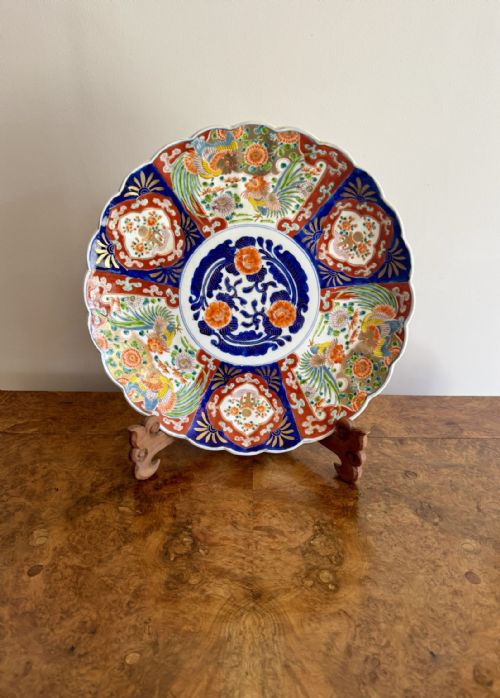
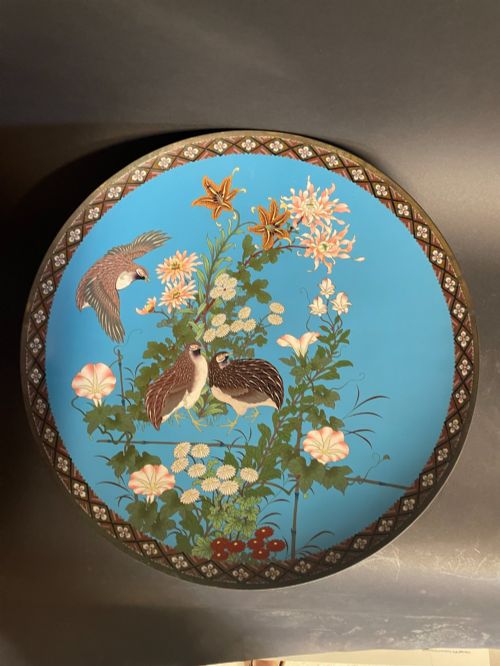
The primary forms found here are decorative chargers, large plates, and platters created in Japan. These items showcase traditional motifs such as dragons, koi, phoenix birds, and Mount Fuji, executed across porcelain, copper, and enamel.
Originating predominantly from Japanese workshops, these pieces reflect distinct historical aesthetic movements. They serve as dramatic focal points when mounted on walls or displayed on stands within domestic interiors.
How they were made
Makers utilised porcelain and copper as foundational bodies for these large decorative surfaces. Porcelain pieces received hand-painted cobalt blue designs or rich imari palettes, whilst metal chargers employed cloisonne techniques with wire cells defining the patterns.
Enamel, glaze, and gold leaf were applied within the delineated compartments or across ceramic surfaces before firing. Skilled artisans built up layers of colour to achieve the detailed depictions of birds, deities, and mythological creatures seen on these large charger plates.
Several chargers feature leaping koi and mythical ho-o birds frozen mid-flight, proving that nineteenth-century artisans knew how to make metal and glass feel remarkably athletic.
What varies in quality
The distinction between ordinary and exceptional examples rests upon the precision of the execution and the complexity of the imagery. Superior pieces exhibit fine, controlled brushwork or meticulously aligned wirework in the cloisonne enamel, rendering subjects like dragons and koi with immense vitality.
Depth of colour, the richness of the glaze, and the ambition of the composition set the finest items apart. Masterpieces display a harmony of form and decorative detail that reflects the peak of the artisan's skill during the Meiji or Edo periods.
The Large Asian Wall Charger Glossary
- Charger
- A large ornamental plate traditionally used for display rather than for serving food at table.
- Cloisonne
- A decorative metalwork technique where fine wires form compartments to hold coloured enamel pastes.
- Imari
- A traditional style of Japanese porcelain featuring distinctive cobalt blue, iron red, and gilt decoration.
- Meiji Period
- An era in Japanese history spanning from 1868 to 1912, noted for significant artistic production and export.
- Edo Period
- The period in Japanese history lasting from 1603 to 1868, preceding the Meiji era.
Large Asian Wall Charger: Frequently Asked Questions
How do I hang a large asian wall charger safely?
Displaying these substantial plates requires a sturdy, adjustable wall bracket designed specifically to support heavy porcelain or metal objects without obscuring the rim design.
Ensure the fixings are secured firmly into wall studs or use appropriate masonry anchors to bear the weight safely over time.
Are these chargers meant for dining use?
These items function primarily as decorative art pieces rather than practical tableware. Their generous scale and delicate enamel or hand-painted surfaces suit vertical wall display or cabinet presentation best.
Using them for food risks damaging historical glazes and delicate surface decorations that have survived for over a century.
What is the difference between imari and cloisonne?
Imari describes Japanese porcelain decorated with cobalt blue underglaze and red and gold overglaze elements. The patterns are painted directly onto the ceramic body.
Cloisonne involves metal bases, such as copper or brass, where thin wires create cells filled with coloured glass enamel powders before firing.
How do I date an antique charger?
Dating relies upon examining the materials, decorative style, and underlying manufacturing techniques recorded in the piece. References to the Meiji or Edo periods indicate specific historical manufacturing eras.
Backstamps, where present, alongside the complexity of the palette and the quality of the base metal or porcelain help narrow the timeline.
How should I clean my antique charger?
Dusting gently with a soft, dry microfibre cloth removes everyday particles without risking the delicate enamel or painted surface. Avoid harsh chemical cleaners, abrasives, or soaking in water, as these can lift fragile gilding or older glazes.
For metal cloisonne pieces, keeping them away from direct moisture prevents corrosion of the underlying copper or brass foundations.