
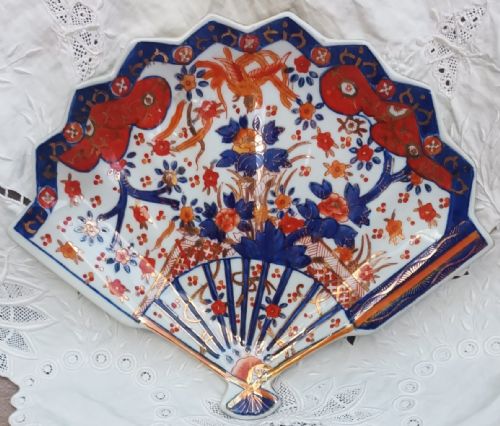


Japanese Phoenix Dish
A japanese phoenix dish brings the vibrant mythological ho-o bird into your home through intricate Meiji period and Edo period craftsmanship.
Japanese Phoenix Dish
When you search for a japanese phoenix dish, you encounter decorative plates, chargers, and platters created during the Meiji and Edo periods alongside Victorian interpretations. These pieces feature the revered ho-o bird, a mythical phoenix symbolising virtue and grace.
You are most likely to meet cloisonne enamel chargers and Imari porcelain plates on this page, reflecting the dominant forms in the listings. The selection spans wide diameters up to fifty-one centimetres, encompassing both square plates and round dishes.
The objects bridge functional vessels and pure ornamentation, with jardinieres and planters occasionally appearing alongside traditional wall chargers and flat dishes. Each item showcases the distinct aesthetic priorities of late nineteenth-century export wares and earlier traditions.
Materials and construction
Cloisonne enamel pieces utilise copper, brass, or bronze bases decorated with delicate wirework cells that outline the feathers of the phoenix. Artisans fired these vitreous enamels at high temperatures to achieve a smooth, glossy surface across the charger face.
Imari porcelain works combine cobalt blue underglazes with iron-red and gold leaf overglazes, creating a rich palette characteristic of traditional kilns. Selected examples employ totai techniques incorporating cinnabar lacquer over porcelain foundations.
Materials represented across the inventory include porcelain, bronze, copper, brass, gold leaf, and cinnabar lacquer.
Distinctions in craftsmanship
The fineness of the cloisonne wirework and the density of the enamel cells separate standard decorative items from masterwork chargers. Precision in rendering the complex plumage of the ho-o bird indicates the skill level of the original workshop.
Porcelain bodies show divergence in the crispness of the underglaze cobalt painting and the intactness of the gilding. Scale also dictates standing, with larger chargers requiring significantly greater technical control during the kiln-firing process.
The Japanese Phoenix Dish Glossary
- Ho-o bird
- The mythical East Asian phoenix associated with fire, sun, and justice. It appears frequently with stylised wings and flowing tail feathers on Japanese metalwork and ceramics.
- Cloisonne
- A metalworking technique where flat wires are soldered to a bronze, copper, or brass base to create compartments for enamel paste. These cells are subsequently fired and polished flat.
- Imari
- A type of Japanese porcelain produced in Arita and exported through the port of Imari. These wares typically display a strong combination of underglaze blue and iron-red with added gilding.
- Charger
- A large decorative plate or platter intended primarily for display on a wall or sideboard rather than for serving food at the table.
- Totai
- A specialised method involving translucent or semi-translucent porcelain bodies combined with exterior lacquer work such as cinnabar.
- Meiji period
- The era in Japanese history spanning from 1868 to 1912, noted for a surge in high-quality metalwork and ceramics produced for international export.
Japanese Phoenix Dish: Frequently Asked Questions
How do I hang a heavy charger?
Large chargers require specialised spring-loaded wall hangers designed to distribute weight evenly across the rim. Ensure the fixing secures firmly into solid masonry or a wall stud.
Avoid using adhesive discs or simple wire loops that might slip off the glazed foot ring over time.
Were these dishes used for dining?
Most large chargers and decorative plates served as display items in Japanese interiors and Western Victorian drawing rooms. Their substantial size and delicate surface decoration made them unsuitable for everyday meals.
Smaller Imari plates saw functional use, but pieces featuring raised cloisonne enamel were strictly ornamental.
What is the difference between Edo and Meiji pieces?
Edo period works date from before 1868 and often reflect domestic aesthetic traditions. Meiji period items coincide with the opening of trade to the West, which stimulated larger export formats.
Both periods produced exceptional phoenix motifs, though Meiji cloisonne achieved unprecedented technical scale.