


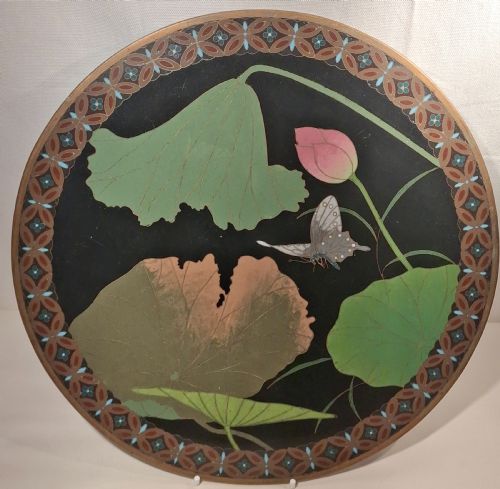

Copper Cloisonne Wall Dish
A copper cloisonne wall dish brings intricate Japanese metalwork and vibrant enamel into a room.
Copper Cloisonne Wall Dish
A copper cloisonne wall dish is a decorative charger, plate, or tray created in Japan during the late Edo and Meiji periods. These circular metal pieces function primarily as wall display items rather than utilitarian tableware.
The selection ranges from mid-nineteenth-century examples down to works from around nineteen hundred. Common forms include large chargers and medium plates depicting traditional motifs such as dragons, phoenixes, koi, and Mount Fuji.
How they were made
Artisans form the base of each piece from copper, often utilising brass wire to outline detailed motifs across the surface. These metal wires create individual cells that receive applications of vitreous enamel.
Fired in a kiln, the enamel melts to fill the wire compartments before technicians polish the entire face to a smooth finish. Some pieces incorporate wooden elements alongside the primary metal structure.
Among the creatures peering from the enamel are tiny swimming shrimp alongside majestic dragons and soaring phoenixes.
What varies in quality
The intricacy of the wirework separates standard pieces from finer examples, as tighter cells allow for much greater detail in subjects like birds, deities, and samurai. The precision of the polishing process also dictates the visual clarity of the finished enamel.
Overall scale and the complexity of the chosen subject matter influence the standing of an individual charger. Earlier works from the mid-nineteenth century often display distinct characteristics compared to later Meiji production.
The Copper Cloisonne Wall Dish Glossary
- Cloisonne enamel
- A technique where thin metal wires are soldered to a copper base to form compartments that hold coloured glass paste before firing. This method creates detailed pictorial designs across the face of the dish.
- Charger
- A large decorative plate or tray intended for display rather than serving food. These substantial vessels provide a wide canvas for intricate enamel imagery.
- Meiji Period
- The era in Japanese history spanning from eighteen sixty-eight to nineteen twelve, noted for significant artistic production. Many decorative metal objects date from this time.
- Vitreous enamel
- A material made by fusing powdered glass to a metallic substrate through high-temperature firing. It provides durable, glossy colour across the surface of the piece.
- Ho-o bird
- A mythical bird and traditional East Asian motif resembling a phoenix. These creatures appear frequently as central subjects on large decorative plaques.
Copper Cloisonne Wall Dish: Frequently Asked Questions
How do I hang a heavy charger safely?
Displaying a large copper piece requires a dedicated wall bracket designed to support the full weight of the metal and enamel structure without putting pressure on the rim.
Ensure the fixing secures firmly into solid masonry or a wall stud to keep the charger stable.
What periods do these dishes come from?
The available pieces originate from the late Edo period through the Meiji period, spanning roughly from eighteen sixty to nineteen hundred.
Earlier examples often share similarities with mid-nineteenth-century craftsmanship, while later items reflect the refined techniques of the turn of the century.
What subjects appear on the enamel?
Common imagery includes dragons, ho-o birds, owls, shrimp, leaping koi, and figures such as samurai or buddahs. Landscapes featuring Mount Fuji also occur across larger chargers.
These traditional motifs are rendered using precise wire cells and coloured vitreous enamel.
Are these pieces signed by makers?
Certain larger chargers and plates feature artist signatures incorporated into the design or on the reverse. These marks help identify the origin and workshop background of the metalwork.
Unsigned examples remain common and rely on stylistic traits for dating.