


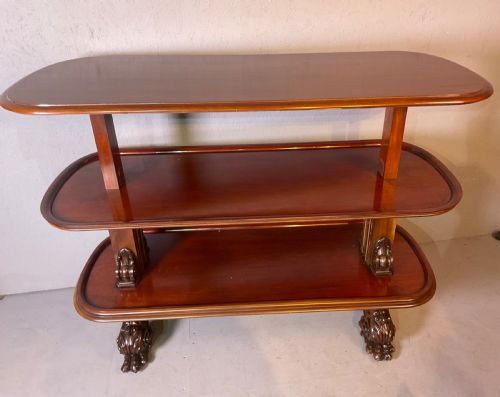


Large Buffet Table
A large antique buffet table grounds a dining room with substance, offering generous display space and deep drawers for tableware.
Large Buffet Table
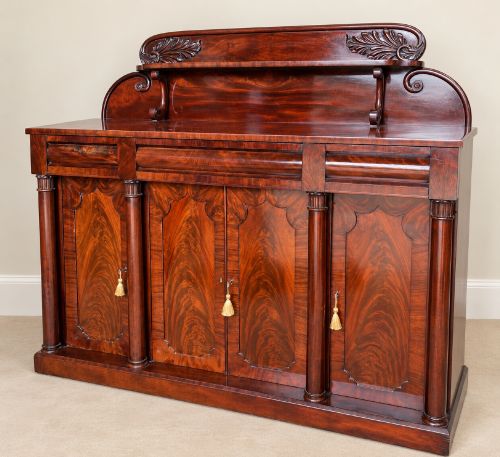
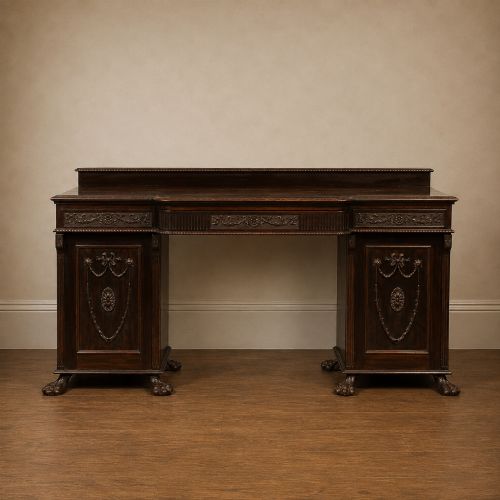
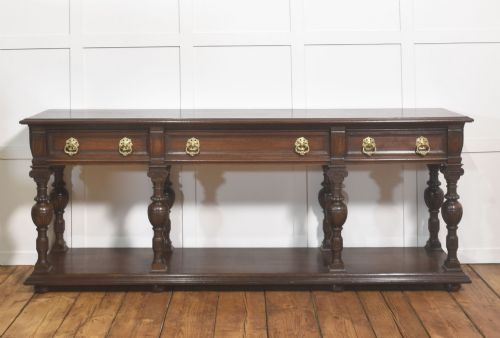
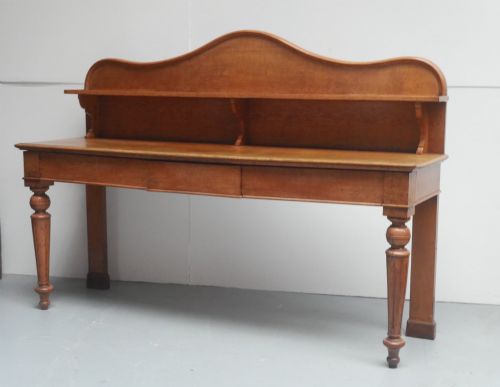
A large antique buffet table primarily encompasses substantial sideboards, serving tables, and dresser bases designed for formal dining rooms and large country houses. These pieces originate predominantly from the Georgian, Victorian, and Edwardian periods, carrying the weight and presence characteristic of those eras.
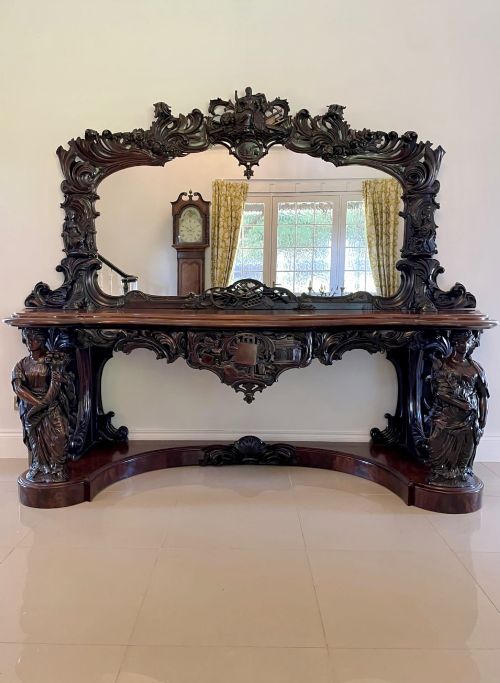
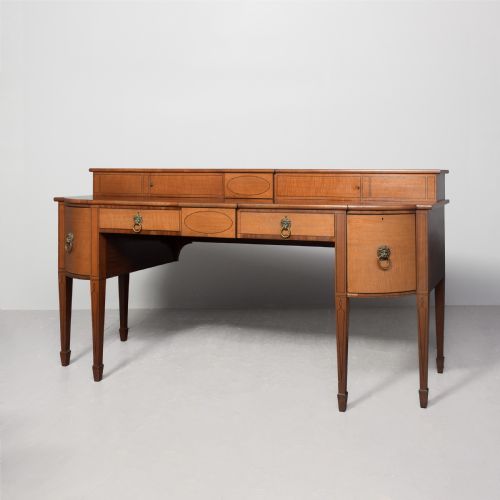
Buyers seeking a large antique buffet table most frequently encounter mahogany and oak forms, ranging from serpentine front designs to carved oak sideboards. These items serve the dual purpose of surface display and practical interior storage for dining utensils and linens.
How they were made
Cabinetmakers constructed these large dining pieces using solid timbers like mahogany, oak, and pine, frequently applying flame mahogany veneer or boxwood stringing to create decorative surface contrast. Carved details and turned supports show the manual woodworking techniques standard in the eighteenth and nineteenth centuries.
Secondary materials such as brass, ormolu, and glass appear on handles, lamps, and decorative mounts associated with these serving pieces. Pine often serves as the secondary wood for interior drawer construction within mahogany and oak carcases.
The furniture spans multiple eras, including Georgian, Regency, Victorian, Edwardian, and Art Deco periods.
What varies in quality
The standard of timber selection and veneer matching defines the upper tier of these pieces, where figured mahogany or pollard oak exhibits a balanced, intentional grain pattern. Lesser examples rely on plain timber surfaces without the careful grain alignment seen in exhibition grade work.
Construction depth also separates standard utility pieces from exceptional items, particularly in the crispness of hand carving, the presence of original brass hardware, and the integration of secondary woods. Maker attribution, such as work by Robson and Sons, further distinguishes the top tier of production.
Robson and Sons·Palmer and Co
The Large Buffet Table Glossary
- Dresser base
- A low wooden storage unit with drawers and sometimes cupboards below an open top surface. These often originate from country house settings.
- Serpentine
- A furniture front curving outward at the centre and inward at the sides in a gentle S-shape. This contour requires advanced cabinetmaking skill.
- Stage-back
- A raised tier at the rear of a sideboard or serving table used to display silver or platters. It adds height and visual drama to the piece.
- Ormolu
- Gilded bronze used for decorative mounts and furniture embellishments. It brings a bright metallic contrast to dark woods.
- Dumb waiter
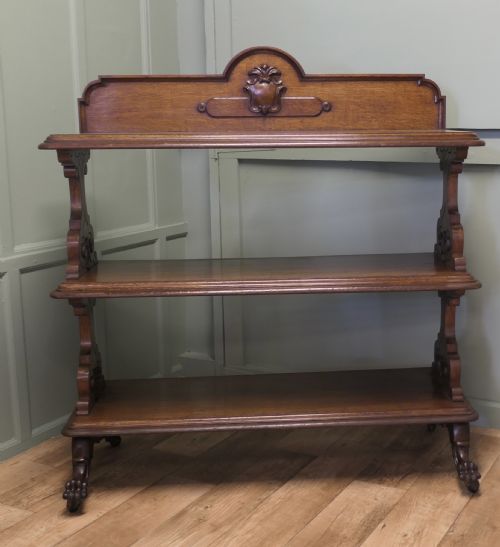
- A tiered freestanding piece of furniture used for holding food or plates near a dining table without requiring servant attendance.
Large Buffet Table: Frequently Asked Questions
How do I style a large antique buffet table?
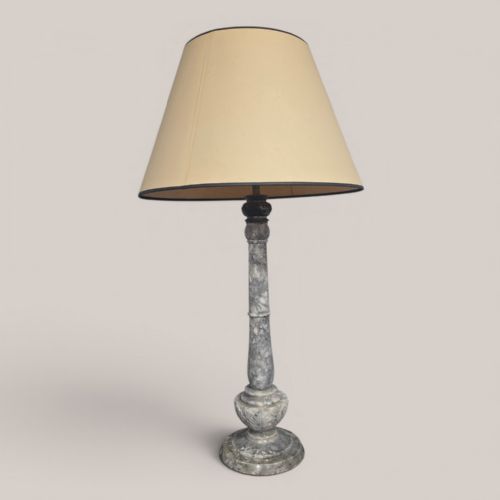
Place a large mirror, a pair of candlesticks, or table lamps on the surface to anchor the piece visually against a dining room wall. Layer ceramic platters and glassware behind the surface to create a traditional display.
Keep the lower cupboards and drawers functional for storing table linens, cutlery, and serving dishes so the top surface remains uncluttered.
What is the difference between a sideboard and a buffet?
Sideboards generally feature a longer body with a mix of deep drawers and cupboards designed specifically for dining room storage. They often include decorative stage-backs or mirror attachments.
Buffets traditionally focus on serving food during meals, sometimes standing slightly lower or featuring open tiers for platters and serving vessels.
Can I use a buffet table in an entrance hall?
These large pieces fit well in wide hallways or grand entrance foyers where their surface provides a convenient drop zone for keys and post. Their deep proportions require ample floor space so the room does not feel crowded.
Pairing the piece with a tall mirror or table lamps helps balance the substantial wooden base within a non-dining environment.
How do I care for antique mahogany and oak?
Apply traditional beeswax periodically to nourish the wood grain and maintain a soft, protective lustre without building up synthetic residues. Avoid placing the timber in direct sunlight or near heat sources to prevent the wood from drying out.
Dust the carved details gently with a soft brush and clean spills immediately using a dry cloth to protect the historic finish.