


Lakai Wall Hanging
These Central Asian textiles bring bold geometric needlework into modern interiors, offering authentic nomadic artistry for your walls.
Lakai Wall Hanging
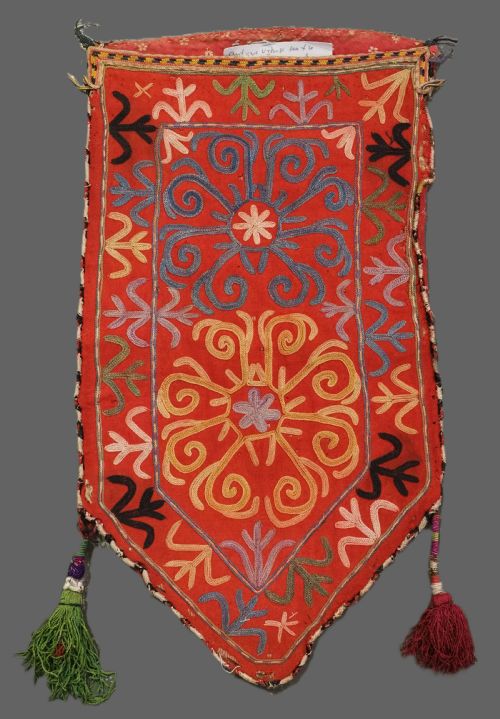
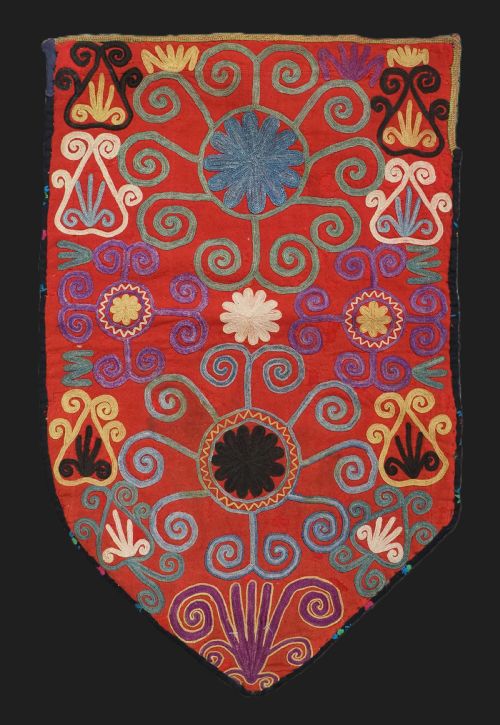
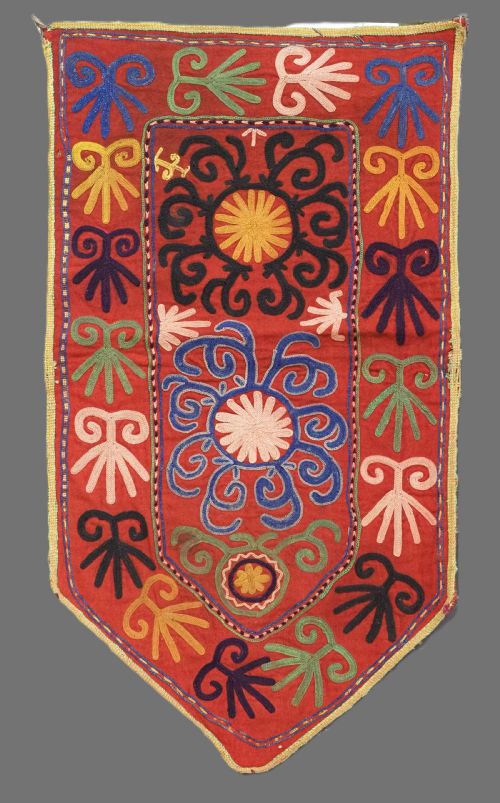
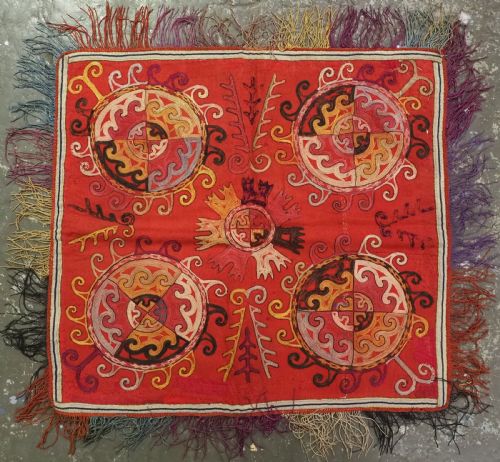
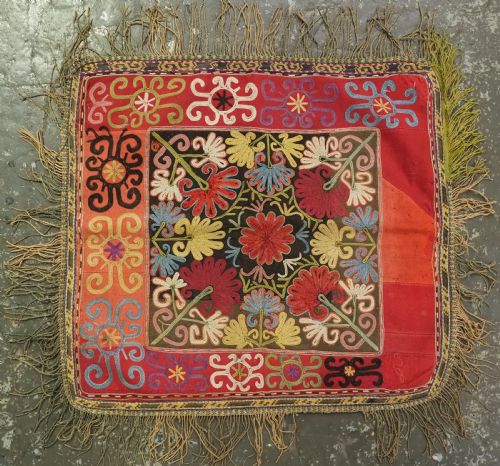
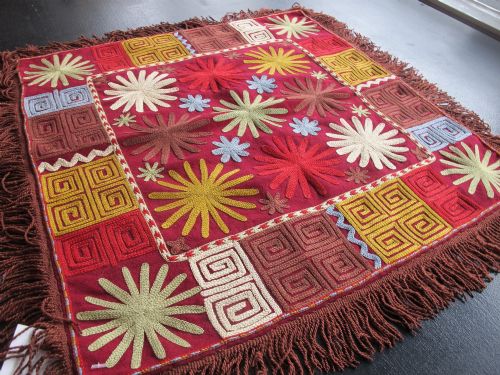
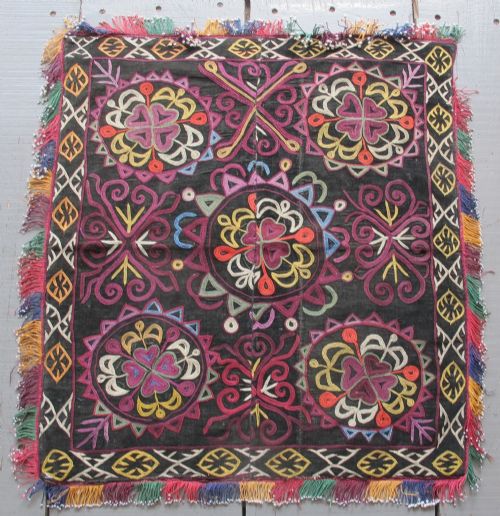
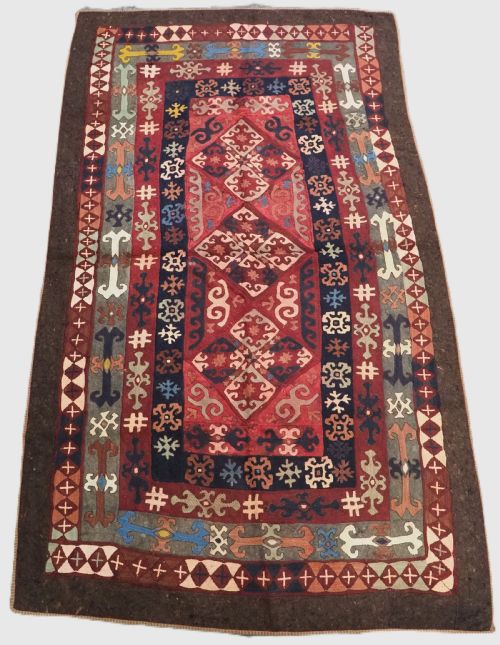
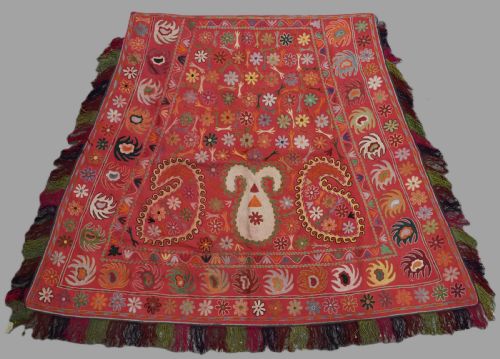
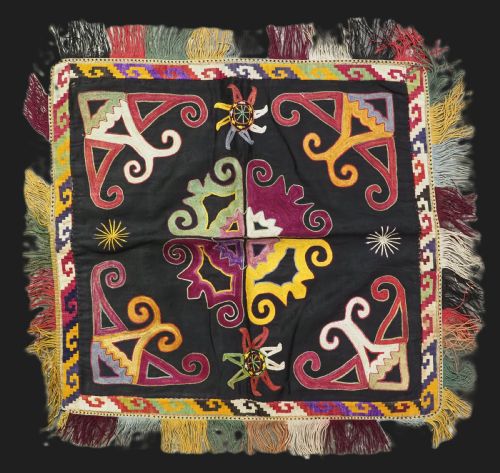
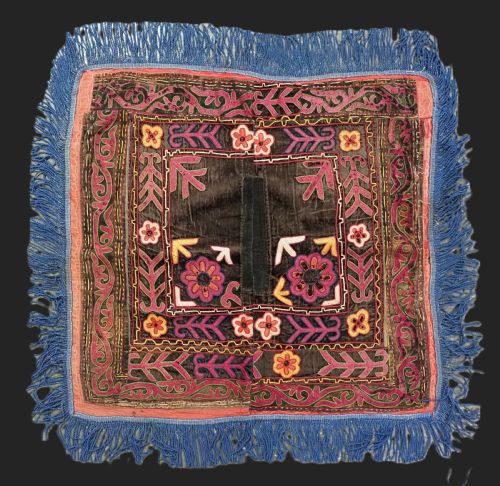
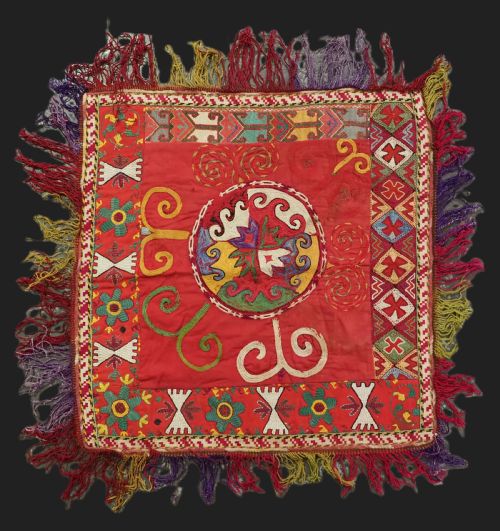
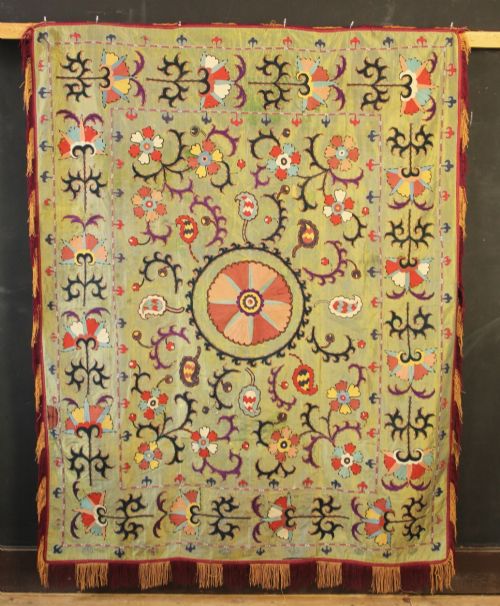
A lakai wall hanging encompasses traditional Central Asian tribal embroideries, including dowry pieces,ilgich panels, and saddle covers repurposed for display. These objects originate from the Uzbek Lakai tribes, particularly associated with Shakrisabz in Uzbekistan.
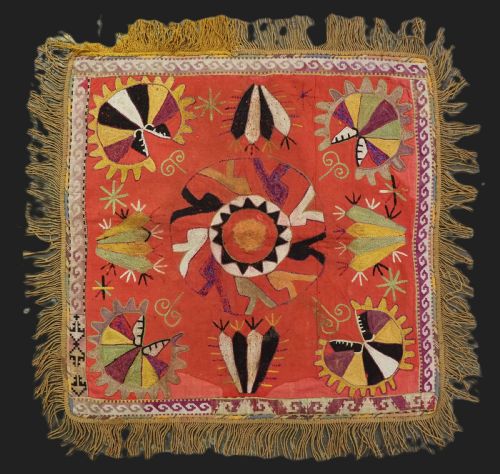
The most common forms encountered on this page are antique ilgich panels and dowry embroideries dating from the late nineteenth century through the early twentieth century. Buyers also find nim suzanis, mirror covers, and ceremonial horse covers that function well as textile art.
These pieces display distinct regional styles classified under Central Asian folk art and tribal traditions, reflecting nomadic heritage through asymmetrical layouts and energetic motifs. Each textile serves as a window into historical domestic craft traditions from Central Asia.
Materials and Techniques
Artisans constructed these textiles using silk thread, cotton, wool, and felt grounds, frequently enhanced with velvet and glass beads. The needlework relies on dense silk embroidery applied to solid backings, creating textured surfaces with considerable tactile depth.
Ground fabrics often consist of red wool, felt, or woven cotton, providing a sturdy foundation for intricate stitching. Fringe details in wool frequently finish the edges of these panels, while glass beads add punctuation to the central patterns.
The listings span the period from the late nineteenth century through the 1930s, featuring silk, wool, cotton, and felt substrates.
Assessing Quality and Execution
Quality in these textiles depends heavily on the density and precision of the silk embroidery. Finer examples show tight, consistent stitching that completely covers the ground fabric, whereas simpler pieces display more open work.
The visual strength of the design and the preservation of materials determine the standing of a piece within its type. Vibrant silk threads and intact wool fringe or beadwork indicate superior survival and original craftsmanship.
The Lakai Wall Hanging Glossary
- Ilgich
- A type of Central Asian dowry embroidery created for wall hanging. These panels often feature dynamic geometric patterns stitched by tribal makers.
- Suzani
- An embroidered textile panel from Central Asia. Nim suzani refers to a half-sized version of these decorative hangings.
- Uut Kap
- A storage bag or hanging piece made by tribal groups. These items formed part of traditional nomadic furnishings before entering the decorative market.
- At Torba
- A horse cover or bag associated with equestrian gear. Collectors prize these functional items for their striking tribal embroidery.
- Saye Gosha
- A bed decoration or hanging textile piece. These objects display the characteristic silk needlework of Uzbek makers.
Lakai Wall Hanging: Frequently Asked Questions
How were these textiles used originally?
Nomadic communities utilised these embroidered panels as functional items within their domestic and ceremonial lives. Many served as dowry pieces, wall decorations, or ceremonial horse covers for important occasions.
Over time, collectors and interior designers have repurposed these durable textiles to hang on modern walls as works of art.
How should I hang a textile?
Hanging a textile safely requires distributing the weight evenly across the entire top edge to prevent fabric distortion. Conservation mounting using a velcro header stitched to a fabric-covered backing board is a preferred method for heavy wool or silk pieces.
Keep the hanging away from direct sunlight to protect the natural silk and wool threads from fading over time.
How do I identify the age?
Dating these pieces relies on examining the materials, natural dye palettes, and regional stitching styles. Items from the late nineteenth and early twentieth centuries typically exhibit hand-spun foundations and rich, vegetable-dyed silk threads.
Comparing the specific motifs to documented examples from regions like Shakrisabz helps narrow down the period of production.