



Silk Chain Stitch Embroidery
Silk chain stitch embroidery brings vibrant Central Asian and Persian tribal artistry into modern interiors through tactile wall hangings and dowry panels.
Silk Chain Stitch Embroidery
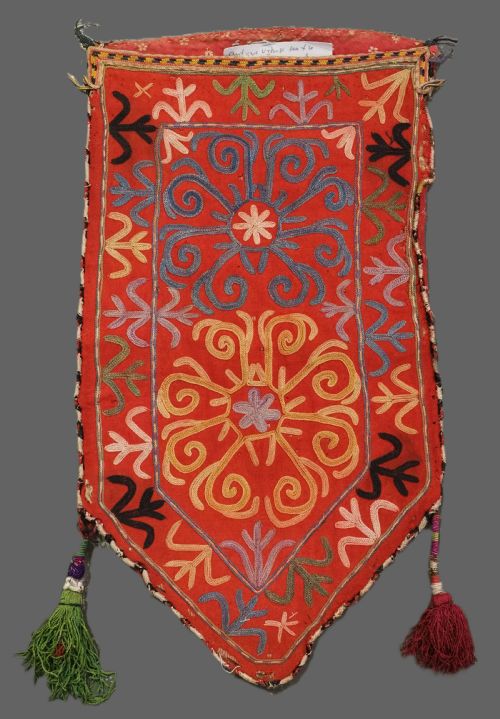
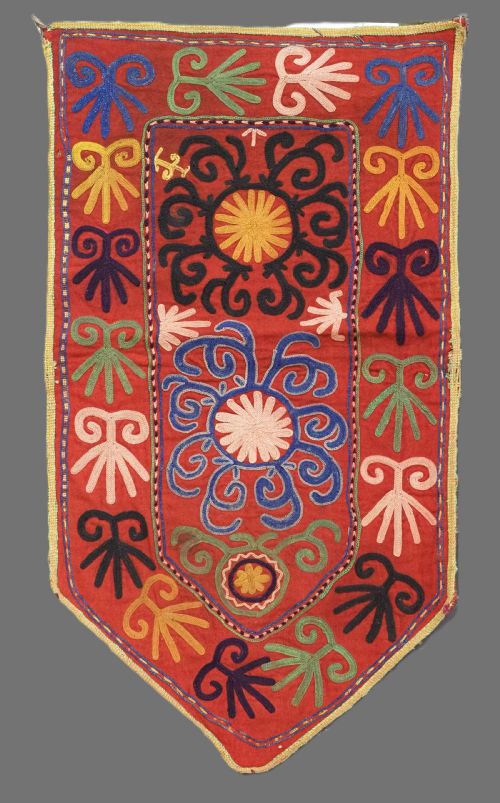
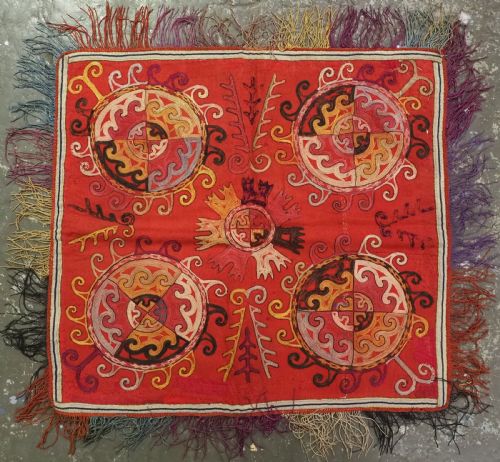
When you search for silk chain stitch embroidery, you encounter textile panels and wall hangings originating from Central Asia and Persia. These pieces date from the late nineteenth century into the early twentieth century, spanning periods such as eighteen eighty, nineteen hundred, and nineteen thirty.
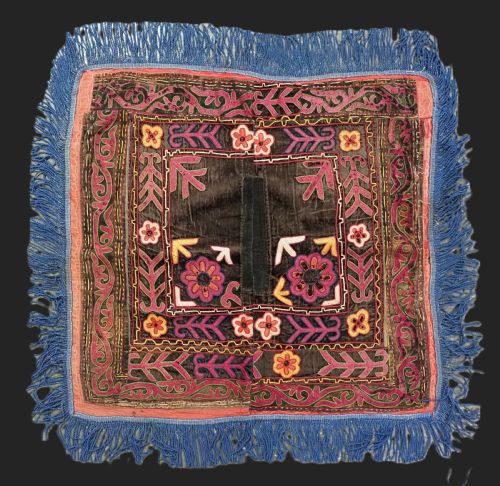
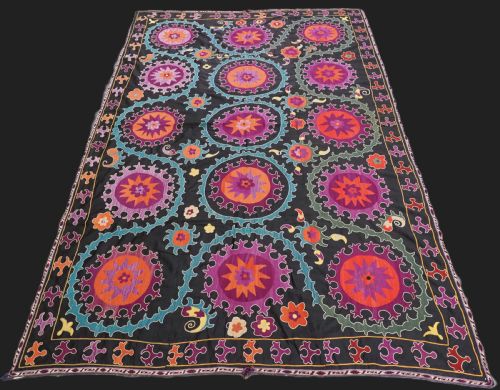
The version you are most likely to meet on this page is the Uzbek Lakai tribe ilgich or dowry embroidery, alongside Persian Rasht embroidery and Uzbek suzani textiles. These works served as functional dowry items or decorative wall hangings within tribal and regional households.
The forms vary from double-faced uut kap ilgich pieces to floral medallion panels designed for vertical display. Each object reflects distinct cultural traditions through its specific motifs and ground fabrics.
How they were made
Maker communities constructed these textiles using silk thread applied to various backing materials through careful needlework. The primary ground fabrics recorded in the evidence include wool felt, cotton, velvet, and plain felt.
Techniques combine standard chain stitch embroidery with appliqué work, where contrasting pieces of fabric are secured to the ground. Artisans utilised wool and cotton alongside silk to build textured, colourful surface designs.
Listings feature periods from eighteen eighty to nineteen thirty, utilising silk, cotton, wool felt, and velvet across Central Asian and Persian origins.
What varies in quality
The distinction between tiers of work rests upon the precision of the needlework and the complexity of the composition. Denser stitching and more intricate floral or tribal motifs elevate an individual piece.
The choice and preservation of the ground materials also influence the character of the textile. Intact wool felt or cotton grounds combined with well-maintained silk thread represent superior examples of the craft.
The Silk Chain Stitch Embroidery Glossary
- Ilgich
- A Central Asian embroidered wall hanging or dowry piece. These textiles were traditionally created by tribal makers for domestic display and ceremonial use.
- Suzani
- A type of embroidered textile originating from Central Asia. These items feature bold floral and geometric designs worked in silk upon cotton or linen grounds.
- Appliqué
- A technique where pieces of fabric are stitched onto a larger ground material. This method adds depth and colour contrast to traditional Persian and Central Asian textiles.
- Rasht embroidery
- A traditional style of Persian textile work utilising silk chain stitch embroidery on wool felt grounds. These pieces often incorporate small floral medallions and detailed geometric patterns.
- Uut kap
- A specific form of Central Asian bag or hanging associated with nomadic furnishings. Examples frequently display double-faced construction and tribal ornamentation.
Silk Chain Stitch Embroidery: Frequently Asked Questions
How are Rasht embroideries different?
Rasht embroideries originate from Persia and typically feature silk chain stitch work applied to a felt ground. They frequently incorporate small floral medallions and intricate surface designs.
Unlike Central Asian suzanis which often use cotton grounds, Rasht pieces lean on wool felt or velvet backings. This gives them a distinct weight and textural profile.
Where did these textiles originate?
These textiles originate from Central Asia and Persia, created by distinct regional groups such as the Uzbek Lakai tribe. Each region developed specific aesthetic traditions and stitch techniques.
Makers worked within local tribal or urban workshops to produce dowry pieces and decorative household panels. The resulting items reflect the cultural exchange and heritage of their makers.
How do I hang a textile?
Hanging a textile safely requires distributing the weight evenly across the top edge without puncturing the historic fabric. Conservation-grade mounting methods utilise custom sleeves or gentle stitching to a padded support board.
Avoid direct display in bright sunlight to protect the natural silk and wool threads from fading. Proper framing behind UV-filtered glass provides additional security for delicate pieces.