


Lakai Tribal Embroidery
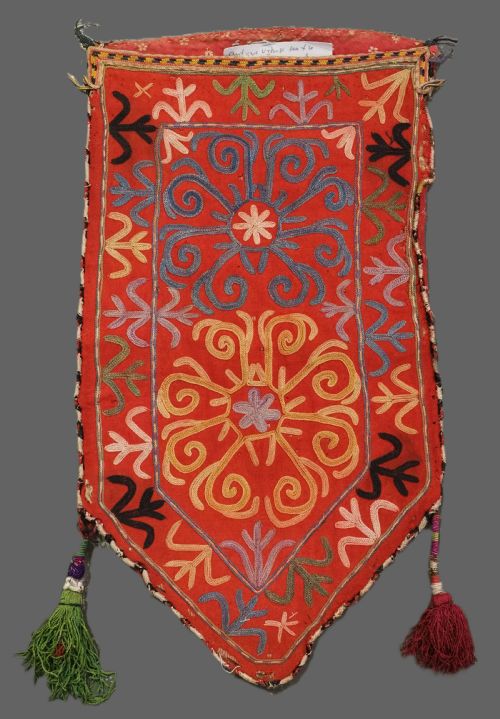
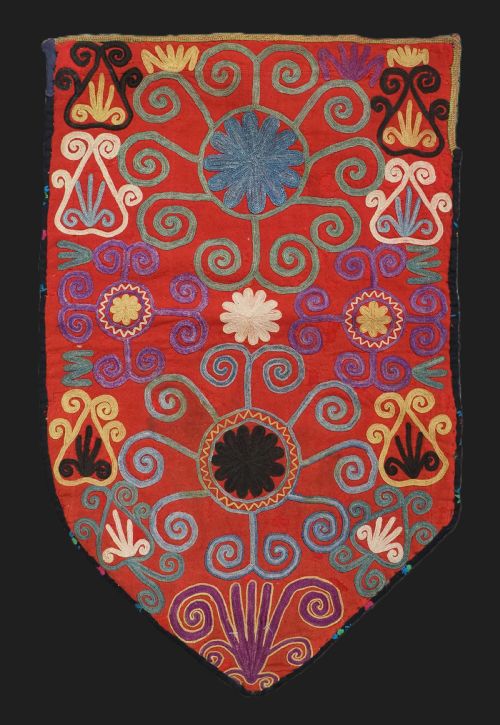
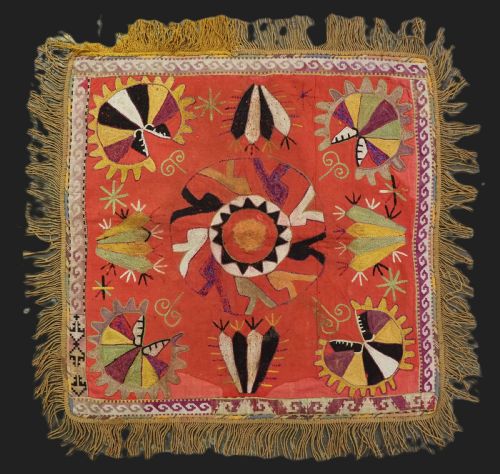
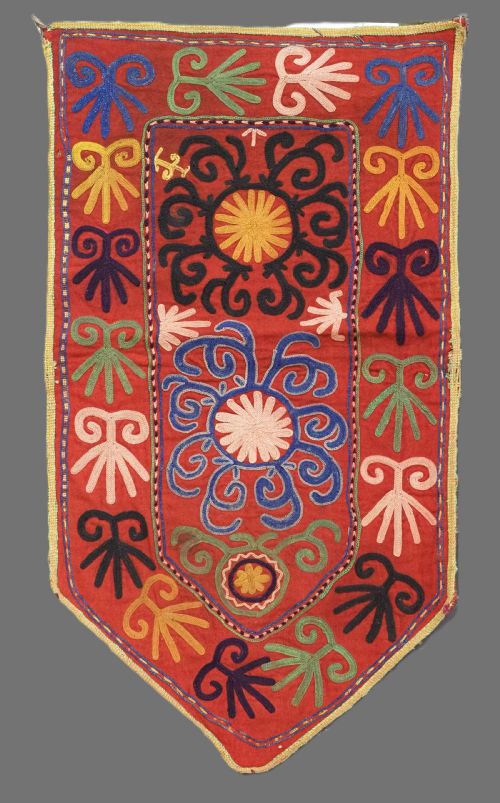
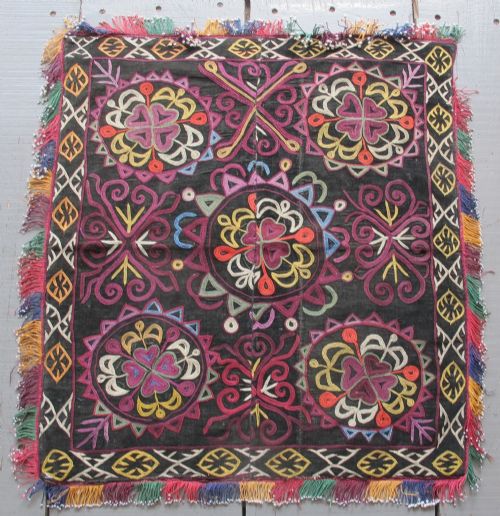
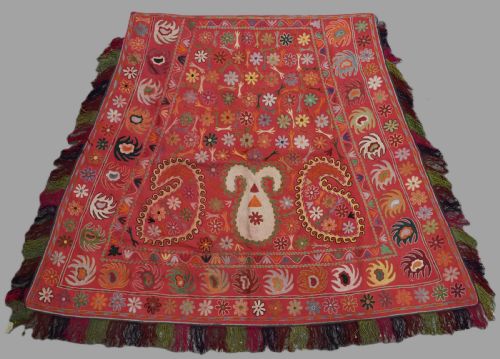
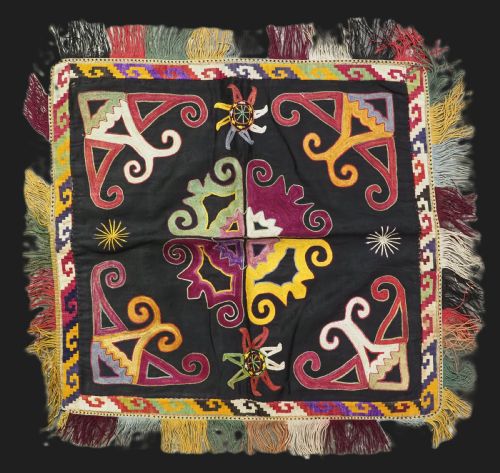
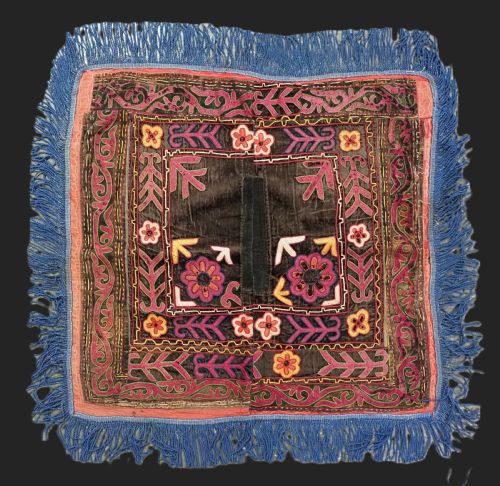
Lakai tribal embroidery pieces are vibrant Central Asian textile works created as dowry items, wall hangings and ceremonial covers.
Lakai Tribal Embroidery
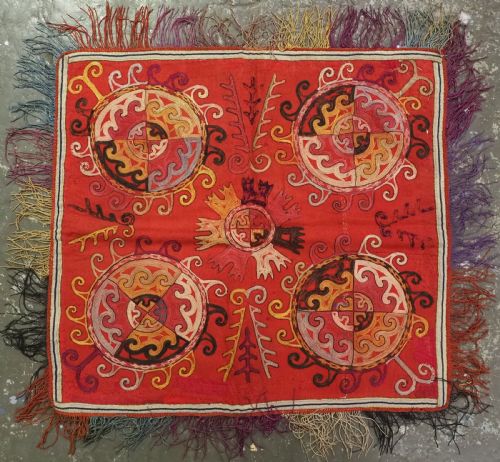
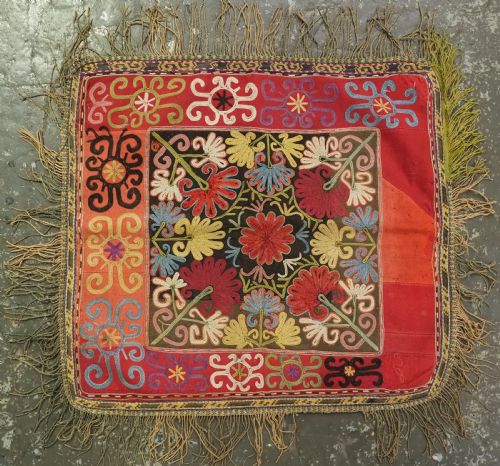
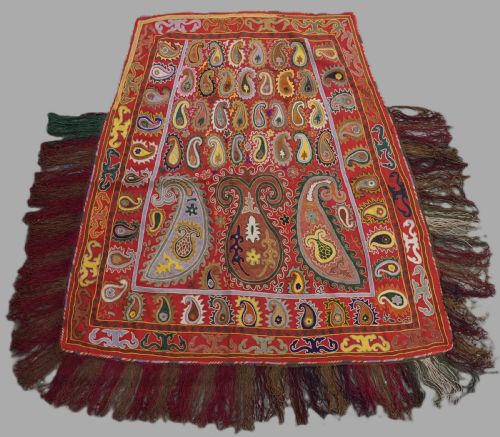
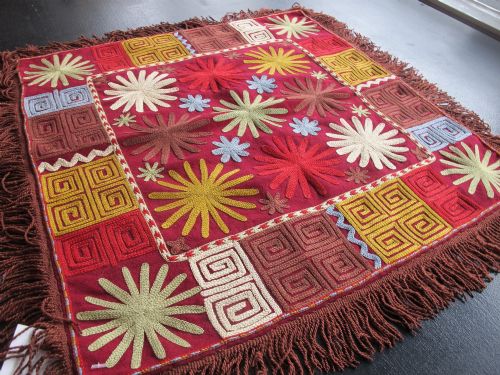
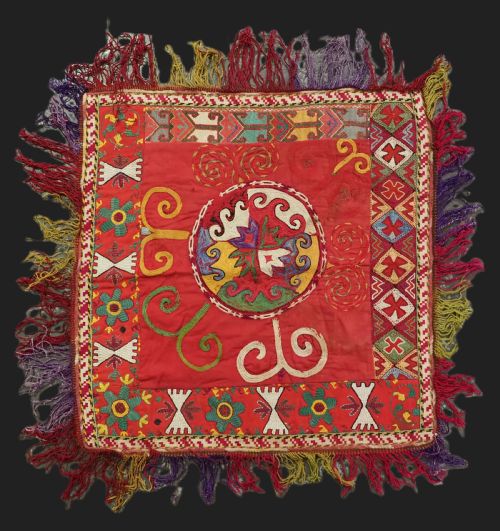
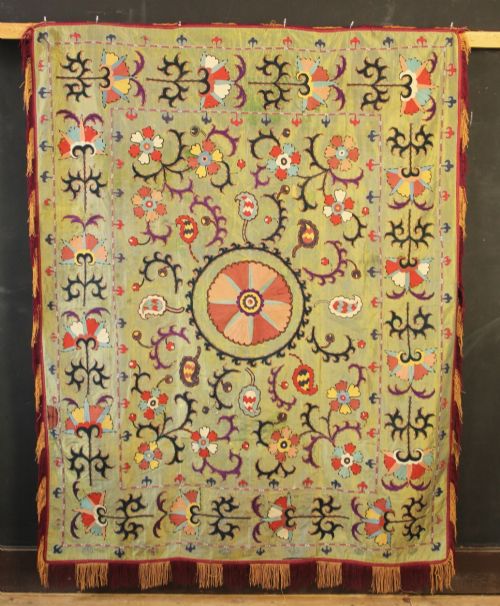
When searching for lakai tribal embroidery, collectors encounter textile works originating from Uzbekistan and wider Central Asia, dating from the late nineteenth century into the early twentieth century. The most common forms met on this page are ilgich wall hangings, dowry embroideries, and ceremonial horse or saddle covers.
These items serve distinct cultural functions within the Lakai tribe, including bed decorations, mirror covers, amulet holders, and larger nim suzani panels. Pieces frequently carry designations such as uut kap ilgich or at torba ilgich, reflecting their specific traditional uses in nomadic domestic and ceremonial life.
Materials and Construction
Makers construct these textiles by applying silk thread embroidery onto ground fabrics of cotton or wool, occasionally incorporating velvet sections and wool fringe. Artisans also embellish select surfaces with glass beads to create textured, dynamic geometric and figurative patterns.
The physical structure relies on traditional Central Asian folk art methods, producing double faced panels and heavy embroidered covers designed for domestic display and ceremonial utility.
Horses in the Lakai tribe wore heavier embroidery than most modern humans own.
Assessing Quality and Execution
Quality in these textiles depends on the density of the silk thread work, the precision of the needlecraft, and the complexity of the design arrangement. Finer examples display intricate geometric articulation and well preserved ground materials.
Condition and completeness also define the standard, particularly regarding the survival of original wool fringe, velvet sections, and integrated glass beadwork across older items.
The Lakai Tribal Embroidery Glossary
- Ilgich
- A Central Asian wall hanging or dowry embroidery piece, typically created by the Lakai tribe for domestic display.
- Suzani
- An embroidered textile panel originating from Central Asia, often worked in silk thread on a cotton or wool ground.
- Nim suzani
- A smaller variation of the traditional suzani panel, generally used as a decorative cover or wall hanging.
- At torba
- A ceremonial horse or saddle cover associated with Central Asian tribal groups and nomadic traditions.
- Uut kap
- A hanging bag or storage textile used within nomadic dwellings, frequently featuring dense tribal embroidery.
Lakai Tribal Embroidery: Frequently Asked Questions
What is lakai tribal embroidery?
These pieces are traditional textile works made by the Lakai tribe in Uzbekistan, featuring silk thread embroidery on wool or cotton grounds.
They encompass functional and ceremonial objects including wall hangings, dowry pieces, and horse covers created during the late nineteenth and early twentieth centuries.
How were these textiles used?
Nomadic and settled communities utilised these embroidered works as functional domestic items, wall decorations, and ceremonial horse trappings.
Specific forms served as dowry pieces, mirror covers, bed decorations, and storage bags within traditional Central Asian households.
What materials are used?
The primary component is silk thread, which makers stitch onto cotton or wool ground fabrics to build dense ornamental designs.
Additional elements include velvet panels, wool fringe, and glass beads integrated into the surface patterns of selected items.
How do I date these pieces?
Dating relies on stylistic analysis, material wear, and structural characteristics that connect the items to periods spanning the late nineteenth century to the early twentieth century.
Listings attribute specific items based on traditional designs and known regional production eras in Central Asia.