


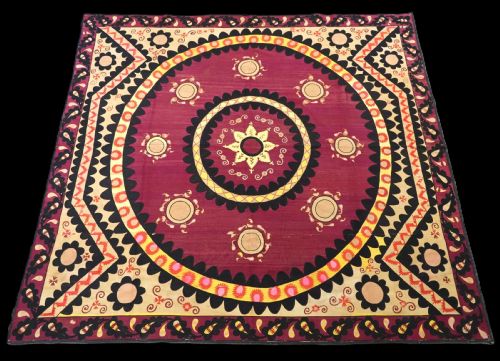


Traditional Uzbek Needlework
Traditional Uzbek needlework brings vibrant Central Asian wall hangings and decorative textiles into a room, offering rich historical textiles crafted centuries ago.
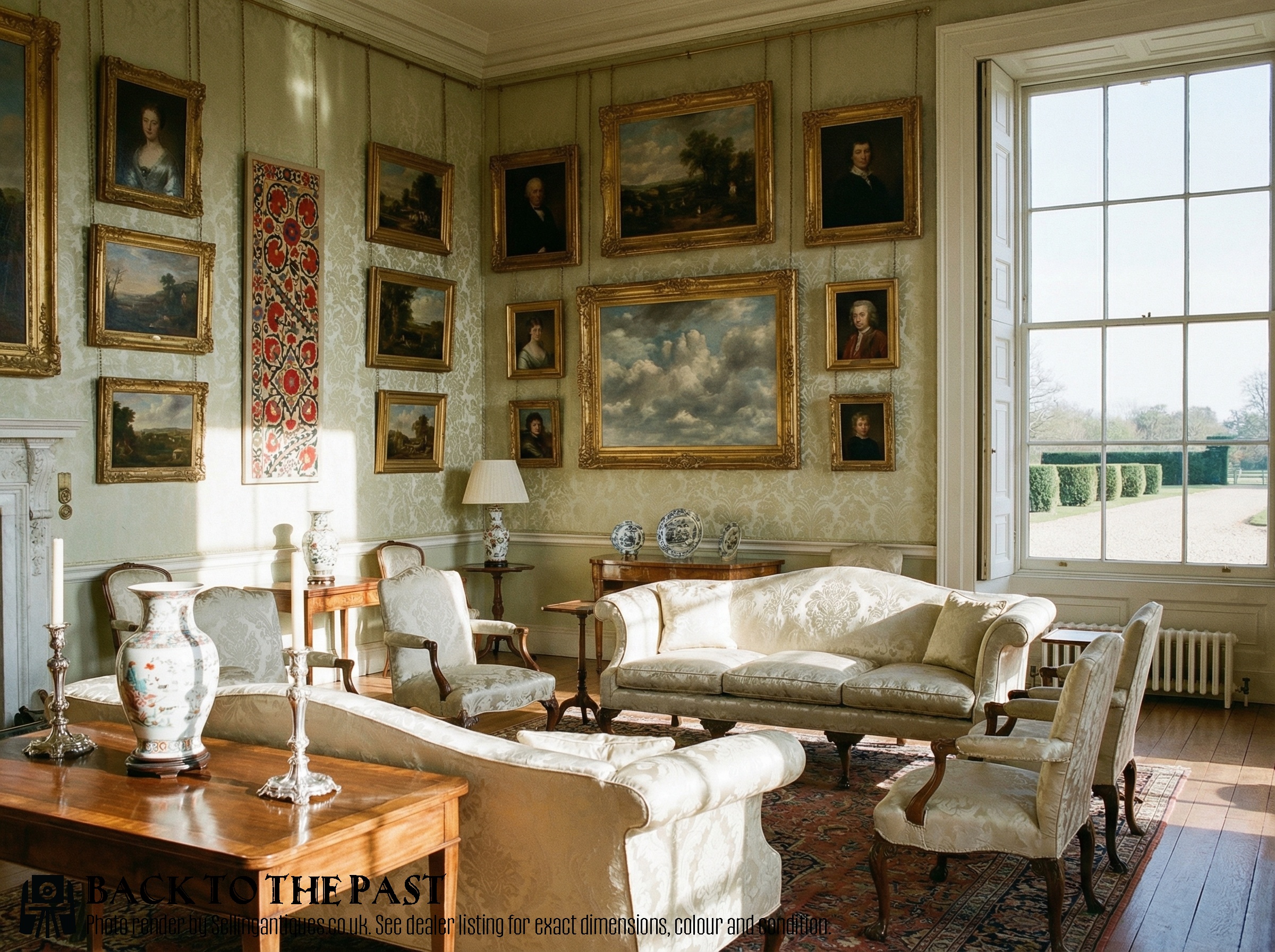
Traditional Uzbek Needlework
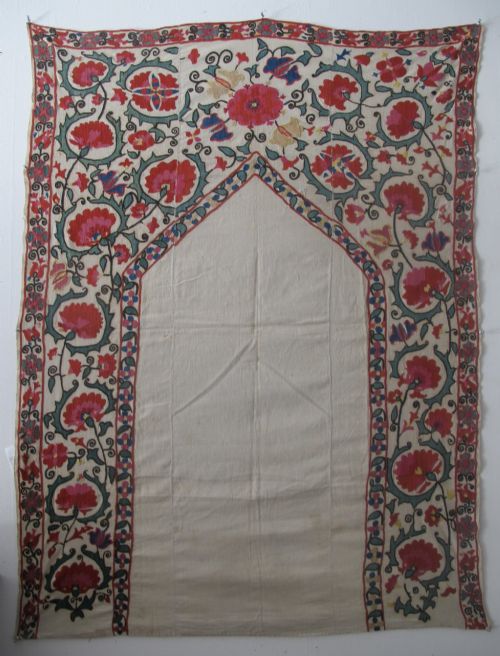
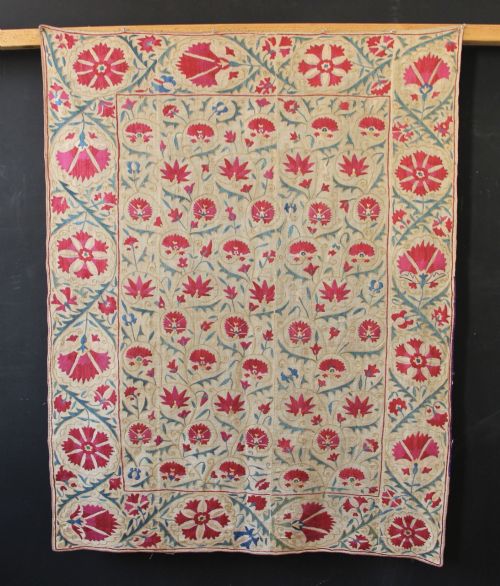
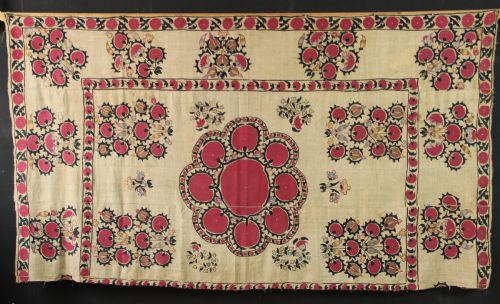
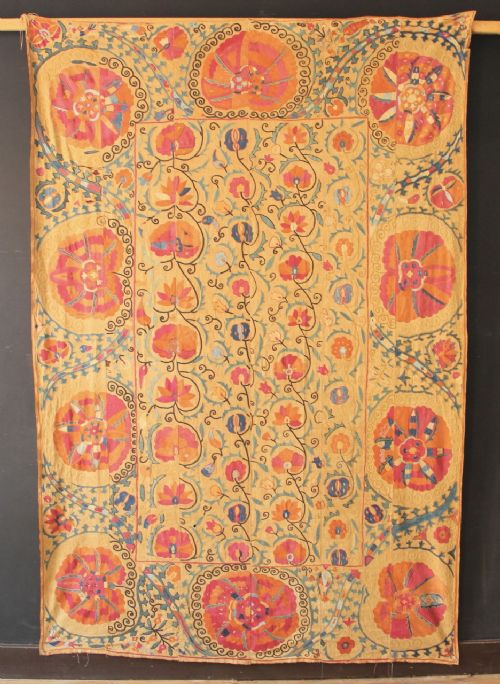
Traditional Uzbek needlework consists of decorative textiles and wall hangings originating from Central Asia, often designated as suzanis. These pieces emerge in formats such as large medallion variants, prayer formats, and smaller embroidered covers.
The selections available span from the early nineteenth century through the early twentieth century, showing regional styles like Bokhara, Ura Tube, Shahrisabz, Nurata, Tashkent, and Lakai.
Buyers encounter everything from compact mounted panels to large multi-metre hangings displaying architectural, floral, and full field embroidered designs.
How traditional Uzbek needlework pieces were made
Artisans constructed these textiles primarily using silk threads for embroidery, applied to ground fabrics formed from cotton and linen.
Needlework techniques involved dense hand embroidery that frequently covered the foundation completely, creating heavy, textured surfaces on regional pieces like palak suzanis.
Traditional Uzbek Needlework Retail Price Guide 2026
Typical asking prices for traditional uzbek needlework among the pieces listed under this phrase on Sellingantiques today, from the lower quarter to the upper quarter. They describe what is for sale here now, not the wider market.
Brides historically embroidered these enormous wall hangings by hand, stitching secret wishes for happiness directly into the floral motifs.
What varies in quality in traditional Uzbek needlework
Quality differentiates by the density of the silk thread embroidery and the precision of the traditional motifs executed across the cotton or linen ground.
Complexity of regional designs, such as intricate architectural layouts or fully embroidered palak compositions, separates standard domestic output from exceptional masterworks.
The Traditional Uzbek Needlework Glossary
- Suzani
- An embroidered tribal textile or wall hanging from Central Asia, traditionally worked by women for dowries.
- Palak
- A fully embroidered suzani design style featuring dense overall patterns that completely cover the ground fabric.
- Nim
- A smaller half-size format suzani used for specific domestic decorative purposes.
- Bokhara
- A historic Central Asian centre known for producing finely detailed traditional embroidery.
Traditional Uzbek Needlework: Frequently Asked Questions
What is a suzani?
A suzani is a traditional embroidered Central Asian textile, usually created as a wall hanging or decorative cover.
These pieces were historically made by brides as part of their dowry in regions like Uzbekistan.
How old are these textiles?
The pieces listed span from the early nineteenth century through the early twentieth century.
Dates are estimated based on regional styles, materials, and structural characteristics.
How do I hang a suzani?
Large textiles and wall hangings require careful mounting to distribute their weight evenly across the fabric.
Conservation framing or professional mounting protects the cotton ground and silk embroidery from undue strain.
What materials were used?
Artisans worked with silk thread embroidered onto foundations of cotton or linen.
The combination creates a textured surface that defines traditional Central Asian needlework.