

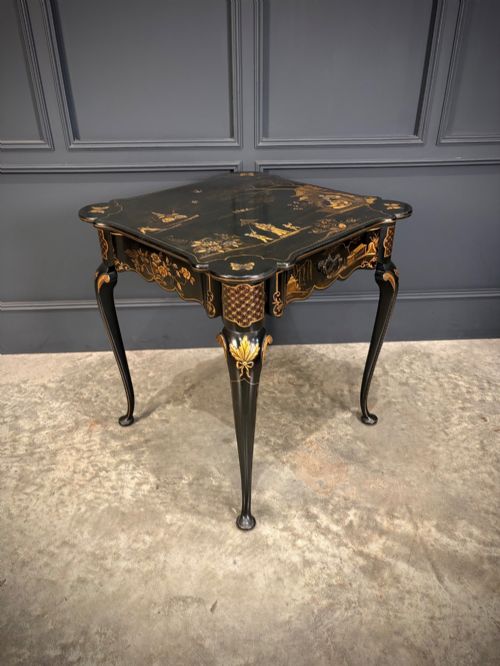
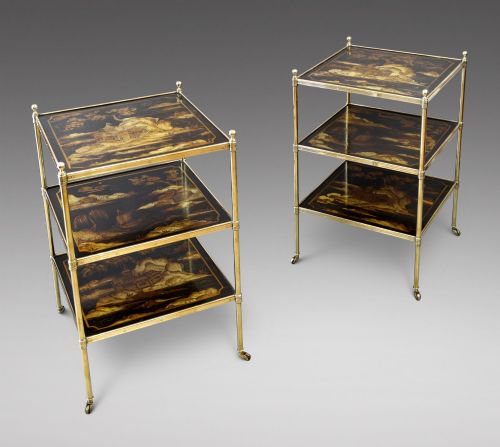
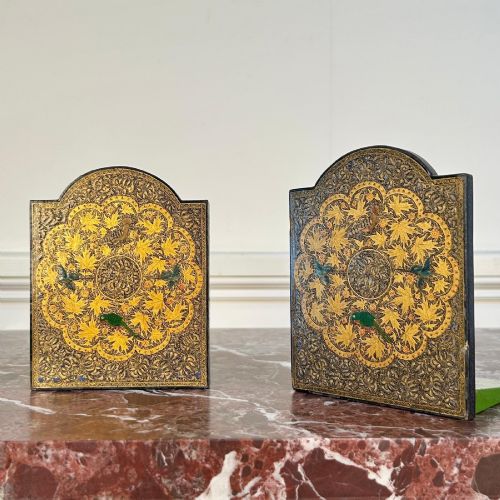
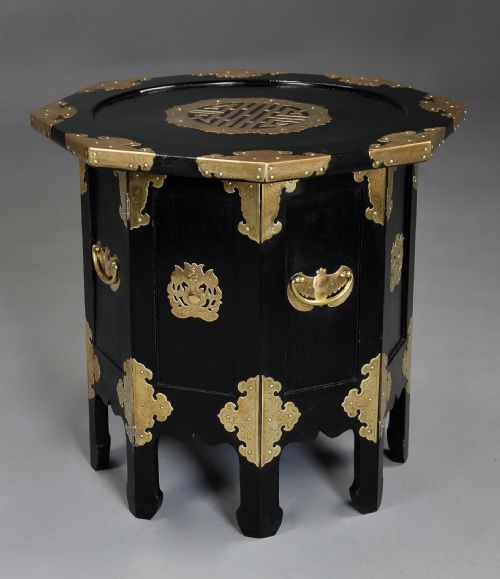

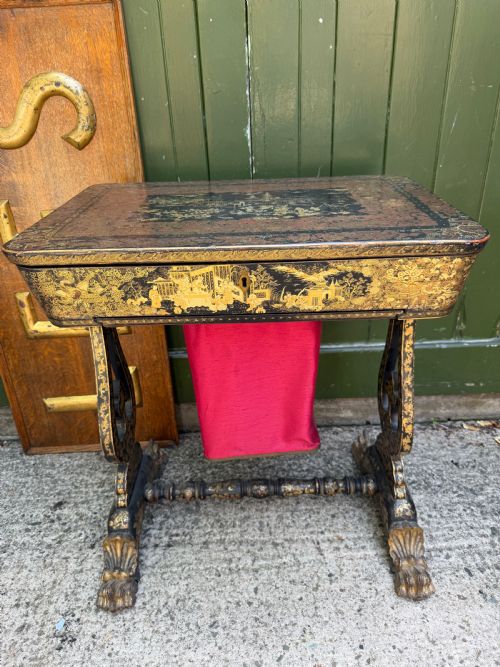


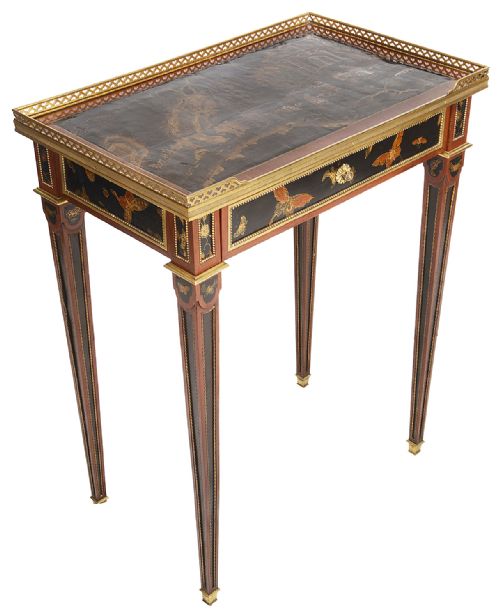
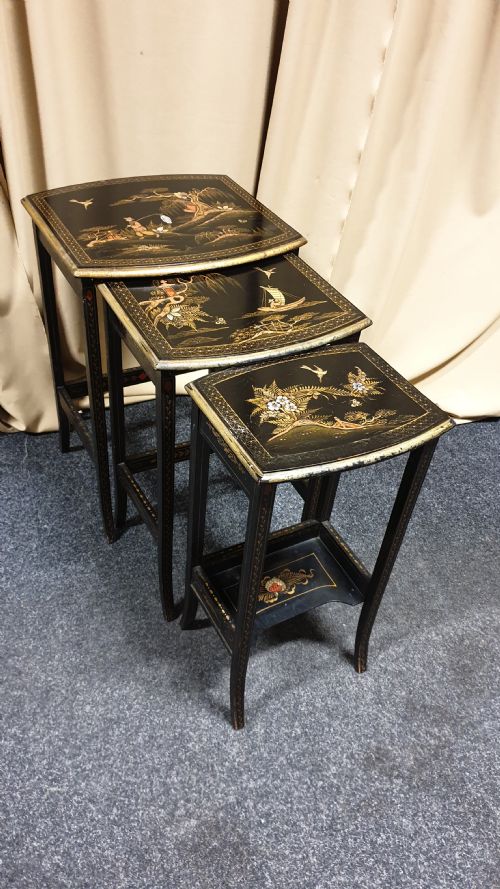
Lacquered End Table
Lacquered end table designs bring deep oriental or regency lacquerwork into a room as practical, decorative side pieces.
Lacquered End Table
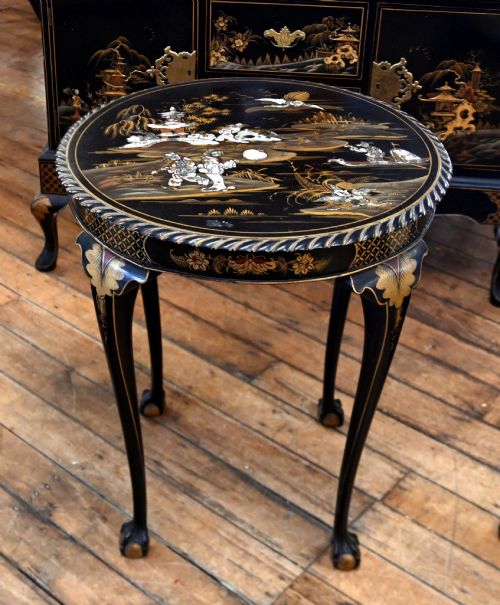
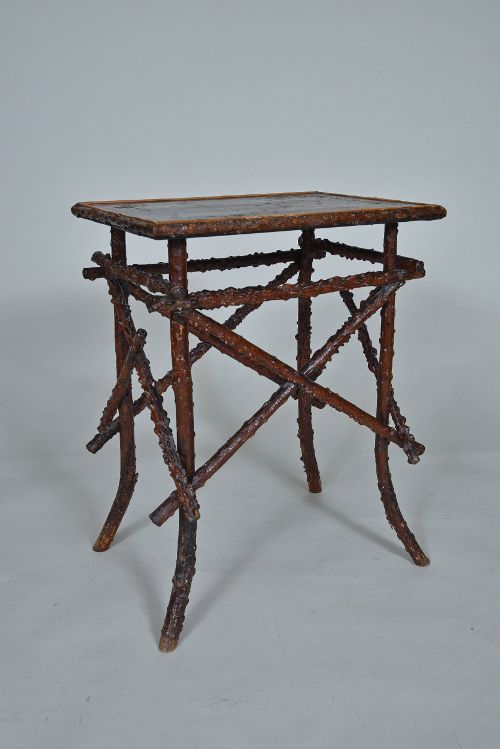
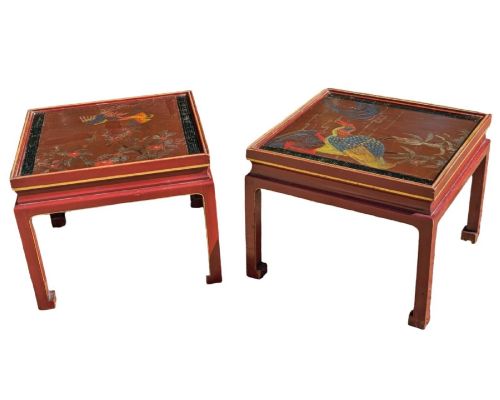
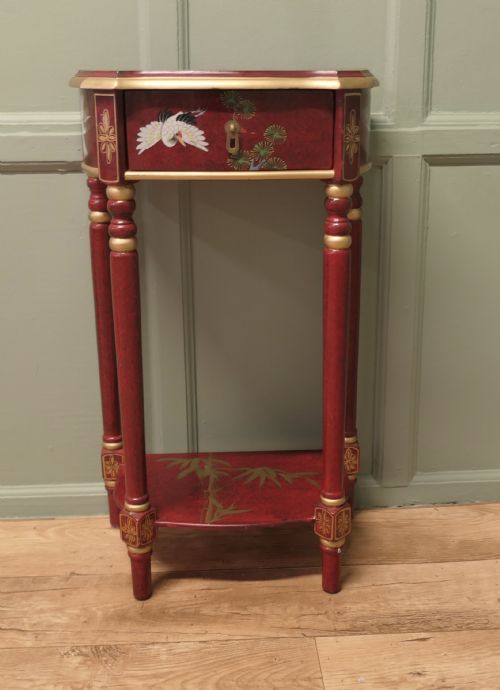
When you search for a lacquered end table, you encounter a variety of compact occasional surfaces, side tables, and low tables spanning the nineteenth and early twentieth centuries. These pieces draw on chinoiserie, Kashmiri, Regency chinoiserie, and Chinese provincial traditions to provide surface space beside chairs and beds.
The selection frequently includes occasional tables, nests of tables, low tables, and bedside cabinets executed in black, red, or ebonised finishes. Common periods range from the Regency era through to the 1930s, reflecting diverse origins from English interpretations to Chinese export pieces.
How they were made
Construction relies on wood, hardwood, and bamboo as foundational structural materials, frequently enhanced by papier-mâché in specific regional traditions. Surfaces receive applied lacquer treatments in black, red, or ebonised tones.
Decoration is achieved through gold leaf, gilt ornamentation, and detailed hand-painted motifs characteristic of chinoiserie and Kashmiri craftsmanship. Brass hardware and occasional cloisonné elements are integrated to accent the woodwork.
Lacquered End Table Retail Price Guide 2026
Typical asking prices for lacquered end table among the pieces listed under this phrase on Sellingantiques today, from the lower quarter to the upper quarter. They describe what is for sale here now, not the wider market.
The listings span from Regency and nineteenth-century pieces to 1930s examples, utilising lacquer, wood, brass, and gold leaf.
What varies in quality
The sophistication of the painted surface decoration distinguishes standard utility pieces from finer examples. Delicacy of the gilt work and complexity of the oriental scenes dictate the visual depth of the lacquer.
Structural choice of timber, such as solid hardwood versus lighter constructed woods or bamboo, influences the substantial feel of the furniture. Preservation of the original lacquer surface without heavy intervention marks the distinction between well-kept specimens and heavily restored items.
The Lacquered End Table Glossary
- Chinoiserie
- European artistic style reflecting Chinese motifs and techniques. It appeared extensively on furniture from the eighteenth century onwards.
- Lacquer
- Durable finish applied to wood surfaces derived from natural resin or specialised varnishes. It provides a glossy, smooth protective coating.
- Gilt
- Application of gold leaf or gold-coloured pigment to a surface. It highlights decorative details and borders.
- Occasional table
- Small, movable table designed for specific, intermittent use rather than permanent placement. They function effectively beside seating arrangements.
- Nest of tables
- Set of graduated tables designed to fit neatly beneath one another. They save space when not in use.
Lacquered End Table: Frequently Asked Questions
Where do lacquered end tables fit best?
These compact pieces suit living rooms, studies, and bedrooms as functional surfaces for lamps, books, or decorative objects. Their distinctive finishes allow them to act as focal points within an interior scheme.
They pair effectively with both traditional and contemporary room layouts, adding texture and colour contrast through their painted surfaces.
How do I identify a chinoiserie finish?
Chinoiserie surfaces typically display painted oriental landscapes, figures, or botanical motifs in gold or red over a dark background. The ornamentation often draws inspiration from Chinese art interpreted by European or Asian workshops.
Close inspection reveals hand-applied brushwork or layered lacquer buildup characteristic of traditional decorative methods.
Are these tables sturdy enough for daily use?
Most pieces are built from hardwood or sturdy timber frameworks designed to support everyday items like lamps and cups. However, antique lacquer requires care to avoid scratching or moisture damage.
Using coasters and placing them away from direct heat sources helps preserve the decorative surfaces over time.
What is the difference between Kashmiri and Chinese styles?
Kashmiri pieces often feature intricate floral and paisley-style hand-painted patterns executed on wood or papier-mâché. Chinese export and provincial examples focus more on traditional figurative scenes, landscapes, and architectural motifs.
Both styles utilise vibrant red and black lacquer grounds enriched with metallic detailing.