



Kutani Ware Pottery
Kutani ware pottery brings distinctive Japanese artistry to a room, offering rich enamel decoration and gold leaf detail that collectors prize.
Kutani Ware Pottery
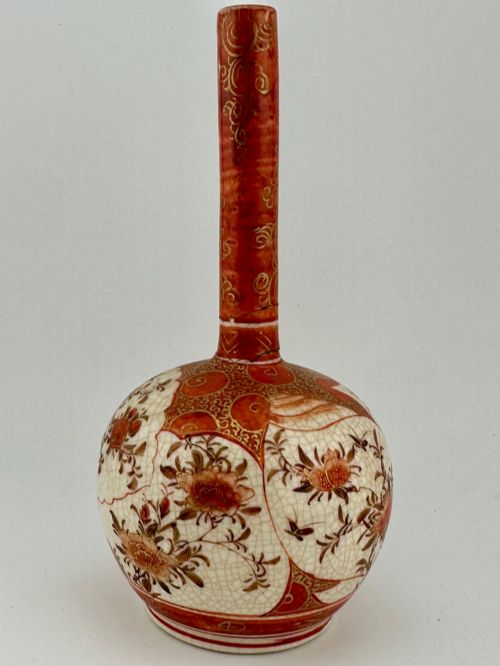
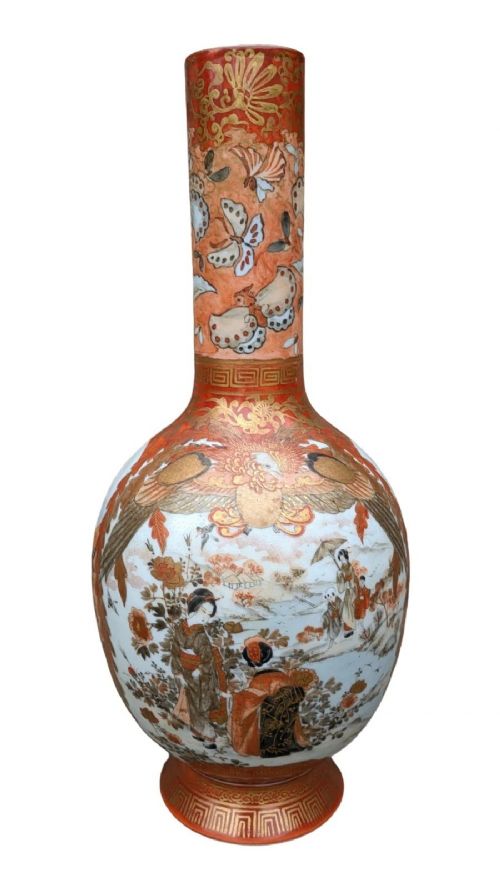
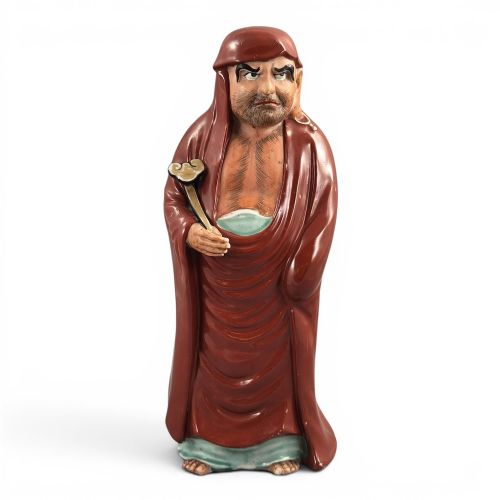
Kutani ware pottery encompasses a striking range of vases, figurines, and okimono figures originating from Japan. When exploring these pieces, collectors encounter various forms dating from the nineteenth century through the Edwardian period and the Meiji and Taisho eras.
Vases dominate the available selection, often appearing in matched pairs or individually. The pieces reflect the distinct aesthetic standards of Japanese craftsmanship from the eighteen-hundreds onwards.
How Kutani ware pottery was made
The makers utilised porcelain as the primary base material for these vessels and figures. Skilled artisans applied intricate enamel work and generous gilding to the surfaces.
Techniques such as moriage involved building up thick layers of slip or enamel to create raised decorative textures. Artisans also incorporated gold leaf to highlight specific details on the porcelain bodies.
Certain larger figures and vases were accompanied by carved wood stands designed to support the porcelain securely. The combination of detailed painting and relief work defined the production process.
Kutani Ware Pottery Retail Price Guide 2026
Typical asking prices for kutani ware pottery among the pieces listed under this phrase on Sellingantiques today, from the lower quarter to the upper quarter. They describe what is for sale here now, not the wider market.
The listings here feature porcelain items decorated with enamel, gold leaf, and moriage spanning the nineteenth and early twentieth centuries.
What varies in quality
The precision of the enamel painting and the delicacy of the gilding set superior examples apart from standard production. Finer pieces demonstrate greater control in the brushwork and more complex decorative compositions.
The application of raised moriage details varies significantly across different items, with finer pieces showing crisp definition and restraint. The overall balance of colour and gold leaf determines the visual success of each object.
Kinrin Workshop
The Kutani Ware Pottery Glossary
- Okimono
- A Japanese decorative figurine intended for display in an interior setting. These sculptural objects often represent historical or mythological figures.
- Moriage
- A ceramic technique where clay or enamel is applied in raised dots or lines to create a textured surface. This method adds tangible depth to the painted decoration.
- Meiji Period
- The era in Japanese history spanning from eighteen sixty-eight to nineteen twelve, noted for significant artistic production and export. Pieces from this time show distinct decorative styles.
- Daruma
- A traditional Japanese figurine modelled after Bodhidharma, the founder of Zen Buddhism. These figures often appear as rounded, meditative forms in porcelain.
- Gilding
- The application of gold leaf or gold paint to decorate the surface of an object. This technique enhances the visual richness of the ceramic body.
Kutani Ware Pottery: Frequently Asked Questions
What is Kutani ware pottery?
Kutani ware is a traditional style of Japanese porcelain known for its colourful enamel decoration and gold leaf accents. The items available include decorative vases and figural okimono.
Production spans multiple historical periods, with many examples originating from the nineteenth and early twentieth centuries.
How do I identify Meiji period pieces?
Meiji period items generally date between eighteen sixty-eight and nineteen twelve, reflecting the artistic standards of that era. Makers during this time produced highly detailed porcelain vessels and figures.
Examining the style of the enamel work and the character of the porcelain helps determine the manufacturing period.
How were these vases displayed?
Vases and figurines were traditionally placed in domestic interiors to add colour and artistic interest to a room. Larger vessels frequently included carved wood stands for proper presentation.
Pairs of vases were often positioned symmetrically on furniture or within alcoves.
What is moriage decoration?
Moriage is a decorative technique where slip or enamel is built up in thick layers to create a raised, textured design. This method provides a tactile quality that contrasts with flat painted surfaces.
Artisans often combined moriage with gilding to accentuate the dimensional patterns.