



Kurdish Long Carpet
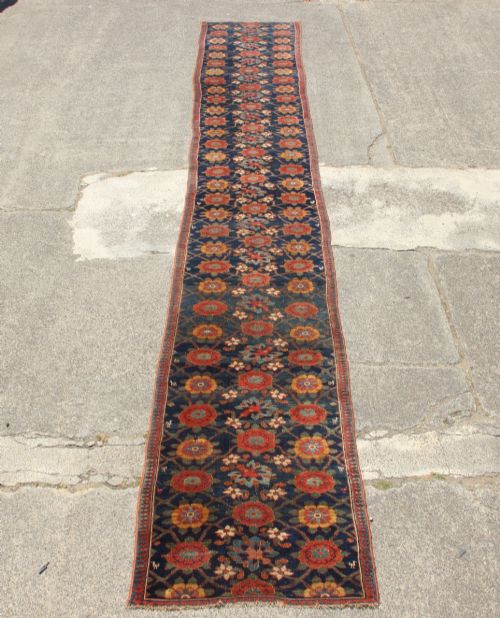
A Kurdish long carpet brings tribal geometry and deep saturated dye to a hallway or drawing room.
Kurdish Long Carpet
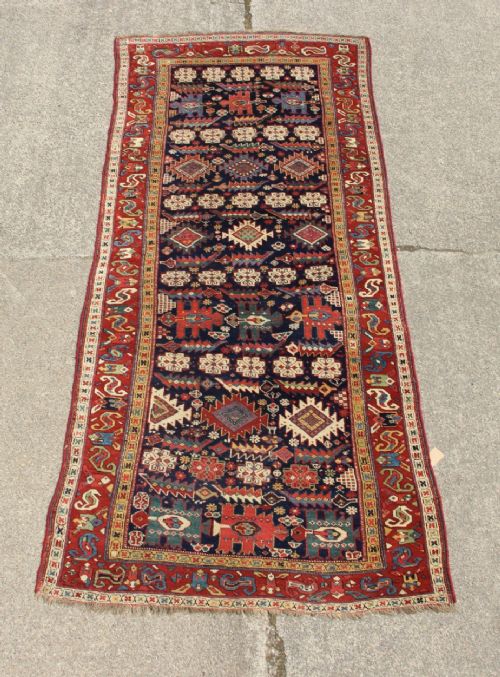
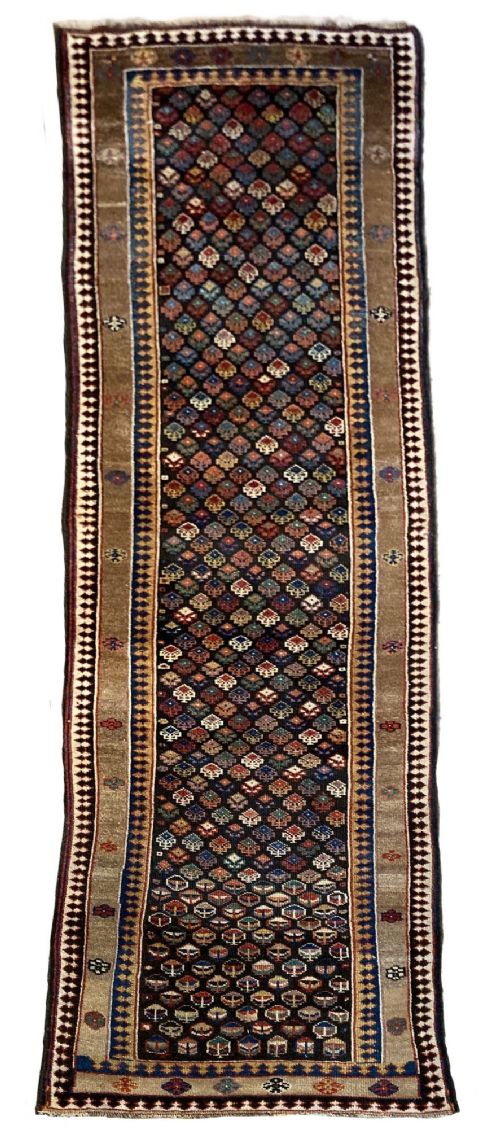
A Kurdish long carpet is a room-sized or elongated runner woven in the weaving traditions of Kurdish communities. When you search for this phrase, you meet narrow formats, hallway runners, and substantial kelleh carpets designed for long spaces. These pieces emerge from regions spanning North West Persia, Hamadan, and Kurdistan, dating from the mid-nineteenth century to the early twentieth century.
The format dominates the selection, appearing as runner rugs, corridor carpets, and narrow floor coverings. They frequently showcase traditional motifs such as the Mina Khani pattern, boteh designs, shrub motifs, and Memling guls. The palette often relies on deep reds and blues set against ivory grounds or dark fields.
Materials and Construction
Weavers constructed these carpets using wool and cotton foundations combined with hand-spun wool pile. The reliance on hand-spun wool provides the characteristic dense handle and irregular texture visible across the pieces.
Natural dyeing methods yielded the varied hues recorded in the titles, interacting with the wool fibres to produce deep tones that shift across the pile. The structures rely on sturdy village and tribal knotting techniques suited to heavy foot traffic.
Certain narrow runners preserve the quiet company of small woven birds perched upon trees.
Evaluating Quality
Quality rests in the precision of the tribal drawing and the complexity of the border arrangements, such as dragon borders or intricate geometric repeats. The handling of secondary details, including birds perched on trees or small figures, distinguishes more expressive weaving.
The grade of the hand-spun wool and the saturation of the dye determine the visual depth of the field. Tighter knot counts and balanced proportions separate major kelleh carpets and long runners from simpler village work.
The Kurdish Long Carpet Glossary
- Kelleh
- A large format carpet that is longer than a standard room rug yet broader than a corridor runner. These rectangular pieces served as major floor coverings in traditional interiors.
- Mina Khani
- A repeating geometric pattern composed of daisy-like flowers linked by a lattice network. This classical design appears frequently in Persian and Kurdish weaving.
- Boteh
- A stylised floral motif resembling a pear or almond shape with a curved upper end. It is a fundamental element in tribal and village rug design.
- Memling Gul
- An octagonal tribal gul motif with hooked appendages extending from the edges. Named after the painter who depicted similar Anatolian carpets, it denotes strong regional weaving traditions.
- Runner
- A long, narrow carpet format intended for hallways, corridors, and narrow spaces. These pieces balance length with restricted width.
Kurdish Long Carpet: Frequently Asked Questions
What is a kelleh carpet?
A kelleh is a specific format of carpet that sits between a standard room rug and a long runner in its proportions. These pieces offer substantial floor coverage while maintaining an elongated rectangular shape.
They function well in large hallways, drawing rooms, or galleries where standard widths fall short.
Where were these carpets made?
These pieces originate from Kurdish communities operating across North West Persia, Kurdistan, and surrounding regional centres like Bidjar and Hamadan. Tribal and village weavers produced them within local domestic workshops.
Each region contributed distinct stylistic preferences in palette and border design.
How do I care for a wool runner?
Maintenance requires regular gentle vacuuming without rotating brush heads to protect the hand-spun wool pile and delicate foundations. Professional rug cleaning handles deep dirt safely without damaging natural dyes.
Using an appropriate underlay prevents slippage and reduces friction against the floorboards.
What motifs appear on these pieces?
Designs include all-over shrub layouts, repeated boteh motifs, Mina Khani lattices, and geometric Memling guls. Some examples feature figural elements such as small figures or birds perched on trees.
Borders often incorporate intricate guard stripes and dragon motifs framing the central field.