





Knopped Stem Goblet
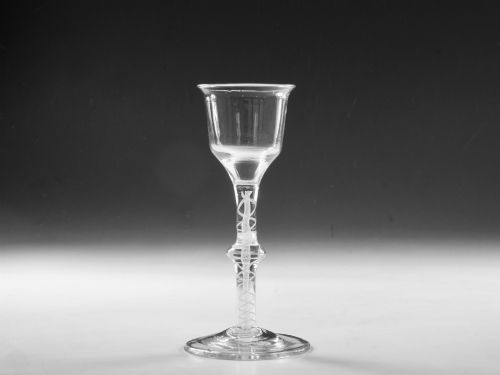
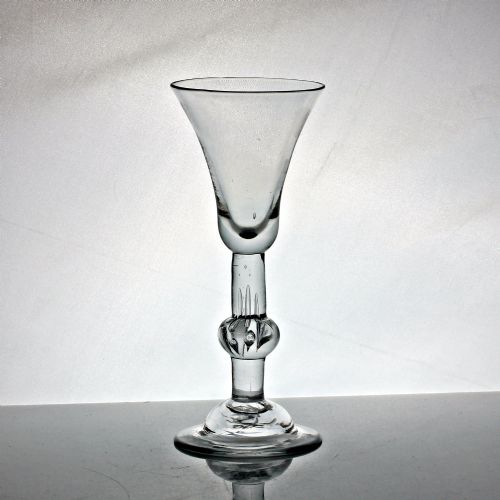
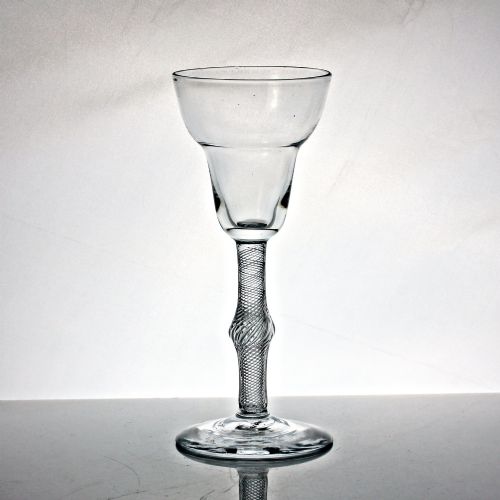
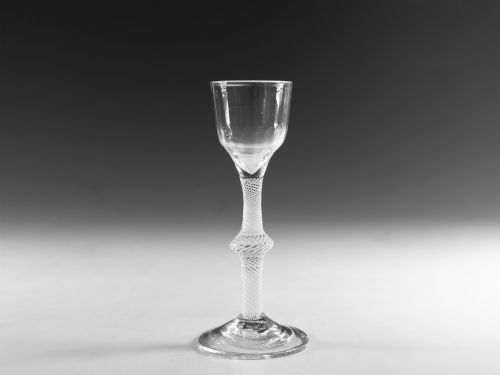
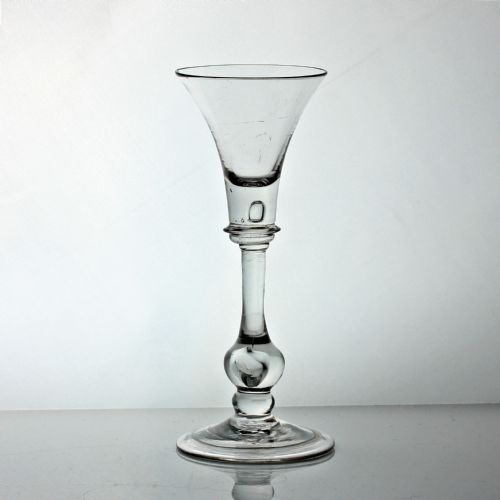
A knopped stem goblet offers the tactile weight of lead glass and the distinct architecture of a prominent mid-stem node.
Knopped Stem Goblet
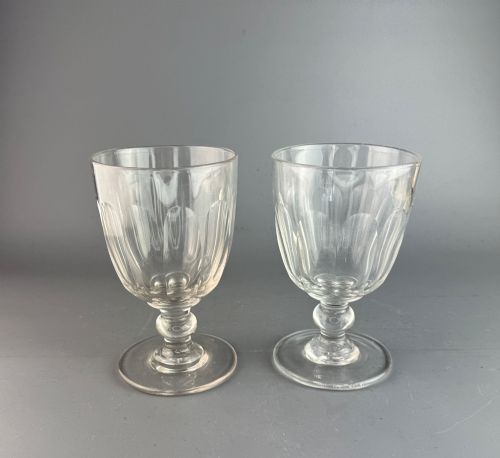
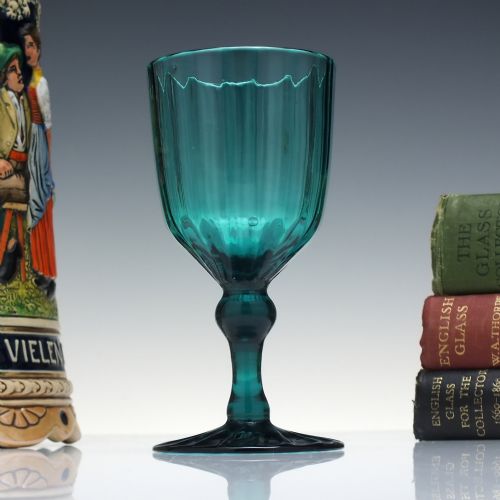
When you search for a knopped stem goblet, you encounter drinking vessels defined by distinct thickened nodes along the stem, ranging from early eighteenth-century baluster and balustroid forms to later Victorian variations. These pieces encompass Georgian wine glasses, rummers, and chalices shaped in lead glass, lead crystal, and clear glass.
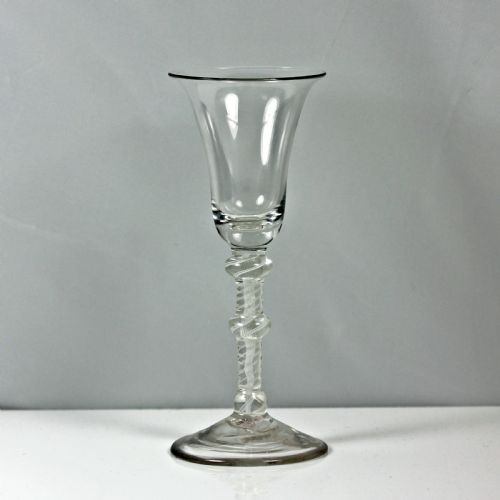
The version most commonly met on this page is the eighteenth-century Georgian wine glass featuring an opaque twist, air twist, or multi-knoped stem formation. Such vessels include examples with complex air-teared stems, armorial engraving, and rib moulding originating from English and continental workshops.
Factors influencing quality
Quality rests upon the clarity of the metal and the precise execution of the stem's knops and twists. Superior examples display clean lead glass without excessive seed bubbles, combined with symmetrical twist formations or well-proportioned baluster profiles.
The depth and skill of wheel engraving separate standard production from superior pieces, particularly when heraldic details or inscriptions are present. Balance, weight, and the crispness of moulded ribs further distinguish the finer vessels from simpler domestic ware.
Several eighteenth-century glasses retain tiny trapped air bubbles that survived the glassblower's breath by nearly three centuries.
The Knopped Stem Goblet Glossary
- Knop
- A pronounced swelling or bulbous node on the stem of a glass. This architectural feature provides a secure grip and defines the silhouette.
- Baluster
- A heavy, turned stem style popular in the early eighteenth century. It echoes the robust stone or woodwork supports found in British architecture.
- Air twist
- A decorative stem formation enclosing elongated spiral channels of trapped air. Craftsmen achieved this effect by drawing out air bubbles within the molten glass rod.
- Opaque twist
- A stem containing internal threads of white enamel glass twisted into spiral patterns. These threads create a striking contrast against clear lead glass.
- Rummer
- A large, substantial drinking glass with a thick bowl and sturdy foot, suited to ales and wines. Victorian and Georgian examples often feature cut or engraved decoration.
Knopped Stem Goblet: Frequently Asked Questions
How do I date an antique goblet?
Dating relies on observing the vessel form, metal composition, and manufacturing technique. Early pieces from the seventeen-hundreds often exhibit heavy baluster stems and lead metal content, whilst Victorian examples trend towards pressed or heavy cut glass.
Tool marks on the pontil pont mark at the base provide further clues regarding age. Comparing the bowl shape and engraving style to documented examples clarifies the period.
Are these glasses safe for daily use?
Whilst antique lead glass is chemically stable, historic drinking vessels warrant careful handling. Modern detergents and thermal shock can damage fragile eighteenth-century lead crystal.
Hand washing in lukewarm water preserves the surface integrity and engraving. Many collectors reserve these pieces for display or occasional celebratory toasts rather than routine dining.
What is the difference between air twist and opaque twist?
An air twist contains fine, spiralling threads of trapped air within the clear glass stem. This is created by pricking air bubbles in the hot metal before drawing and twisting the stem.
An opaque twist substitutes those air channels for solid white enamel rods enclosed within the clear glass. Both techniques demand exceptional skill from the glassblower.