
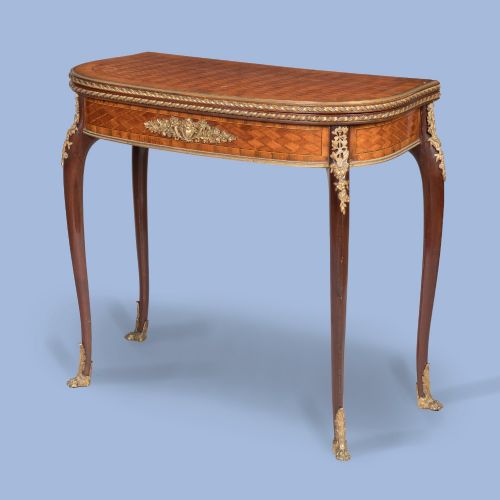
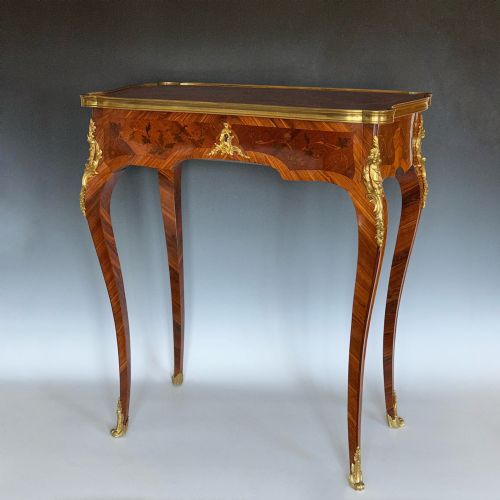
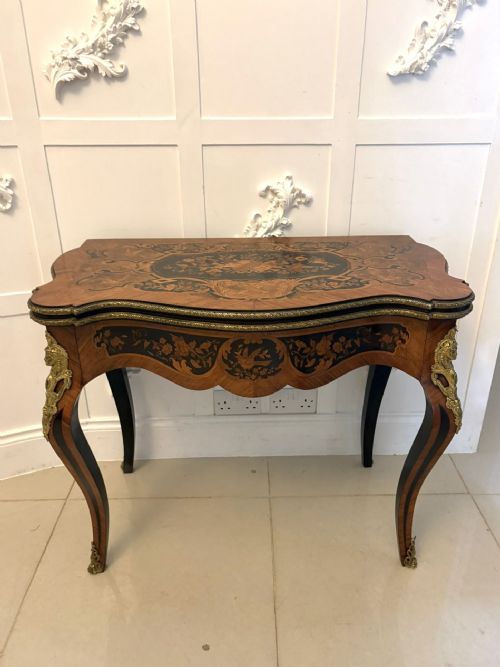


Kingwood Console Table
A kingwood console table brings together rich timbers and chased gilt metal mounts, offering an elegant surface for a hallway or reception room.

Kingwood Console Table
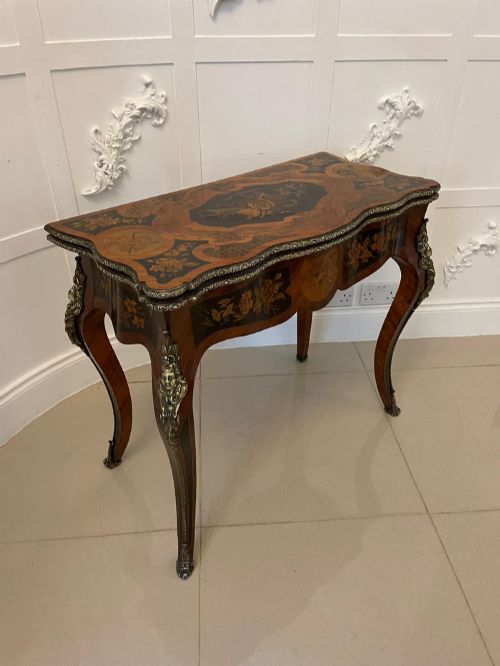
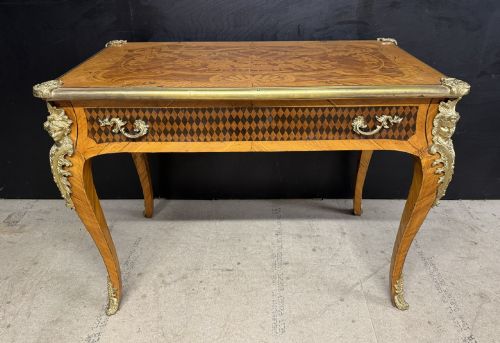
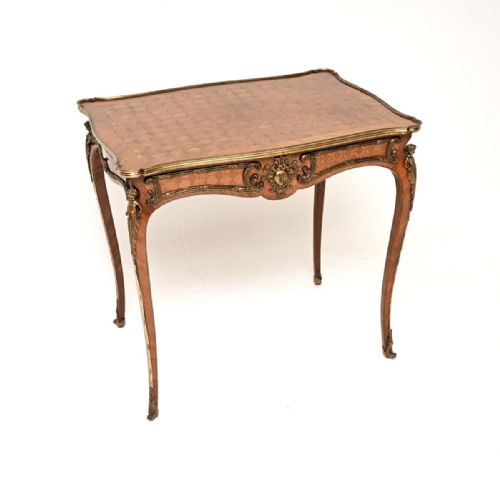
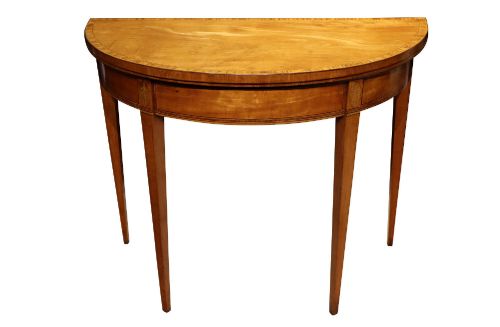
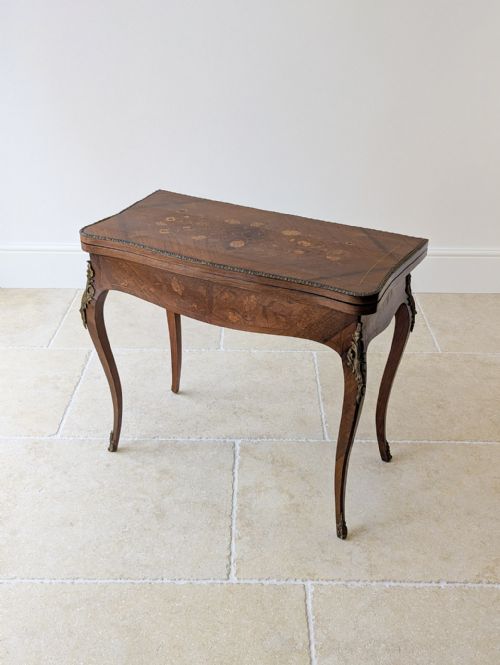
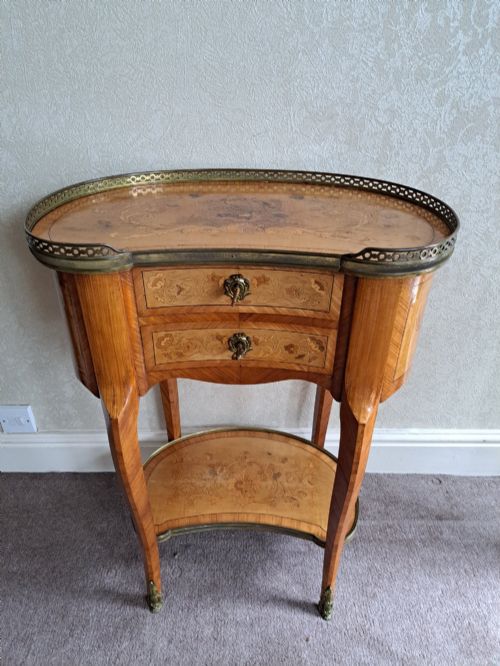
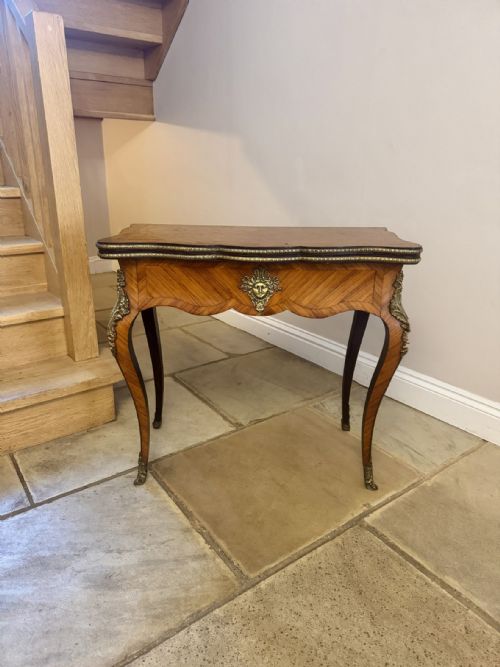
A kingwood console table typically appears in French revival designs from the nineteenth century, notably following the Louis XV and Louis XVI styles. These tables often function as card tables, side tables or games tables with folding tops, rather than strictly wall-mounted console pieces. The forms range from demi-lune shapes to rectangular side tables resting against a wall.
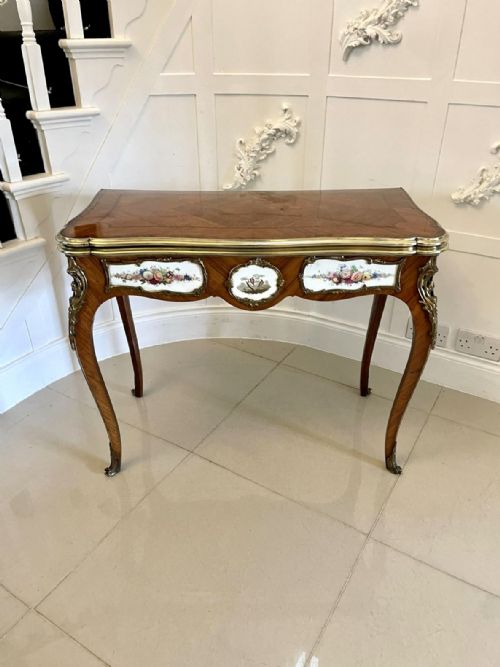
Makers working in Victorian London and Paris produced these pieces using exotic veneers and detailed brass or ormolu mounts. The evidence shows frequent appearances of nineteenth-century pieces alongside Regency and George III examples in satinwood and walnut. Buyers find tables ranging from simple parquetry work to elaborate marquetry inlay paired with porcelain plaques.
Materials and Construction
Cabinet makers constructed these tables using a solid carcase of timber veneered with kingwood, tulipwood, walnut and rosewood. Wood inlay and parquetry geometric patterns or floral marquetry decorate the top surfaces and apron rails. Crossbanding frames the grain of the primary timber to create distinct borders.
Gilt bronze ormolu mounts, cast and chased, accent the corners, legs and aprons, while brass inlay appears in Regency examples. Card tables and games tables incorporate folding mechanisms and hinged leaves supported by swing legs or pivoting frameworks.
Kingwood Console Table Retail Price Guide 2026
Typical asking prices for kingwood console table among the pieces listed under this phrase on Sellingantiques today, from the lower quarter to the upper quarter. They describe what is for sale here now, not the wider market.
Secret compartments in games tables often hid counters, leaving Victorians to argue over winnings in absolute luxury.
Judging Quality
Quality rests upon the precision of the marquetry and parquetry work, where tight joints and varied wood tones create depth without gaps in the veneer. The crispness of the ormolu mounts separates standard production from exceptional pieces produced by prominent makers.
The sophistication of the internal mechanism on folding card and games tables indicates the grade of the original commission. Heavier, well-cast bronze mounts and carefully selected timber figure distinguish the top tier of nineteenth-century French and English workshops.
G T Morant·François Linke·Millet·Joseph-Emmanuel Zwiener·Henry Dasson
The Kingwood Console Table Glossary
- Kingwood
- A dense, heavy South American timber showing rich purple-brown tones with darker grain stripes. Cabinet makers valued it for high-end veneering.
- Ormolu
- Gilt bronze mounts applied to furniture for decorative accent. Artisans cast and chased the metal to achieve sharp detail.
- Marquetry
- Decorative patterns formed by fitting together small pieces of coloured wood veneer. Craftsmen utilised this technique to render floral and pictorial scenes.
- Parquetry
- Geometric arrangements of wood veneer tiles forming patterns such as cubes or chequers. This technique emphasises the natural grain of contrasting timbers.
- Crossbanding
- A border of veneer laid with the grain running perpendicular to the main surface. It frames the central panel of a table top.
Kingwood Console Table: Frequently Asked Questions
What is the difference between ormolu and brass?
Ormolu consists of cast bronze that has been finished with a layer of gold, providing a warm, deep lustre. Brass is an alloy of copper and zinc with a brighter, yellower metallic tone.
Nineteenth-century French furniture typically employs fire-gilded ormolu mounts for richer decorative contrast.
How do I care for kingwood veneer?
Keep kingwood furniture away from direct sunlight and heat sources to prevent the exotic veneers from drying out or splitting. Dust regularly with a dry cloth and avoid silicone polishes.
Applying a traditional beeswax occasionally helps preserve the natural sheen of the timber.
How do I distinguish Louis XV and Louis XVI styles?
Louis XV style furniture relies on curved lines, asymmetrical rococo scrolls and cabriole legs. Louis XVI style shifts toward neoclassical restraint with straight tapered legs, fluting and symmetrical geometric parquetry.
Both styles frequently utilised kingwood veneer and ormolu mounts during the nineteenth-century revival period.