







Lyre End Table
A lyre end table offers distinctive scroll supports shaped like ancient stringed instruments, bringing classic grace to a room through balanced proportions and traditional craftsmanship.

Lyre End Table
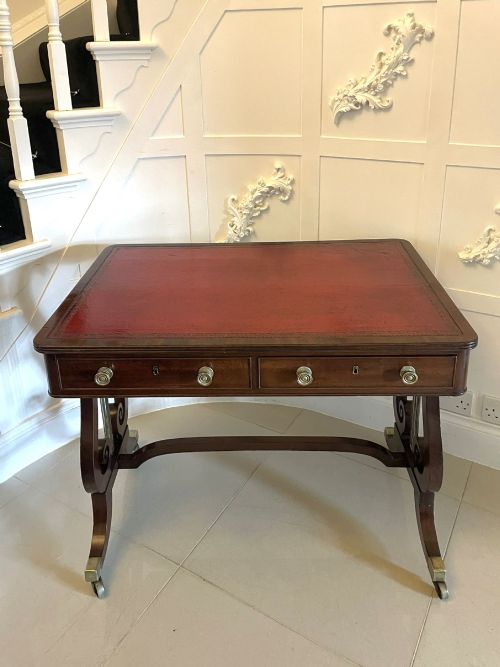
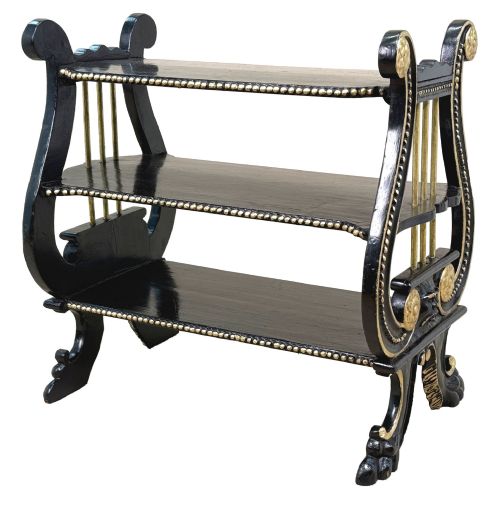
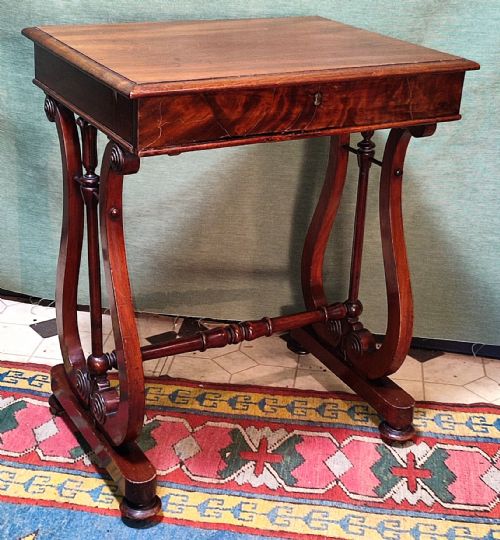
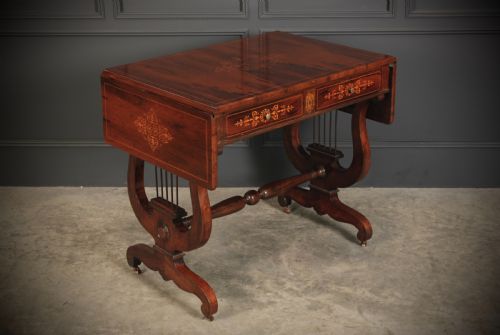
A lyre end table takes its defining name from the scroll-shaped uprights resembling a musical lyre that support the surface. These pieces appear frequently across the Regency and Victorian periods, often taking the form of sofa tables, work tables, and writing desks.
Most examples encountered on this page rely on mahogany, walnut, or ebonised wood to build the central structure. The form adapts readily to domestic use, functioning as a side table, lamp table, or occasional surface beside seating.
Makers of the nineteenth and early twentieth centuries applied this distinctive scroll support to drop-leaf surfaces, games tables, and writing furniture. The resulting forms combine practical utility with the decorative character of classical revival styles.
What varies in quality
The sophistication of the timber figure and the precision of the inlay set the finest examples apart from standard workshop production. Superior pieces display carefully matched veneers across the drop leaves and drawer fronts, maintaining continuity of the wood grain.
Construction methods also define the tier of a piece, observable in the stability of the lyre supports and the neatness of the joinery within the drawers. Finer execution shows in the crisp carving of the scrollwork and the quality of any brass or gilt detailing.
Some nineteenth-century work tables hide miniature compartments inside for storing spools of silk and ivory winders, keeping sewing paraphernalia neatly out of sight.
The Lyre End Table Glossary
- Lyre end
- A furniture support shaped in the contour of a classical stringed instrument, often joined by a central stretcher. This decorative upright provides both structural support and visual elegance to the ends of a table.
- Sofa table
- A rectangular occasional table designed to stand in front of or beside a sofa, traditionally featuring drop leaves on either side. These tables frequently incorporate drawers and rest on twin pillar or lyre supports.
- Work table
- A small domestic table equipped with drawers or a fabric bag for sewing materials and needlework. These pieces often feature lyre supports and fold-over or drop-leaf tops.
- Marquetry
- The art of applying decorative veneer pieces in wood, metal, or shell to form geometric or pictorial designs on a surface. This technique appears on the tops and drawers of various nineteenth-century tables.
- Parcel gilded
- Partially covered with gold leaf to highlight specific carved details, mouldings, or ornaments against a dark wood ground. Ebonised furniture often employs this method for contrast.
Lyre End Table: Frequently Asked Questions
What is a lyre end table used for?
These tables serve primarily as occasional surfaces, writing desks, or sofa companions in a sitting room or study. Their drop-leaf designs and drawers offer adaptable space for writing, games, or holding lamps.
In daily life, they function just as easily beside a bed or in a hallway as they do flanking a traditional sofa. The versatile proportions allow them to fit narrow wall spaces while providing a distinct decorative focal point.
How do I identify a Regency period table?
Regency pieces typically display classical restraint, clean architectural lines, and dark timbers such as mahogany or rosewood. The presence of brass inlay, sabre legs, or well-carved lyre supports often points toward this era.
Cabinet makers working in the Regency style drew heavily on Greek and Roman archetypes, creating balanced forms with restrained ornamentation. Examining the secondary timbers inside the drawers helps confirm the period of construction.
Are these tables sturdy enough for daily use?
Solid timber construction and substantial base stretchers give these tables adequate strength for routine placement of lamps and books. The twin lyre supports distribute weight effectively across the feet.
Care should be taken with drop leaves and pivoting top mechanisms on older tables to avoid straining the hinges. Placing them away from direct heat sources protects the timber and veneer from drying out.
What is the difference between a work table and a sofa table?
Work tables generally incorporate fitted interiors or hanging bags intended for sewing and needlecraft, standing on compact footprints. Sofa tables are typically longer and wider, designed specifically to sit alongside upholstered seating with two drop leaves.
Both forms frequently utilise lyre supports, which can make them visually similar at a glance. Inspecting the interior of the drawers usually reveals whether the table was intended for sewing supplies or general desk storage.