

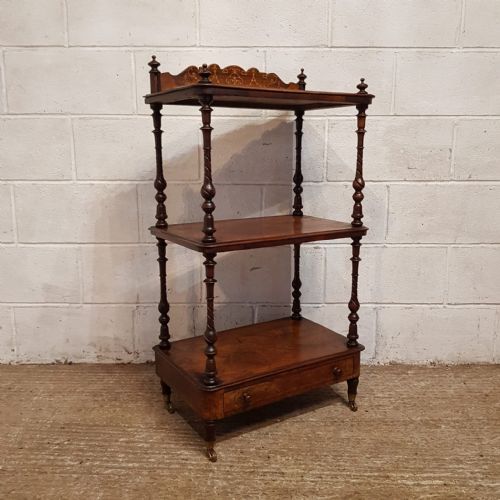


Antique Music Stand Shelf
An antique music stand shelf combines tiered display space with dedicated storage for scores, bringing practical elegance to a room.
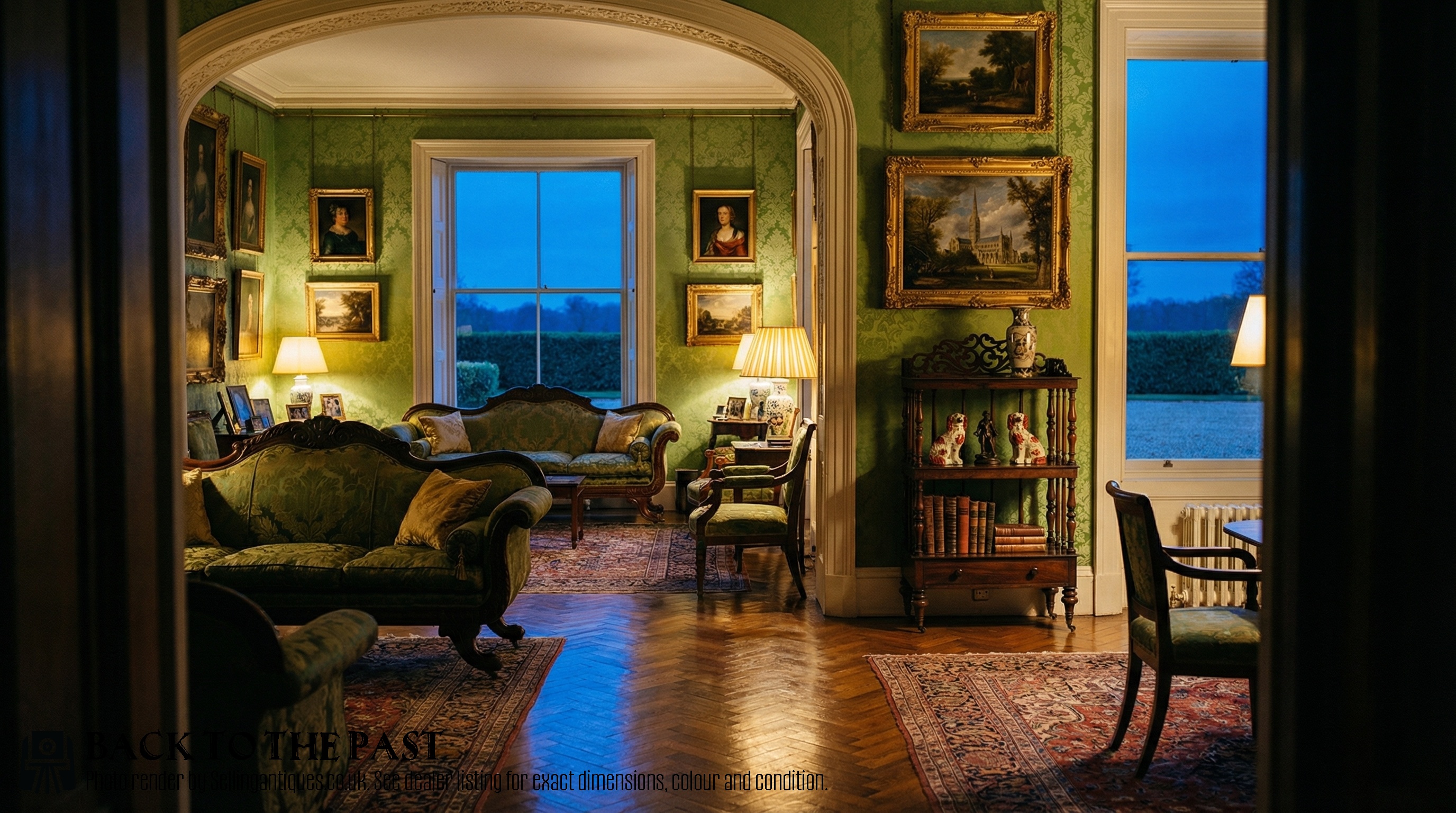
Antique Music Stand Shelf
When you search for an antique music stand shelf, you are looking at multi-functional furniture designed to hold books, sheets of music, and display objects.
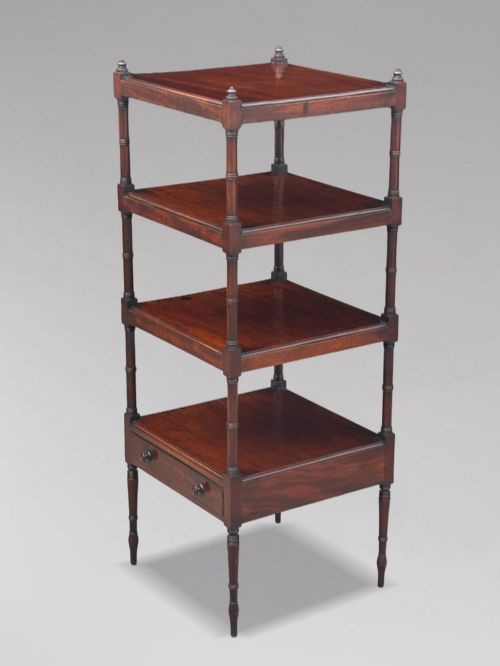
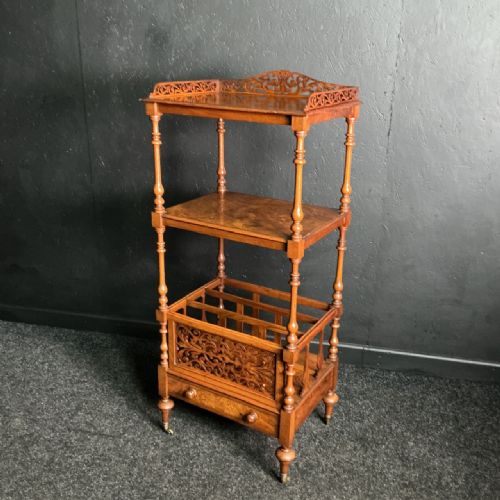
The pieces on this page span the 19th Century, Victorian, and Regency periods, frequently taking the form of whatnots, etageres, and canterburys.
Mahogany, burr walnut, and rosewood dominate the construction, often incorporating drawers, reading stands, or tiered shelving units.
How these pieces were made
Cabinet makers utilised dense hardwoods such as mahogany, walnut, and rosewood, applying fine veneers like burr walnut to visible surfaces.
Details such as ebony inlay, parcel gilding, glass panels, ceramic fittings, and turned feet with castors show the range of craftsmanship.
Structural elements include tiered platforms supported by slender columns, vertical partitions for sheet music in canterburys, and adjustable reading desks.
Several pieces double as reading stands, proving that Victorians took their sheet music very seriously indeed.
What varies in quality
The distinction between standard items and the finest work lies in the selection of timbers, such as highly figured burr walnut or rich rosewood, and the crispness of any inlay.
Attribution to notable workshops like Gillows or makers such as Gabriel Viardot elevates a piece through superior joinery, thoughtful multi-functional design, and balanced proportions.
Original hardware, such as castors and handles, alongside well-preserved internal divisions in music cabinets and canterburys, separates well-maintained examples from altered ones.
Gabriel Viardot·Gillows
The Antique Music Stand Shelf Glossary
- Canterbury
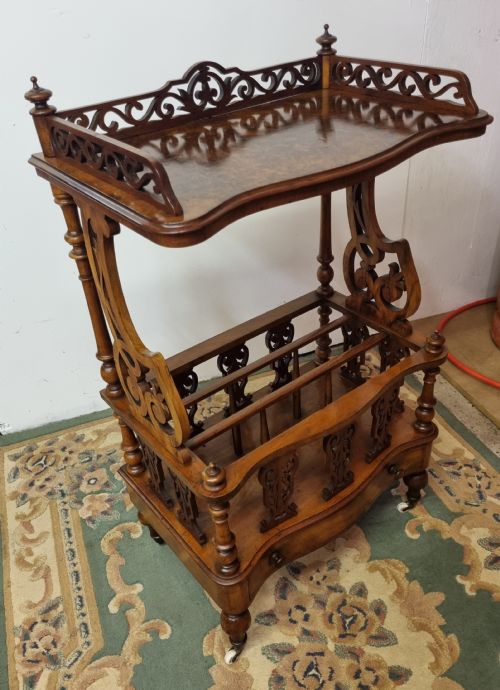
- A low piece of furniture featuring vertical partitions designed to hold sheet music or folios. Many examples incorporate a drawer below the divisions.
- Etagere
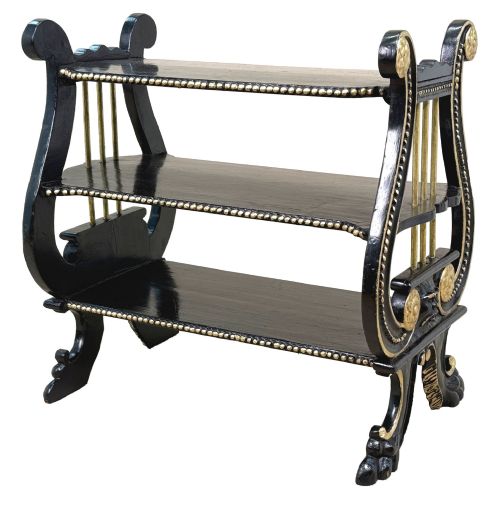
- A French term for a piece of furniture consisting of a number of open shelves for displaying small objects. They appear in ebonised and rosewood finishes.
- Japonisme
- A style reflecting late 19th-century European interest in Japanese arts. It influences the decorative details on cabinets and etageres from the period.
Antique Music Stand Shelf: Frequently Asked Questions
What is a Canterbury whatnot?
A Canterbury whatnot combines tiered open shelving with a low slatted compartment specifically built for holding sheet music.
This hybrid form allowed owners to display decorative objects on top while keeping performance scores organised underneath.
How do I date a Victorian piece?
Dating relies on timber choices, such as the preference for burr walnut during the mid-Victorian era, alongside construction methods.
Turned feet, original castors, and specific inlay styles help narrow down the decade of manufacture within the 19th century.
Where were these pieces used?
These pieces sat in drawing rooms and parlours to hold music for piano practice while displaying small ornaments.
Their multi-functional nature made them useful surfaces for reading stands and general household storage.
Are all these pieces made of mahogany?
While mahogany is common across Regency and 19th-century examples, walnut, burr walnut, and rosewood appear frequently.
Some etageres also incorporate ebonised finishes and parcel gilding to achieve a distinct visual effect.