


Black Ebonised Shelf
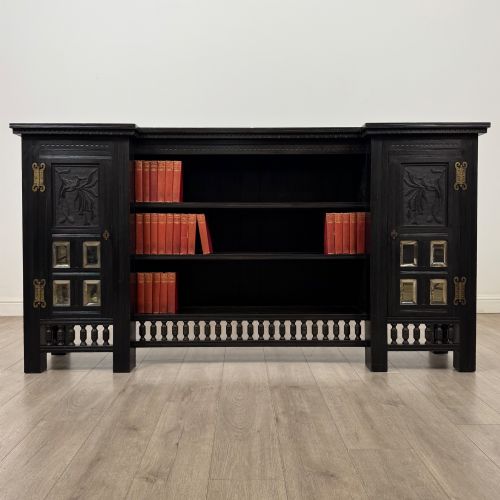
A black ebonised shelf brings dark, sharp lines to a room, offering a sturdy stage for displays through Victorian and later periods.
Black Ebonised Shelf
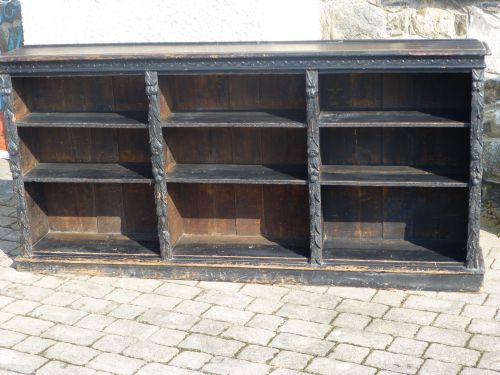
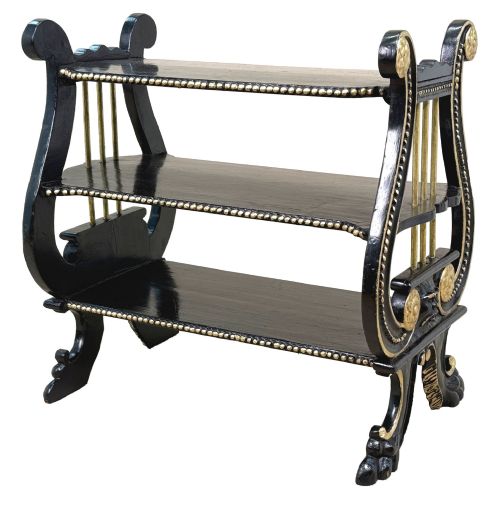
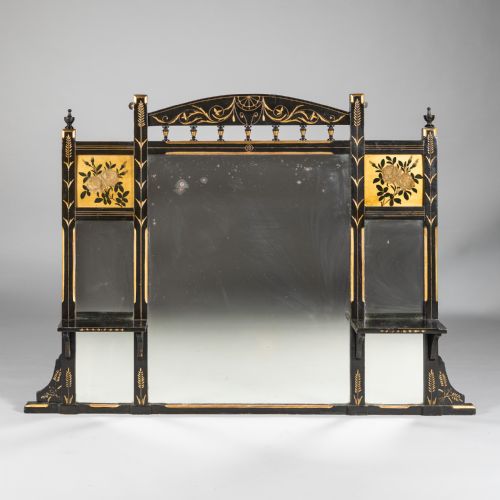
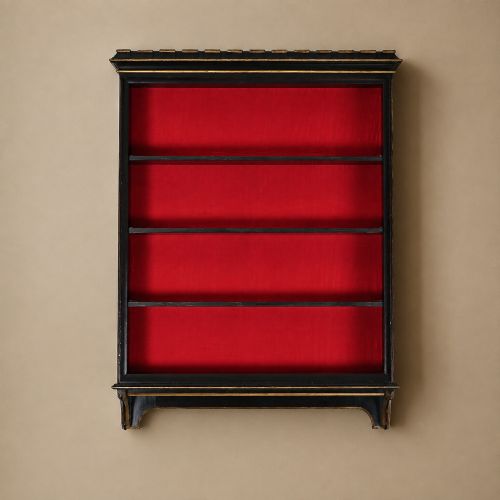
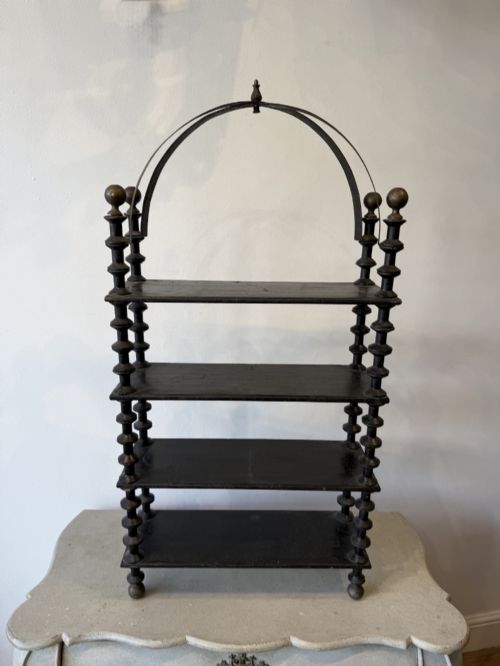
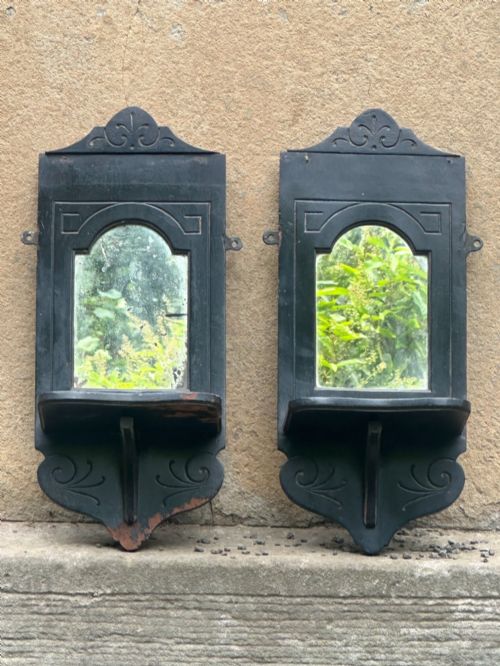
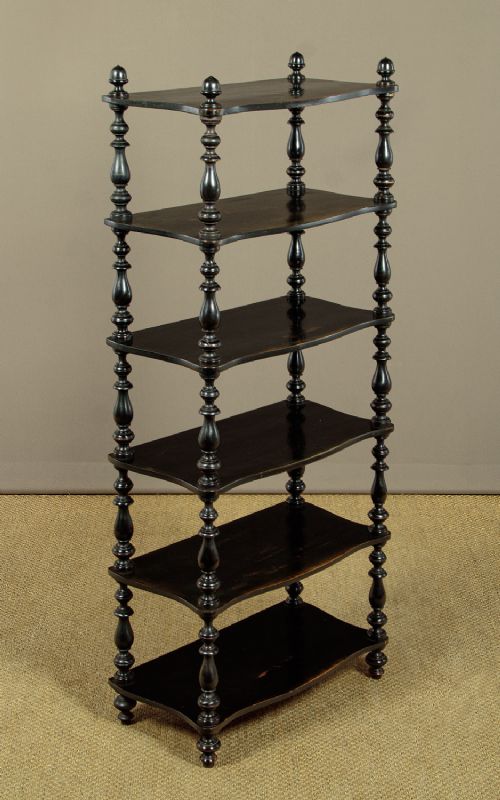
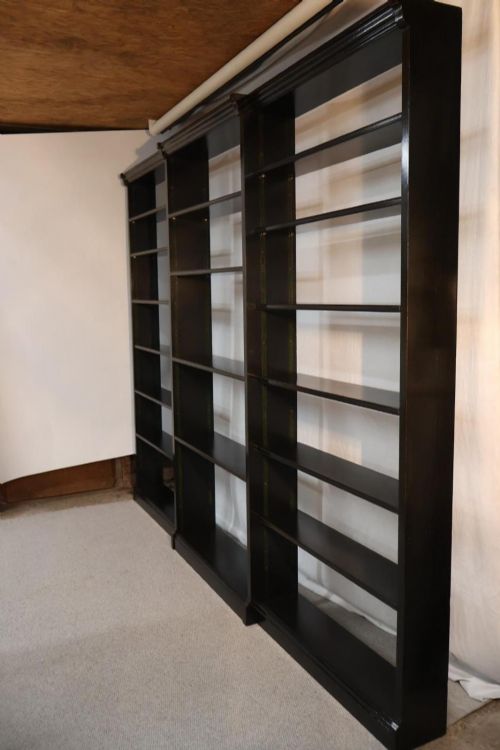
A black ebonised shelf search reveals a variety of dark timber furnishings, most frequently encountered as open bookcases, multi-tiered étagères, wall-hanging bookcases, and corner whatnots from the Victorian era and the late nineteenth century. These pieces draw on aesthetic movement and gothic revival styles, often integrating open storage with stepped tiers designed for display.
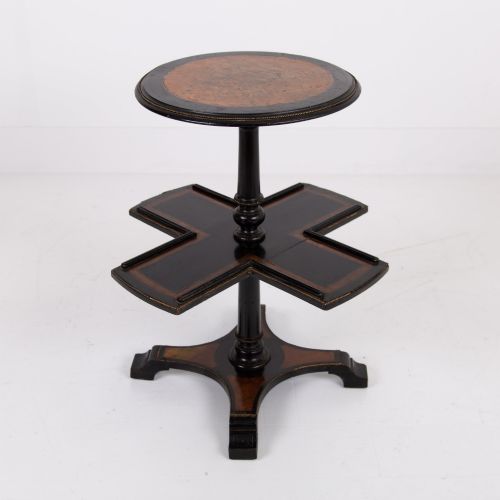
The material vocabulary spans across ebonised wood and timber, sometimes accented with parcel gilding, brass mounts, or inlaid amboyna and marquetry. Origin dates stretch from the Georgian period through the nineteenth century up to nineteen thirty, showing how makers adapted dark finishes across bookcases, tables, and mirrors.
Materials and construction methods
Workshops achieved the dense black finish by ebonising timber, a process that stained or treated wood to imitate expensive ebony. Craftsmen frequently combined this dark surface with parcel gilding, gold leaf, or bright brass mounts to create high contrast along architectural mouldings and shelves.
Joinery techniques matched the functional demands of each object, from carved low bookcases with adjustable shelves to multi-tiered dumb waiters and wall-fixed brackets. Surfaces often received paint or lacquer alongside the ebonisation, while decorative details incorporated glass, enamel, and ormolu.
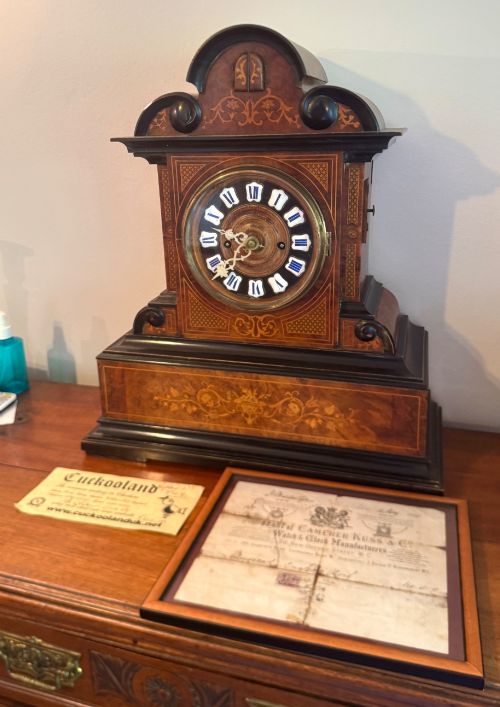
Some shelves once held steamship timekeeping records.
Distinctions in craftsmanship and design
Quality rests upon the crispness of the carving, the integrity of the ebonised surface, and the precision of any parcel gilding or brass mounts. Pieces with fine inlays of amboyna or marquetry demonstrate greater workshop ambition than plain stained equivalents.
Proportion and structural balance separate standard utility pieces from sophisticated examples influenced by specific design movements. The integration of secondary materials like ormolu or enamel points to higher tiers of nineteenth century production.
Cottier and Co.·George Edmund Street·Henri Dasson·John Bull of Bedford·Thomas A Paris·Desbois and Wheeler·D Robertson of Perth·Wm Gilbert
The Black Ebonised Shelf Glossary
- Ebonised
- Wood finished to resemble ebony through staining or painting. This technique gained immense popularity during the Victorian period.
- Étagère
- A piece of furniture consisting of open shelves for displaying small objects. These tiered stands appear frequently in nineteenth century inventories.
- Parcel Gilt
- Partially gilded with gold leaf, leaving areas of the underlying wood or ebonised surface exposed. This creates a sharp visual contrast.
- Whatnot
- A set of open shelves used for ornaments and books. They span corner formats and multi-tiered freestanding designs.
- Ormolu
- Gilded bronze mountings applied to furniture and clocks. It provides metallic highlight against dark ebonised timber.
Black Ebonised Shelf: Frequently Asked Questions
What periods do these pieces date from?
The selection spans from the Georgian era through the Victorian nineteenth century up to the early twentieth century. Most examples cluster around the Victorian aesthetic and gothic revival movements.
Dates are determined by stylistic markers, construction methods, and recorded workshop attributions rather than fixed stamps.
How were these shelves used originally?
They served as display surfaces for books, ornamental objects, and clocks in principal rooms of the house. Multi-tiered étagères and whatnots held porcelain and small collectables.
Open bookcases and corner units provided accessible storage for libraries and parlours during the nineteenth century.
How do I live with ebonised furniture?
Ebonised pieces provide strong, dark silhouettes that anchor light-coloured walls and contrast well against patterned wallpapers. Their neutral black tone allows them to mix easily with walnut, mahogany, and gilt objects.
Keep them away from direct sunlight and excessive heat to protect the dark finish and any parcel-gilded details.
How do I tell styles apart?
Gothic revival pieces feature pointed arches and heavy architectural carving, whereas aesthetic movement items favour leaner, more refined lines with Japanese-inspired motifs. Victorian work often combines ebonising with incised gilding and contrasting wood inlays.
Examining the structural motifs and secondary woods helps place an item within its specific nineteenth century context.