


Khorasan Wool Carpet
A khorasan wool carpet brings the rich weaving traditions of north-east Persia directly to the floor.
Khorasan Wool Carpet
When you search for a khorasan wool carpet, you look at hand-knotted floor coverings originating from the Khorasan region in north-east Persia. These pieces span the late nineteenth century and the early twentieth century, taking the form of large rugs and oversize carpets.
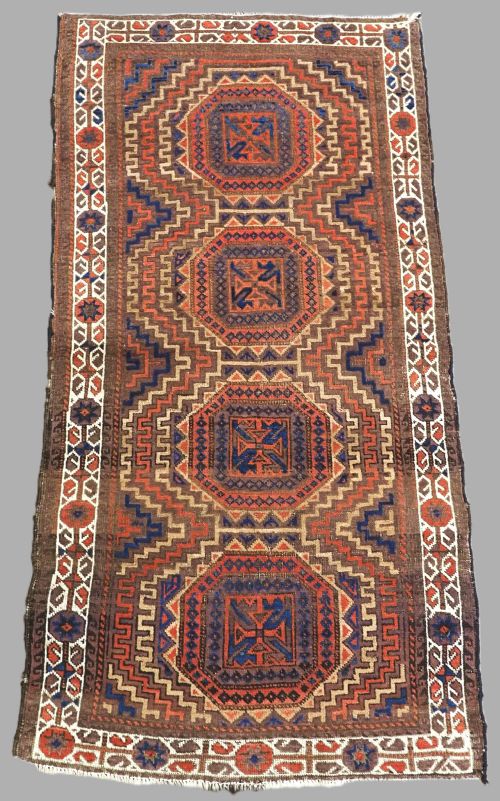
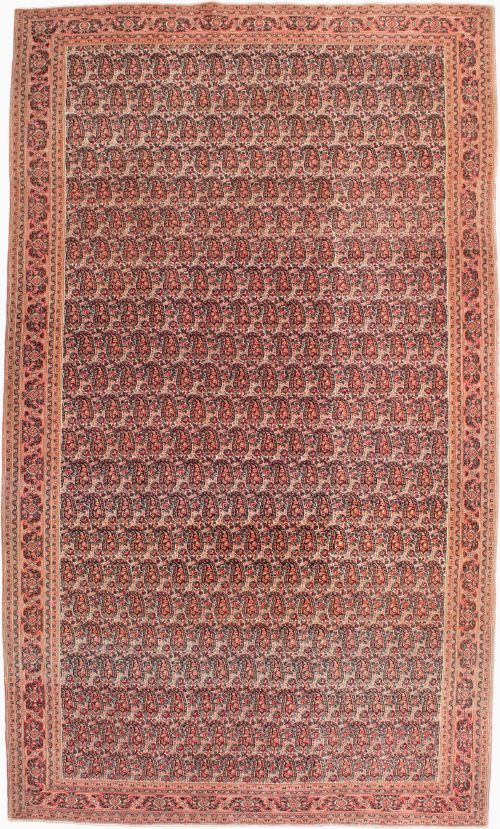
You meet variations that blend regional identities, including Baluch tribal styles, Quchan Kurdish work, and specific weaving groups like the Salar Khani and Mahdad Khani. Designs frequently incorporate geometric lattice motifs such as the mina khani and calyx patterns, alongside large guls.
The most common version you encounter on this page is an antique Khorasan Baluch rug produced around eighteen-eighty to nineteen-hundred. These items reflect the nomadic and village traditions of the region, utilising traditional layouts handed down through generations.
How they were made
Makers construct these carpets using durable wool for the pile, often combined with camel wool for specific tonal variations and rustic texture. Foundations typically rely on cotton or wool warps and wefts to provide structural stability.
Weavers knot the pile by hand onto the foundation, employing traditional techniques native to Persian tribal and nomadic workshops. Natural dyeing traditions impart deep, enduring tones to the wool yarns.
Khorasan Wool Carpet Retail Price Guide 2026
Typical asking prices for khorasan wool carpet among the pieces listed under this phrase on Sellingantiques today, from the lower quarter to the upper quarter. They describe what is for sale here now, not the wider market.
Several pieces feature camel wool introduced specifically to provide a delightfully rustic handle underfoot.
What varies in quality
The finesse of the knotting and the complexity of the design layout distinguish finer examples from simpler village work. Tighter execution in lattice patterns and lattice variants shows greater technical skill by the weaver.
The choice of materials also elevates certain pieces, particularly those incorporating fine camel wool or exceptionally well-prepared sheep wool. Consistency in the weave and clarity of regional motifs further separate standard tribal pieces from exceptional regional carpets.
The Khorasan Wool Carpet Glossary
- Khorasan
- A large province in north-east Persia known for producing distinctive carpets and rugs with varied tribal influences.
- Gul
- A medallion-like design motif frequently found repeating across tribal rugs and carpets.
- Mina khani
- A repeating geometric lattice pattern usually enclosing stylized flowers or rosettes.
- Calyx lattice
- A repeating network motif based on the sepals of a flower, common in regional Persian weaving.
- Salar Khani
- A specific sub-group of Baluch weavers originating from the Khorasan region.
Khorasan Wool Carpet: Frequently Asked Questions
How do I identify a khorasan wool carpet?
Look for characteristic regional designs such as mina khani layouts, calyx lattice patterns, or Baluch tribal influences originating from north-east Persia.
Dates generally centre around the late nineteenth and early twentieth centuries, often featuring wool or camel wool construction.
Where were these carpets made?
These pieces originate from the Khorasan region in north-east Persia, encompassing work by Kurdish tribes in Quchan and various Baluch weaving groups.
Production took place across villages and nomadic camps rather than large urban manufactories.
What materials make up the pile?
The pile consists primarily of sheep wool, occasionally incorporating camel wool for a more rustic texture and natural colour variation.
Foundations generally utilise cotton or wool to support the hand-knotted structure.
How do I care for an antique rug?
Protect the piece by placing it in a low-traffic area or utilising a breathable underlay to prevent sliding and excessive wear.
Vacuum gently without a rotating brush bar and consult a specialist for professional cleaning when necessary.
What is a Baluch style rug?
Baluch rugs stem from nomadic and semi-nomadic tribes inhabiting the borderlands of Persia, Afghanistan, and Balochistan.
In the Khorasan context, these pieces merge traditional Baluch motifs with regional Persian weaving techniques.