



Khorasan Baluch Area Carpet
A khorasan baluch area carpet brings tribal craftsmanship into a room through rich woolwork and traditional motifs.
Khorasan Baluch Area Carpet
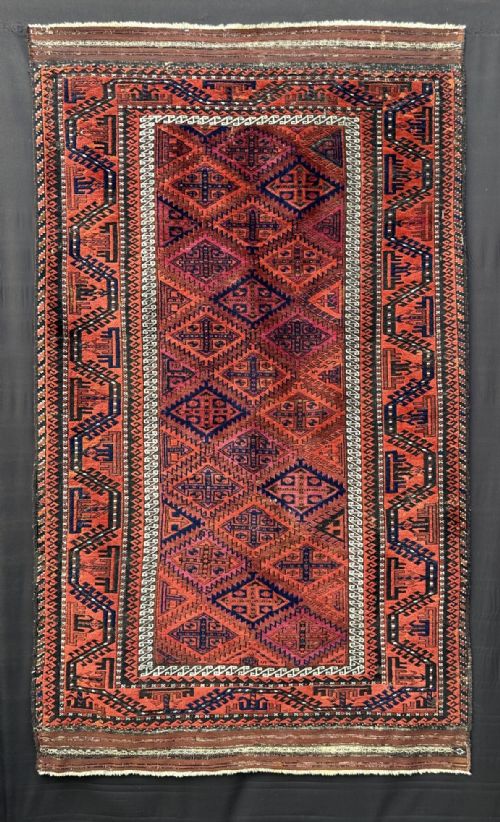
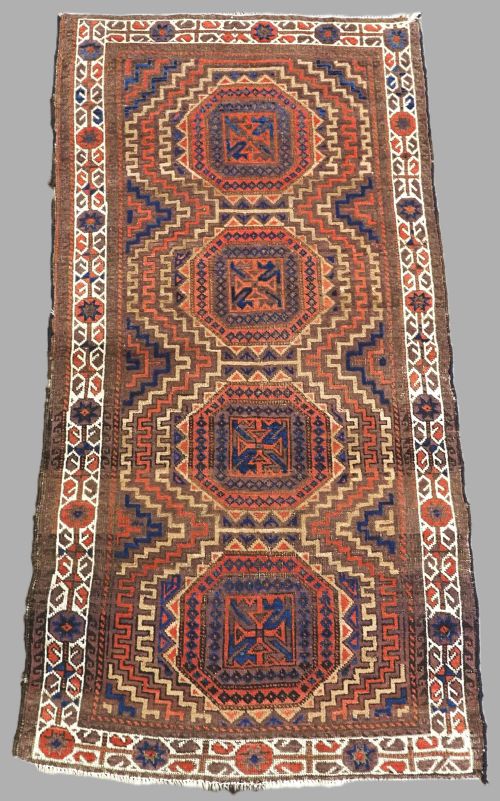
A khorasan baluch area carpet represents the weaving traditions of nomadic and tribal groups operating within the Khorasan region. These pieces appear primarily as rugs and area rugs, spanning periods from the nineteenth century into the early twentieth century, specifically around eighteen eighty through nineteen hundred.
Buyers encounter distinctive regional patterns such as the mina khani design, calyx lattice work, and fine geometric lattice arrangements. Tribal identifiers like Salar Khani and Mahdad Khani frequently emerge alongside Afghan Arab and Quchan Kurd attributions.
The aesthetic bridges Persian tribal artistry with nomad utilitarian output, creating floor coverings that function equally as historical artefacts and grounded decorative elements. Most examples on this page reflect these specific Khorasan Baluch origins and nineteenth to early twentieth century dates.
How they were made
Weavers utilised natural sheep wool and camel wool for the pile and foundation yarns, providing durability and textural depth. Cotton also appears in the structural elements of these tribal floor coverings, offering stability to the wider format.
The construction relies on traditional hand-knotting techniques executed by tribal makers working within the Khorasan region. Vegetable and natural dye sources yielded the characteristic deep tones seen across the surviving nineteenth and early twentieth century output.
Khorasan Baluch Area Carpet Retail Price Guide 2026
Typical asking prices for khorasan baluch area carpet among the pieces listed under this phrase on Sellingantiques today, from the lower quarter to the upper quarter. They describe what is for sale here now, not the wider market.
Camel wool brings a cosy, rustic resilience that makes these historic nomad floors feel wonderfully grounded beneath bare feet.
What varies in quality
Knot density and precision of the lattice or gul design dictate the refinement of the weaving. Finer execution in motifs such as the mina khani variant separates standard utilitarian pieces from more accomplished tribal work.
Material selection influences tactile character, particularly where weavers incorporated soft camel wool alongside standard sheep fleece. The crispness of the drawing in geometric fields and the retention of structural integrity across the rug define the upper tier.
The Khorasan Baluch Area Carpet Glossary
- Gul
- A medallion motif frequently repeated across tribal carpets. This octagonal design element often indicates specific regional or clan origins.
- Mina Khani
- A repeating pattern of daisy-like flowers linked by delicate lattices. This floral arrangement appears across multiple Khorasan Baluch rugs.
- Calyx lattice
- A geometric framework incorporating flower bud motifs within a connected grid. It forms a structured field pattern on nineteenth-century examples.
- Camel wool
- Natural undyed fibre sourced from camels, utilised by tribal weavers for its warmth and soft handle. It often imparts a distinct golden-brown tone.
- Salar Khani
- A sub-group designation within Baluch weaving traditions. Pieces carrying this attribution display recognisable design nuances tied to specific tribal makers.
Khorasan Baluch Area Carpet: Frequently Asked Questions
What is a khorasan baluch area carpet?
A khorasan baluch area carpet is a hand-knotted tribal rug produced in the Khorasan region by nomadic and village weavers. These pieces date from the nineteenth and early twentieth centuries.
They display characteristic geometric patterns, lattice designs, and traditional tribal motifs rooted in Persian and Afghan heritage.
How do I date these carpets?
Dating relies on stylistic analysis of the guls, lattice variants, and structural materials used by the weavers. Pieces on this page typically span from eighteen eighty to nineteen ten.
Examination of the wool quality, dye palette, and regional attributions like Salar Khani further helps establish the period of manufacture.
Where were these carpets made?
These rugs originated in the Khorasan province of Persia, often created by Baluch tribes, Kurdish groups such as the Quchan Kurds, and Afghan communities. The makers travelled and traded across these borderlands.
Their geographical crossover influenced the diverse design vocabulary found within the surviving inventory.
How should I live with one?
Place your carpet in low to medium traffic areas to preserve the historical wool pile and structural foundation. Use a quality underlay to prevent slipping and reduce friction against hard floors.
Keep them away from direct sunlight to protect the natural dyes used by the nineteenth-century weavers.