





Rustic Tribal Floor Rug
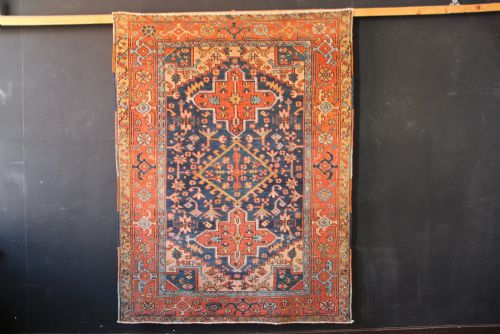
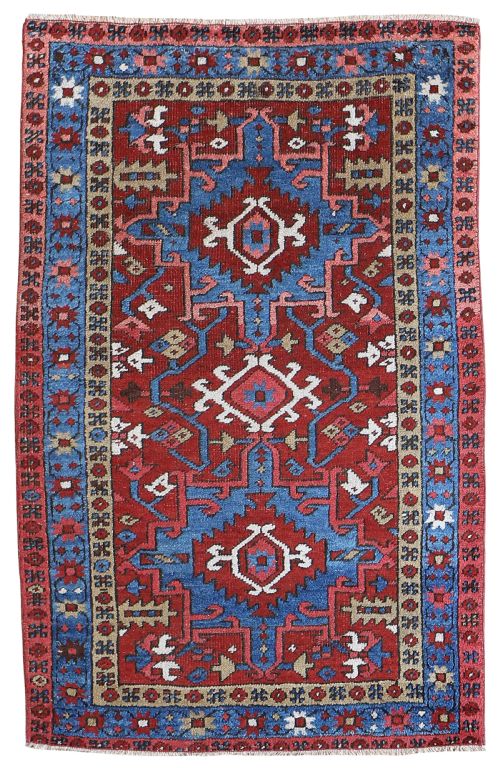
These rustic tribal floor rug examples are woven floor coverings carrying village designs and nomad patterns.
Rustic Tribal Floor Rug
A rustic tribal floor rug brings dense wool textures and geometric village designs directly to the floor. When you search for a rustic tribal floor rug, you encounter pieces originating from Persian, Anatolian, and Afghan weaving traditions. These textiles span periods from the mid nineteenth century through the early twentieth century.
The format covers small area formats, village carpets, and kilim rugs. You are most likely to meet Heriz, Afghan village, and Kurdish examples on this page. Each object reflects the vernacular weaving traditions of specific tribal groups and regional hubs.
Materials and construction
These textiles rely primarily on wool, hand-spun wool, and occasional camel wool foundations and piles. Cotton also appears in structural elements depending on the specific regional origin. Weavers utilised natural dyes to achieve the varied colour palettes seen across the inventory.
Construction methods involve hand-knotting and flat-weaving techniques passed down through generations. The combination of local wool grades and traditional village looms produces the heavy, durable handle characteristic of these floor coverings.
Rustic Tribal Floor Rug Retail Price Guide 2026
Typical asking prices for rustic tribal floor rug among the pieces listed under this phrase on Sellingantiques today, from the lower quarter to the upper quarter. They describe what is for sale here now, not the wider market.
Materials documented across the current selection comprise standard wool, hand-spun wool, camel wool, and cotton.
Assessing quality
Quality rests in the integrity of the wool, the clarity of the tribal motifs, and the consistency of the weave. Tighter knots and heavier hand-spun wool foundations generally separate the sturdier village pieces from lighter or more worn examples.
The handling of natural dye palettes and the originality of regional designs further distinguish the finer rugs. Better examples maintain structural soundness despite age and active use.
The Rustic Tribal Floor Rug Glossary
- Kilim
- A flat-woven carpet or rug produced without a pile. These pieces rely on interlocking warp and weft threads to form geometric patterns.
- Heriz
- A style of Persian carpet originating from the Azerbaijan region known for bold geometric medallions and strong structural designs.
- Bakshaish
- An antique Persian carpet style associated with large-scale geometric patterns and a distinctly rustic, open aesthetic.
- Baluch
- A term describing tribal rugs woven by Baluch nomads, typically characterised by deep dark tones and geometric field designs.
- Warp
- The vertical threads stretched tightly on a loom before the weaving process begins. The foundation upon which the pile is knotted.
Rustic Tribal Floor Rug: Frequently Asked Questions
How do I clean an old wool rug?
Vacuum gently without a rotating brush head to protect the wool pile and delicate edges. Professional specialist cleaning remains safest for antique textiles.
Avoid immersion washing or harsh chemical agents at home. Address spills promptly by blotting rather than rubbing the fibres.
Are these rugs suitable for heavy traffic?
Dense wool construction and sturdy village weaves allow these rugs to handle regular footfall in domestic spaces. Using a quality underlay prevents slipping and cushions the fibres against hard floors.
Rotating the rug periodically ensures even wear patterns across the surface over time.
How do I identify a tribal design?
Tribal designs typically feature repeating geometric motifs, stepped medallions, and stylized animal or plant forms rather than precise floral curves. These patterns reflect local village traditions and nomad symbolism.
Asymmetry and variations in the wool dye lots often indicate hand-woven village production.
What is camel wool used for?
Camel wool provides a durable, naturally pigmented fibre found in specific tribal rugs. It adds warmth and a distinct tactile quality to the pile.
Weavers often utilised undyed camel hair to create natural golden-brown background tones.