


Joined Oak Panel Chest
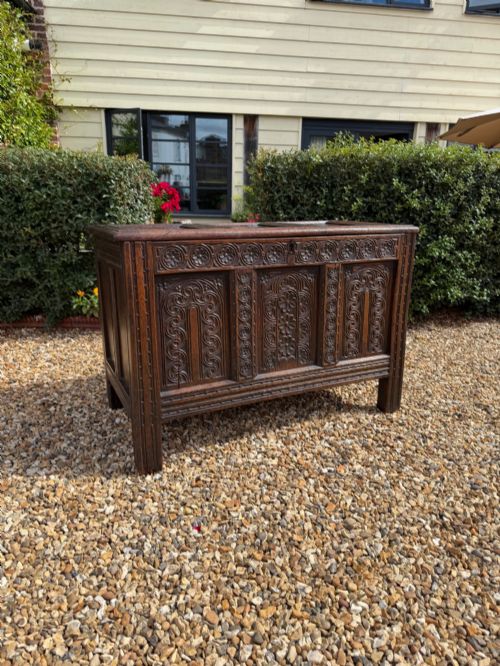
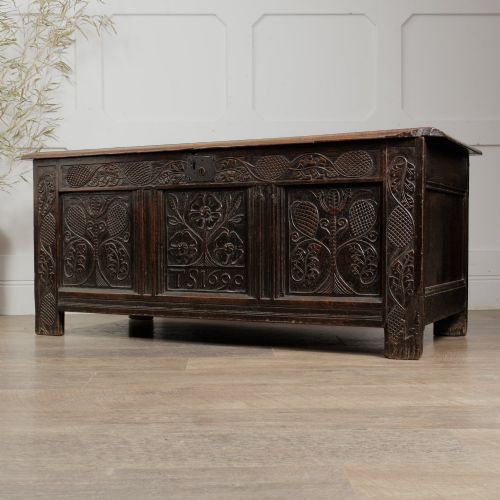
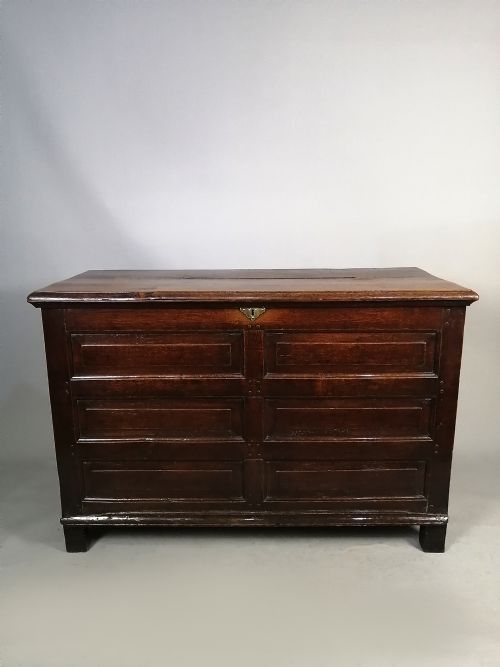
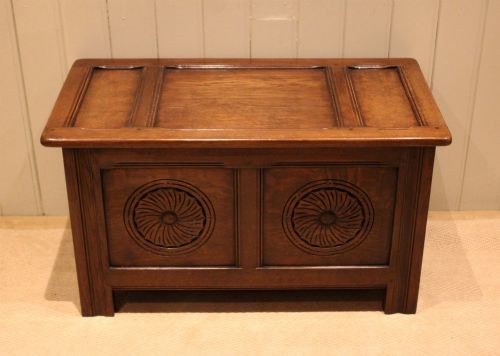
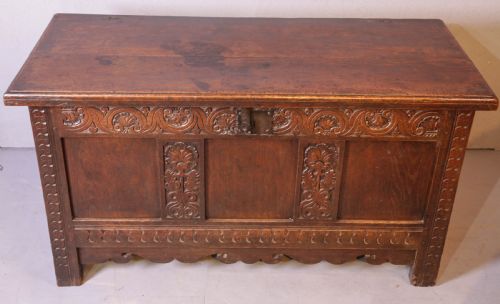
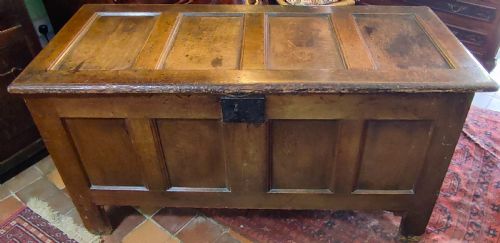
A joined oak panel chest is a heavy storage box built with pegged frame and panel construction that anchors a traditional interior.
Joined Oak Panel Chest
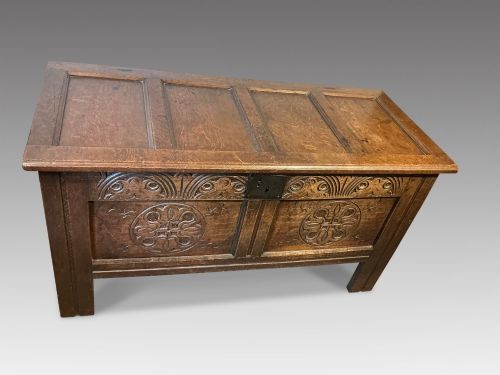
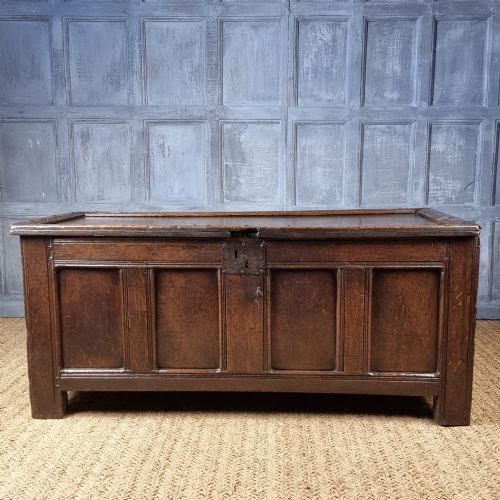
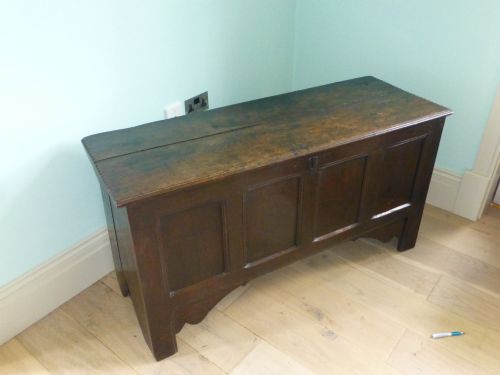
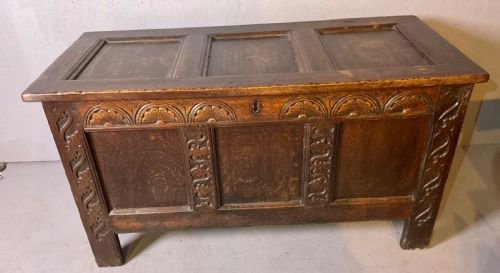
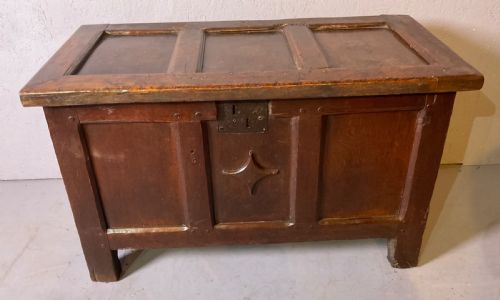
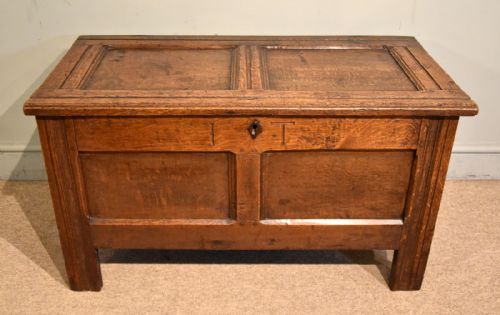
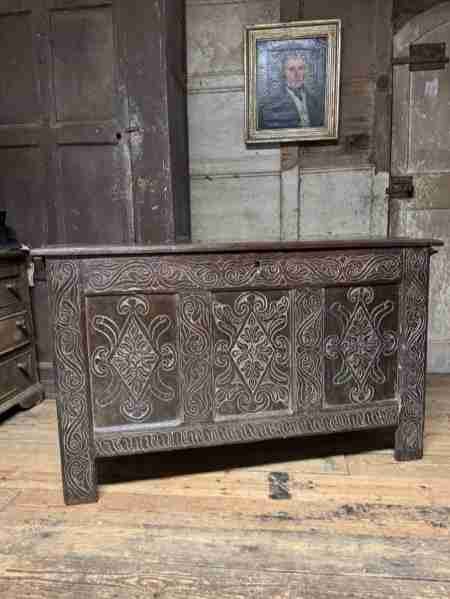
A joined oak panel chest is a sturdy box built to hold household goods, textiles and valuables in early domestic settings. When you search for a joined oak panel chest, you encounter sturdy timber boxes fashioned with stiles and rails enclosing inset panels.
Most examples found here date from the seventeenth century, spanning Elizabethan, Jacobean, Charles I, and later Georgian periods. These pieces frequently appear as simple coffers, double or triple panel chests, and occasionally mule chests fitted with lower drawers.
How they were made
Makers built these items using heavy oak timber shaped with hand tools and held together by mortise and tenon joints secured with wooden pegs. Iron and brass hardware, including hinges and lock plates, fastened the lids and added security to the storage space.
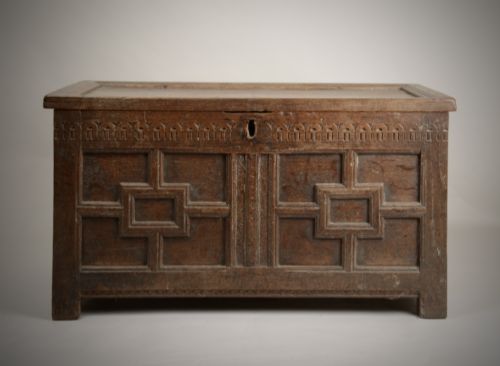
Surface decoration relied on linenfold carving, geometric mouldings, and incised panels worked directly into the timber. Carpenters selected quartersawn oak to ensure stability and reveal the characteristic medullary rays of the wood.
Materials recorded across the inventory include solid oak, iron, and brass utilised in hinges, locks, and structural framing.
What varies in quality
Quality rests upon the crispness of the carpentry and the depth of the carved detail on the front panels and rails. Pieces showing well-balanced proportions and original boarded lids command greater attention from collectors.
The survival of an honest surface with good colour and historic patination distinguishes superior examples from heavily restored boxes. Construction details such as untouched interior tillers and uncompromised frame joints elevate specific chests above standard utility pieces.
The Joined Oak Panel Chest Glossary
- Joined construction
- A method of framing furniture using mortise and tenon joints secured with wooden pins rather than simple board boxes. This technique allowed timber to expand and contract with seasonal humidity changes.
- Panel
- A thin board fitted into a grooved frame of stiles and rails. This design prevents warping while creating decorative depth across the front of a chest.
- Linenfold
- A style of carved wooden panelling resembling folded cloth. It appears frequently on sixteenth and seventeenth century pieces.
- Mule chest
- A storage chest featuring one or more drawers built into the base beneath the main compartment. This form emerged as households sought easier access to stored linens.
- Stile
- The vertical upright member in the frame of a joined chest. Stiles often extend downward to form the feet of the piece.
- Rail
- The horizontal framing member fitted between stiles to hold panels in place. Top and bottom rails define the structural limits of a chest face.
Joined Oak Panel Chest: Frequently Asked Questions
What is a joined oak panel chest?
A joined oak panel chest is a rigid storage box constructed from framed oak timbers rather than plain boards. These boxes utilised pegged joinery to create a stable container for household goods.
Craftsmen built them with stiles, rails, and inset panels that often displayed carving or geometric mouldings. They served as primary furniture for holding clothes, documents, and valuables in early homes.
How were these chests used historically?
These chests functioned primarily for secure storage and transport of domestic textiles, woollens, and personal wealth. Families kept valuable bedding, silver, and legal papers inside them.
In many interiors, a heavy chest doubled as a bench for seating or a surface for resting objects. Their portability allowed households to move belongings during travel or relocation.
How do I live with a historic oak chest?
Placing a historic oak chest in a room requires stable environmental conditions away from direct heat sources and sudden humidity swings. Solid oak responds to dry air by shrinking and to dampness by swelling.
Keep the top surface clear of heavy moisture and maintain the timber with appropriate wax polish. Allowing airflow around the piece preserves the wood and historic finish.
How can I tell the period of a chest?
Dating relies on observing construction methods, tool marks, joinery styles, and decorative motifs like linenfold or geometric mouldings. Sixteenth and seventeenth century pieces typically show pegged mortise and tenon frames with hand-riven boards.
Later pieces from the eighteenth century incorporate drawer additions, such as mule chests, and softer mouldings. Examining the interior floor boards and hinge types further clarifies the timeline of manufacture.