
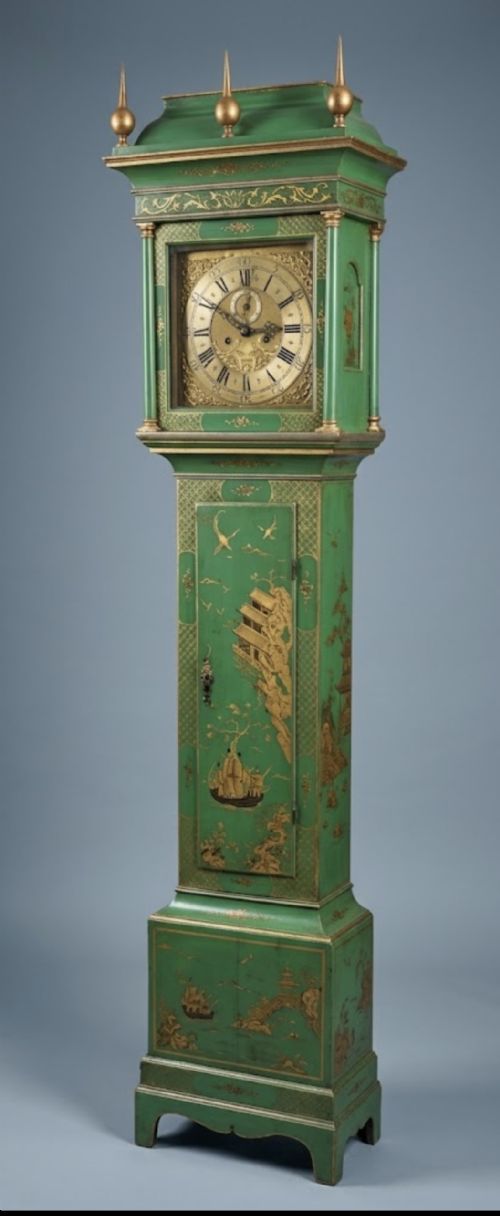
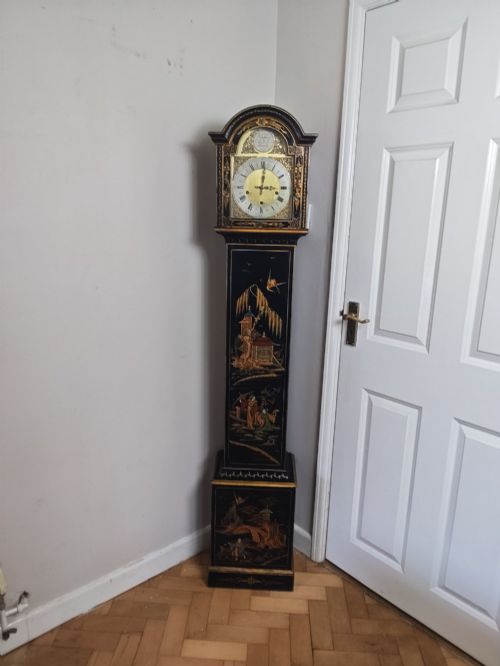
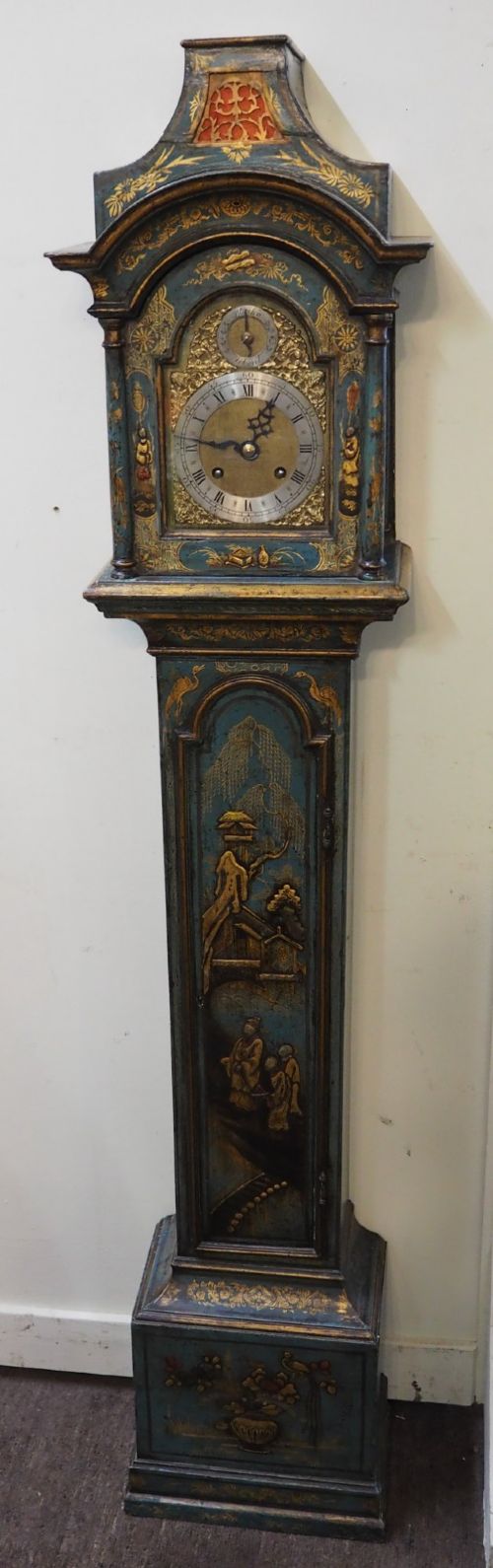
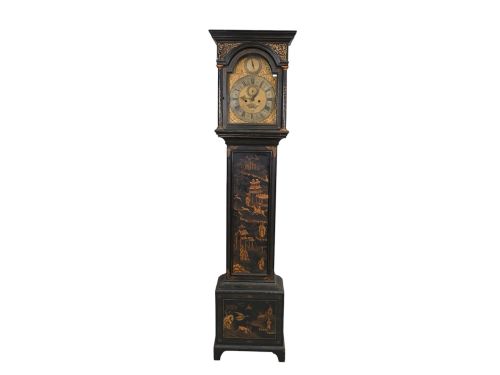


Japanned Tall Case Clock
A japanned tall case clock brings rich hand-painted chinoiserie decoration and a towering presence into a room.
Japanned Tall Case Clock
A japanned tall case clock combines a tall wooden housing with intricate orientalist painted decoration, measuring time on a brass movement inside.
The examples gathered here span the Georgian and 18th century periods alongside later 19th century and 1930 interpretations.
Buyers will encounter grandfathers, smaller grandmother clocks, and musical or automaton movements executed in lacquer, gilt, and gold leaf.
How they were made
Carpenters built tall wooden cases from timber before applying layers of lacquer to create a smooth canvas for decoration.
Craftsmen utilised gold leaf and gilt paint to render raised chinoiserie figures, landscapes, and architectural motifs across the surface.
Some models feature hidden automaton figures that dance or move as the clock strikes the hour.
What varies in quality
The crispness and depth of the raised lacquer work dictate the visual success of the decorated surface.
Signatures by recorded makers on the dial elevate the horological importance of the piece above unsigned examples.
The proportions of the wooden case and the preservation of the original gilt detailing separate standard examples from finer works.
John fielder of Alton·William Kipling London·Thomas Utting of Yarmouth
The Japanned Tall Case Clock Glossary
- Japanning
- European imitation of East Asian lacquerwork using resin varnishes and raised metallic decoration. This technique created the glossy painted surfaces seen on these clock cases.
- Chinoiserie
- European artistic style reflecting Chinese and East Asian motifs. It appears as whimsical figures, pagodas, and birds across the lacquer panels.
- Grandfather clock
- Tall pendulum clock enclosed in a wooden case standing directly on the floor. These tall case timepieces house weights and swinging pendulums.
- Automaton
- Moving mechanical figure or scene integrated into the clock dial. These figures animate as the clock operates.
Japanned Tall Case Clock: Frequently Asked Questions
How do I wind the clock?
Most tall case clocks utilise weights suspended on lines inside the trunk. Pulling the chains or winding the barrels draws the weights back to the top.
Take care not to pull too quickly or strain the internal brass gearing during the process.
Where should I place it?
Position the clock against a sturdy interior wall away from direct sunlight and heat sources. Temperature swings can affect both the wooden case and the lacquer finish.
A stable floor ensures the pendulum swings evenly and keeps accurate time.
How do I clean the case?
Dust the lacquered surfaces gently with a soft, dry cloth rather than using liquid polishes. Moisture can damage old lacquer and gilt decoration.
Professional conservators should handle any deeper cleaning of the painted panels.
What is a grandmother clock?
A grandmother clock is a smaller, more slender version of the traditional grandfather longcase clock. They were produced in various periods to fit rooms with lower ceilings.
Despite their reduced scale, they still house functional brass movements.