


Georgian Chinoiserie Longcase Clock
A georgian chinoiserie longcase clock brings painted lacquer and striking brass movements together, offering the height of 18th-century decorative ambition for your hallway.
Georgian Chinoiserie Longcase Clock
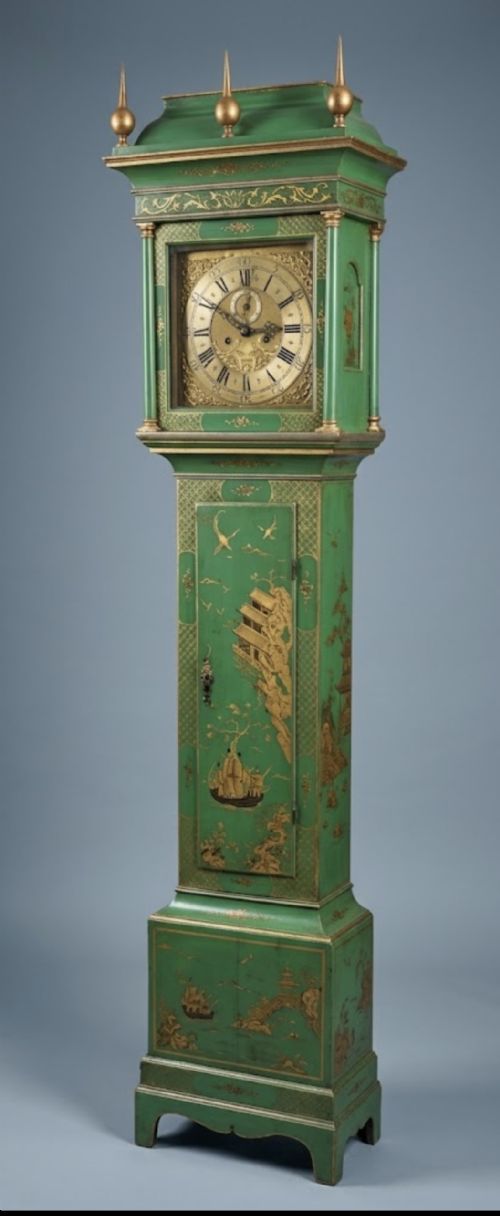
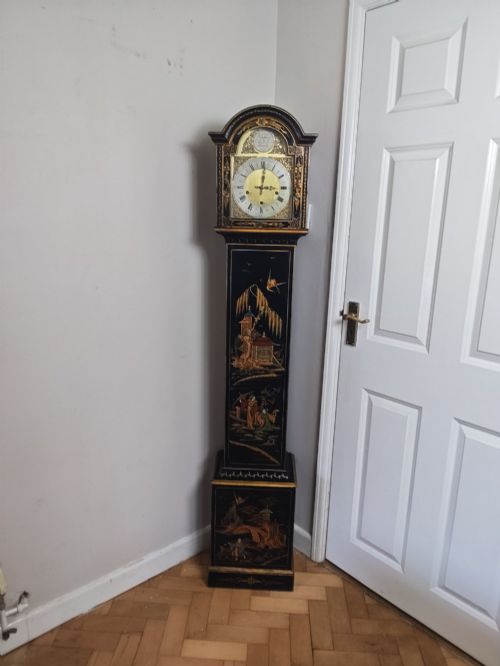
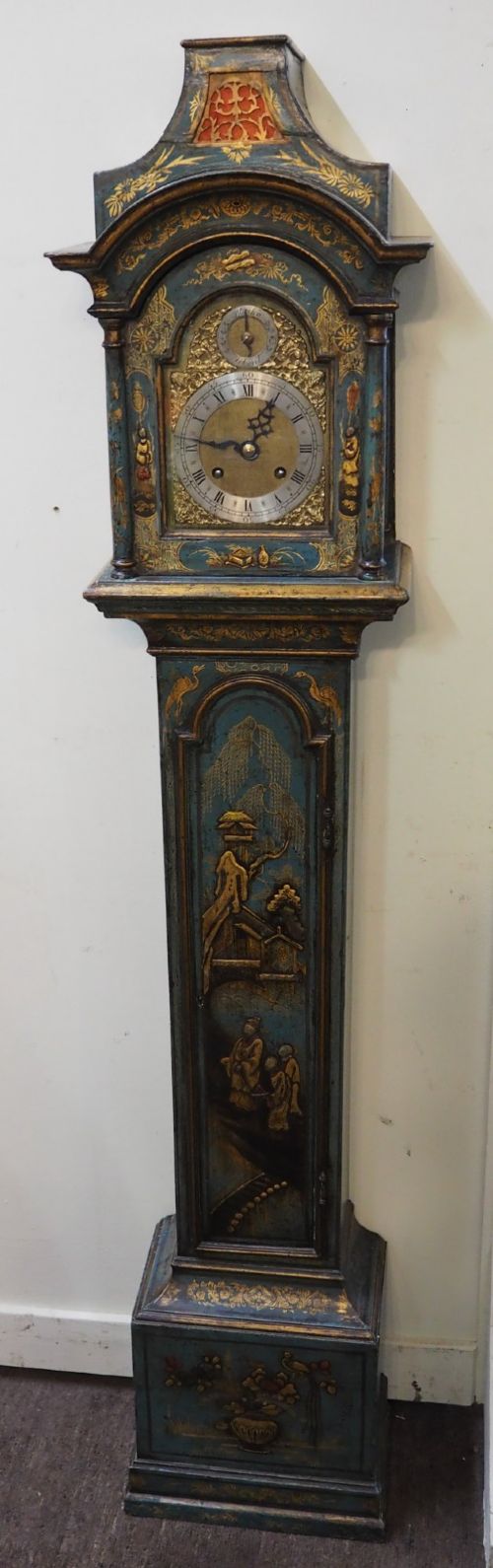
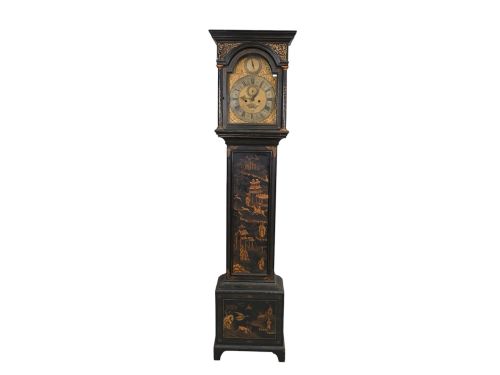
A georgian chinoiserie longcase clock represents the tall case timepiece tradition finished with decorative lacquer, japanned surfaces, and gilt detailing. These pieces predominantly date from the 18th century, spanning George I and George III periods alongside early Georgian eras, with occasional later 19th-century and 1930s grandmother clock variations.
The dominant forms on this page include green lacquered and dark green chinoiserie examples alongside blue lacquer and gilt-lacquer variants. Makers such as John Fielder of Alton, William Kipling London, Wise of Reading, Gardner of London, and Robert Berry appear across these 18th-century records.
How they were made
The construction of a georgian chinoiserie longcase clock relies upon wood carcases finished with specialist lacquer and japanned wood techniques. Artisans applied layers of varnish and pigment, often enriched with gold leaf and gilt work to depict figures, pavilions, and landscapes.
Mechanically, these clocks house brass movements designed to measure time across eight-day durations or alternative intervals. Glass panels protect the dial face, allowing visibility of the brass movement while shielding the delicate interior components from dust.
Some timepieces include a rocking Father Time figure, adding a literal tick of mortality to your hallway.
What varies in quality
The sophistication of the painted lacquer decoration separates standard examples from exceptional ones. Finer pieces display intricate gold leaf detailing and well-preserved japanned surfaces that retain their original depth of colour.
The reputation of the maker influences the standing of the piece significantly. Clocks bearing signatures from established London or provincial makers like William Kipling or Robert Berry command attention through their documented horological provenance.
John Fielder of Alton·William Kipling London·Wise of Reading·Gardner of London·Robert Berry
The Georgian Chinoiserie Longcase Clock Glossary
- Japanned wood
- European replication of East Asian lacquering techniques using heat-dried varnish layers. This finish created glossy, hard surfaces suitable for raised gilt decoration.
- Grandmother clock
- A smaller, more slender version of the traditional longcase clock. These scaled-down timepieces emerged in later periods while retaining similar dial layouts.
- Automaton
- A moving mechanical figure integrated into the clock dial. These mechanisms animate scenes such as Father Time to entertain the viewer.
- Brass movement
- The interior gear train and escapement constructed from brass. This metal provided the necessary durability and precision for accurate timekeeping.
- Longcase clock
- A tall freestanding weight-driven pendulum clock housed in a protective wooden case. The tall trunk accommodated descending weights over extended running periods.
Georgian Chinoiserie Longcase Clock: Frequently Asked Questions
Where should I place a longcase clock?
These tall timepieces suit high-ceilinged hallways, landings, or principal reception rooms where their height and decorative presence can be properly appreciated.
Ensure the floor surface is level and solid to maintain the accurate pendulum swing required by the brass movement.
How do I wind an 18th-century clock?
Winding involves raising the weights suspended inside the trunk using the appropriate key provided with the mechanism. Take care not to over-wind the movement.
Consult the specific instructions for your eight-day or alternative movement type to preserve the historical gearing.
What is the difference between japanning and lacquer?
Japanning is the European interpretation of Asian lacquerwork, utilising resin varnishes baked onto wood bases. True lacquer relies on natural sap from specific Asian trees.
Both finishes create smooth, reflective surfaces designed to host gilt chinoiserie motifs.
Are grandmother clocks different from grandfathers?
Grandmother clocks feature a significantly shorter and narrower case design compared to standard grandfather clocks. They were produced in smaller quantities during later periods.
Both share the same fundamental longcase clock architecture and brass movement principles.