
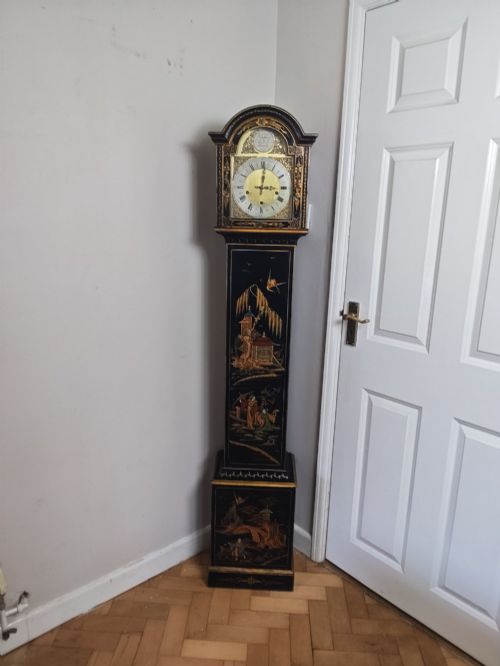
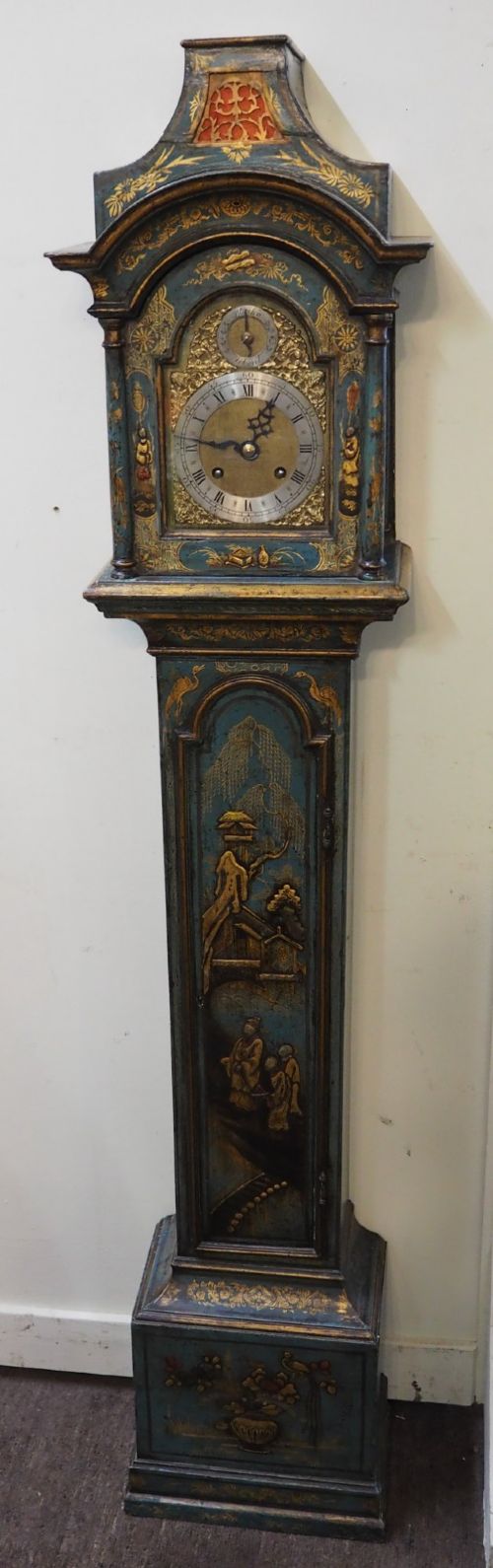


Antique Japanned Pendulum Clock
These antique japanned pendulum clock examples bring striking Chinoiserie decoration and mechanical precision together.
Antique Japanned Pendulum Clock
An antique japanned pendulum clock combines tall case construction with raised lacquer decoration in the Chinoiserie taste.
The evidence shows forms ranging from standard longcase clocks to smaller grandmother clocks and musical or automaton variants.
Periods span from the eighteenth century, including specific dates like seventeen-twenty and seventeen-forty, through the nineteenth century and into nineteen-thirty.
How they were made
Casings are built from wood and finished with lacquer, japanned wood, or blue lacquer, often accented with gold leaf and gilt work.
Internal movements and dials incorporate brass elements visible behind glass panels fitted into the trunk doors and hood doors.
Materials recorded in current listings include brass, glass, gold leaf, and lacquered wood across Georgian and nineteen-thirty periods.
What varies in quality
The refinement of the Chinoiserie decoration dictates visual success, separating standard painted surfaces from intricate raised lacquer work with gold leaf.
Complexity of movement also sets pieces apart, particularly those featuring musical mechanisms, automata, or rocking figures like Father Time.
Robert Berry
The Antique Japanned Pendulum Clock Glossary
- Japanned wood
- European imitation of East Asian lacquerwork using layered varnishes and metallic dust. This technique creates a glossy, dark surface decorated with raised motifs.
- Chinoiserie
- European theatrical interpretation of Chinese and East Asian artistic traditions. It appears widely across furniture and clock cases during the Georgian period.
- Longcase clock
- A tall, floor-standing pendulum clock enclosed in a wooden case. It is frequently called a grandfather clock by later collectors.
- Automaton
- A mechanical figure that moves independently while the clock operates. Examples include rocking figures incorporated into the dial arch.
Antique Japanned Pendulum Clock: Frequently Asked Questions
What is a japanned clock?
A japanned clock is a timekeeper housed in a case decorated with European lacquerwork mimicking Asian styles. These finishes typically feature dark backgrounds with raised gilded scenes.
They gained popularity during the eighteenth century and saw revivals in later periods like nineteen-thirty.
How do I date an antique clock?
Dating relies on stylistic clues, materials, and construction methods visible in the case and dial. Eighteenth-century models often display hand-painted Chinoiserie scenes and brass dial furniture.
Later nineteenth-century and nineteen-thirty pieces utilise similar decorative idioms but employ different internal components and wood preparation.
What is a grandmother clock?
A grandmother clock is a smaller version of the traditional longcase or grandfather clock. They share the same tall proportions and pendulum operation but occupy less floor space.
The listings show examples produced during the nineteenth century and nineteen-thirty.
What is an automaton clock?
An automaton clock includes moving mechanical figures integrated into the dial face. These often depict scenes such as rocking figures or moving characters.
They represent a more complex tier of horological craftsmanship from the Georgian era.