
Japanese Wooden Carving
These japanese wooden carving pieces span intricate netsuke and bold bear sculptures, bringing tactile craft and historical depth to a room.
Japanese Wooden Carving
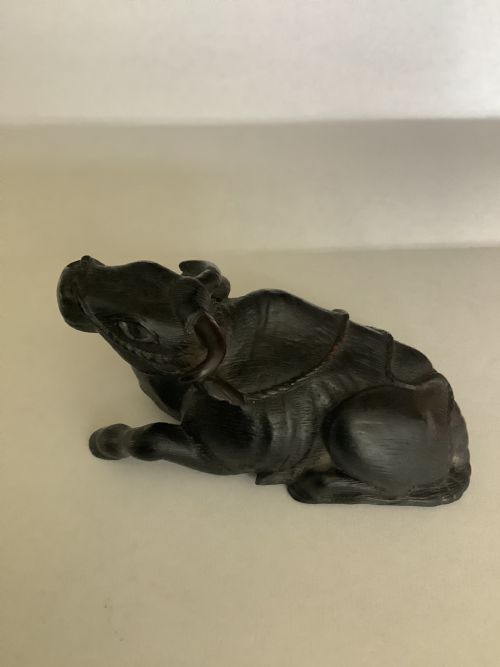
A japanese wooden carving encompasses sculptural objects, miniature netsuke, and functional furniture produced across the Meiji, Edo, and early twentieth-century periods. These works include traditional animal figures such as bears and turtles, alongside intricate figures of deities and geisha.
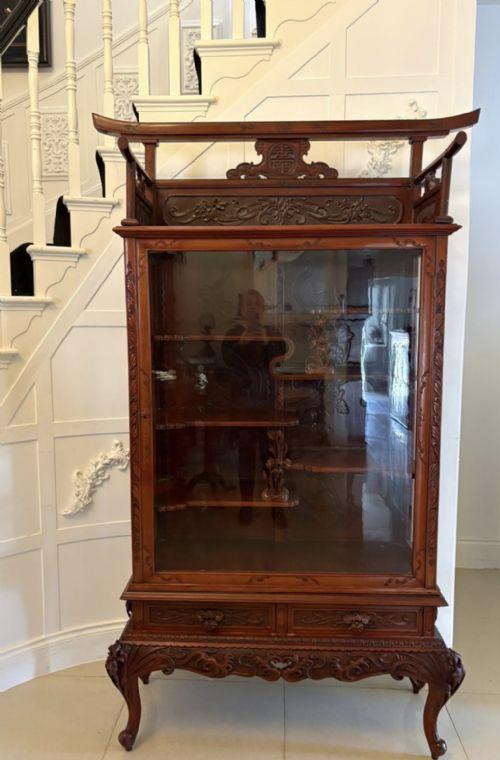
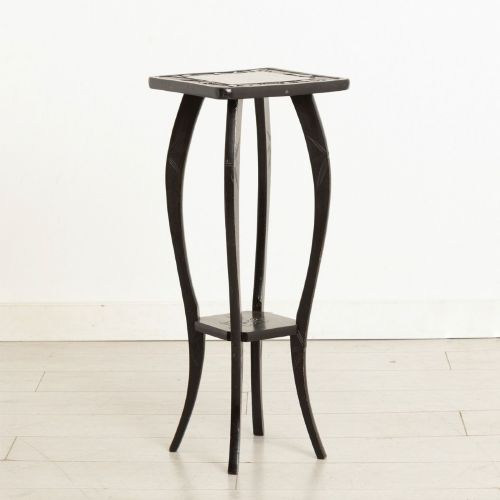
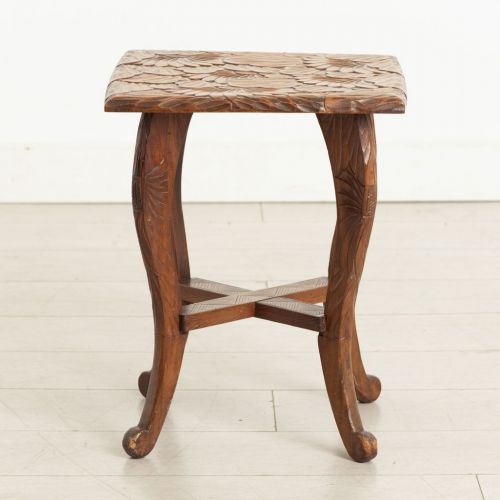
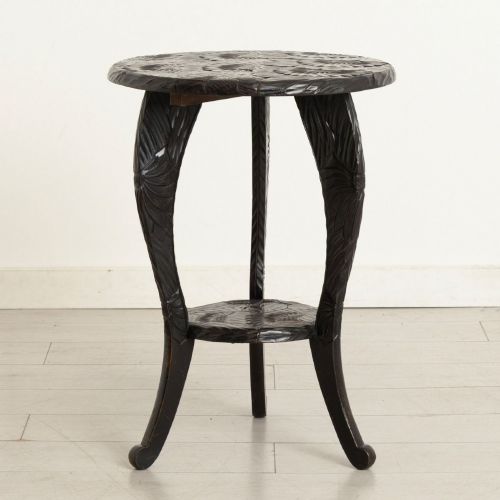
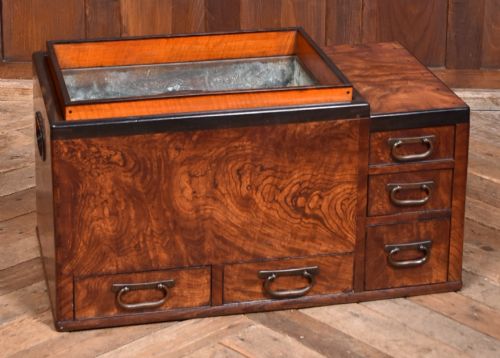
The objects on this page frequently manifest as carved hardwood sculptures, plant stands, folding screens, and tobacco boxes. Buyers regularly encounter pieces reflecting Japanese folk art traditions and the broader Victorian and Edwardian Japonisme aesthetic.
Smaller wearable or portable items like boxwood netsuke appear alongside larger architectural elements and display cabinets. Each form demonstrates the versatile application of traditional woodworking techniques across decorative and practical household items.
Materials and methods
Carvers utilised dense materials such as boxwood, linden wood, and various imported hardwoods to achieve fine detail and lasting durability. These woods allowed artisans to execute deep relief work and minute facial expressions on figures.
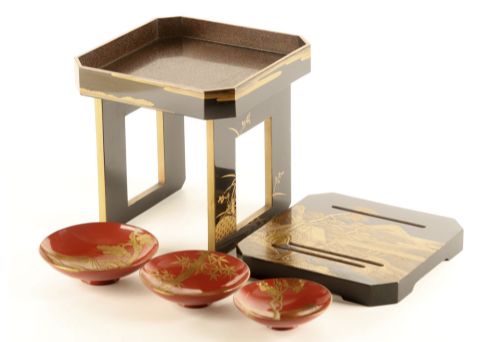
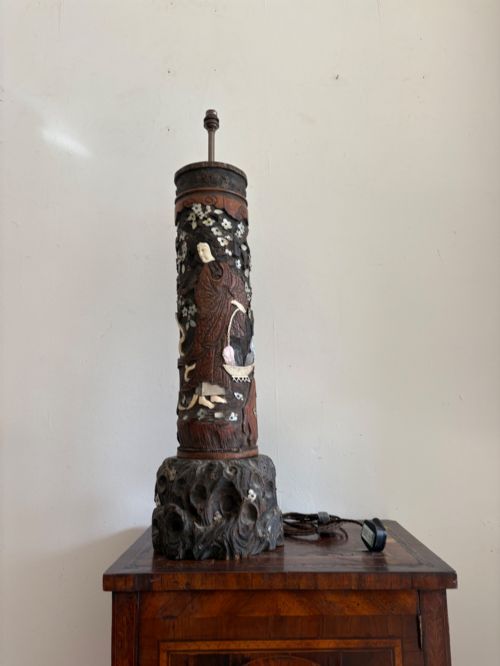
Traditional hand tools shaped the timber through faceted cuts, precise chiselling, and smooth polishing to build up tactile surfaces. Artisans frequently combined carved wood with contrasting elements like bone, mother of pearl, lacquer, and brass fittings.
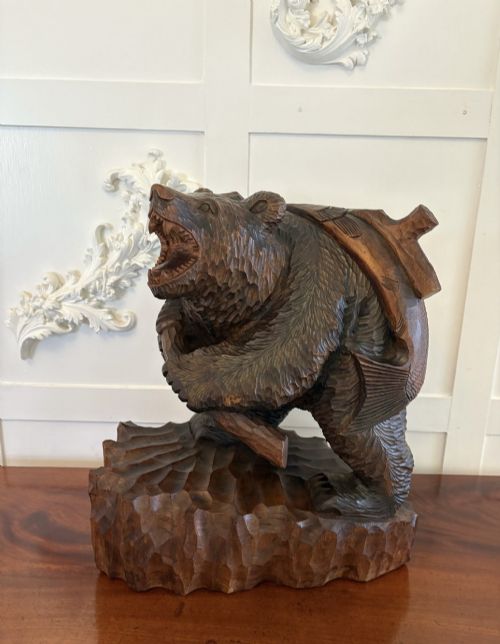
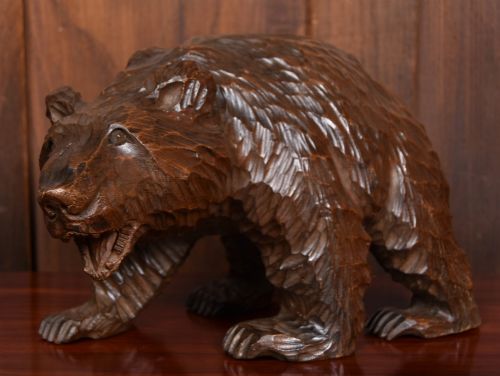
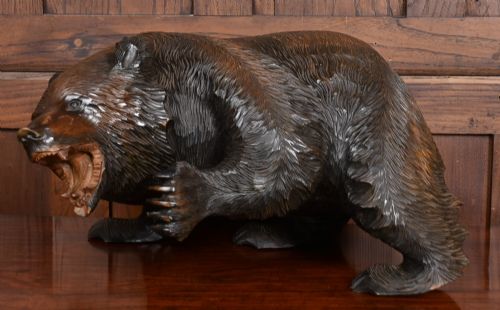
Several bears hold fish, while others display carved expressions of mild confusion.
Variations in quality
Depth of execution and anatomical conviction separate standard workshop output from master works. Superior items display confident, clean tool marks and a considered balance of naturalistic texture with smooth planes.
The inclusion of clear signatures by known carvers or respected studios elevates a piece significantly. Material selection also dictates worth, particularly where dense boxwood or figured hardwoods retain an undisturbed, aged patina.
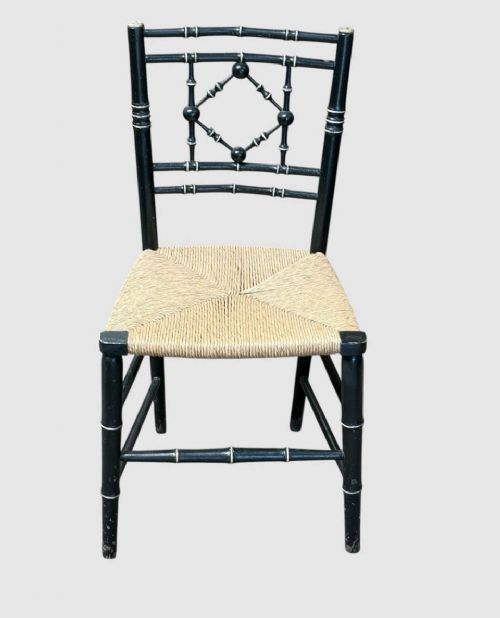
Liberty of London·Gabriel Viardot·Tomochika·Masayuki·Kashi
The Japanese Wooden Carving Glossary
- Netsuke
- A small carved toggle fastened to the end of a cord attached to a small container worn on a traditional kimono sash. These miniature sculptures often depict animals, legendary figures, or daily scenes.
- Okimono
- A standalone decorative statue designed for display on a shelf or in a traditional tokonoma alcove. They share the intricate carving standards of netsuke but are built larger.
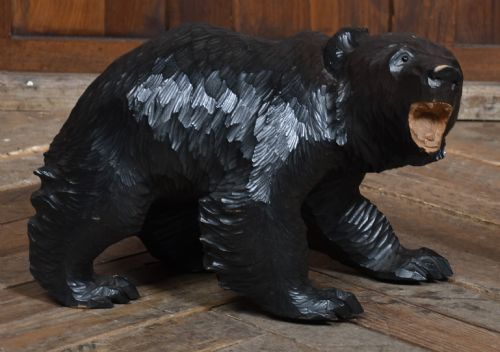
- Kibori Kuma
- A style of wooden bear carving originating in Hokkaido, typically worked in strong faceted cuts. These sculptures frequently hold fish in their jaws and carry distinct regional folk art roots.
- Shodana
- A traditional Japanese tabletop display cabinet featuring staggered shelving and sliding doors. Artisans decorated these structures with carved panels, lacquer finishes, and inlaid details.
- Japonisme
- A Western artistic movement influenced by Japanese art and design during the late nineteenth century. European makers incorporated Japanese motifs, asymmetry, and wooden carving techniques into local furniture forms.
Japanese Wooden Carving: Frequently Asked Questions
What is a Japanese wooden carving?
A Japanese wooden carving is an object shaped from timber by hand, ranging from miniature netsuke to furniture and animal sculptures. These pieces reflect traditional Japanese crafts as well as Western Japonisme interpretations from the nineteenth and early twentieth centuries.
Artisans utilised woods such as boxwood and dense hardwoods, often enhancing the surfaces with lacquer, bone, or mother of pearl. They serve as both decorative items and functional household furnishings.
How do I identify a Meiji period carving?
Meiji period carvings typically exhibit exceptional naturalism, deep relief, and highly detailed surface work. This era coincided with increased international trade, prompting workshops to produce ambitious sculptures, cabinets, and netsuke for global export.
Look for signed panels or maker marks carved directly into the timber or rendered on inlaid tablets. The subjects often mix traditional folklore with acute observations of local wildlife.
Where should I place a wooden bear carving?
Kibori Kuma bear sculptures suit placement on side tables, low bookcases, or mantelpieces where their textured surfaces can be appreciated up close. Their strong silhouettes work well alongside contemporary or traditional interior schemes.
Keep these wooden objects away from direct sunlight and heat sources to prevent the timber from drying out or splitting. Occasional dusting with a soft, dry cloth preserves the aged patina.
How were Japanese folding screens constructed?
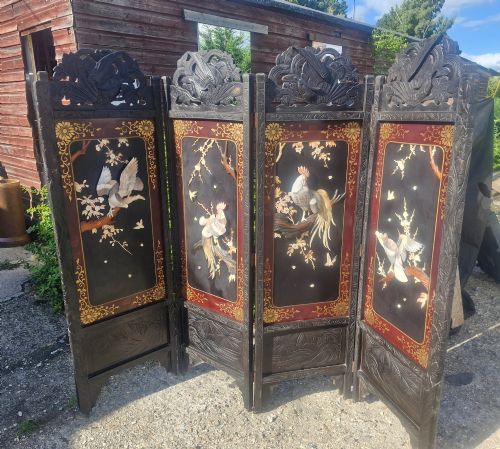
Japanese folding screens utilise a lightweight wooden lattice framework covered with multiple layers of paper or fabric. Artisans then applied deep carved wooden, bone, or painted panels onto the primary structure.
These panels functioned as portable room dividers or decorative backdrops in traditional interiors. The folding hinges allowed the screens to adjust across various angles within a space.