





Carved Wood Okimono
Carved wood okimono are intricate Japanese shelf sculptures and miniature figures that bring remarkable naturalism and expressive character to a room.
Carved Wood Okimono
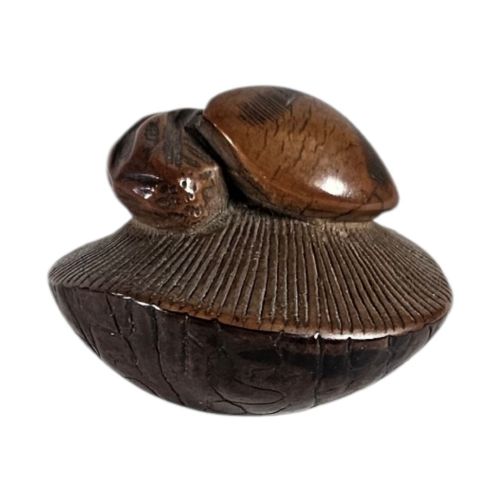
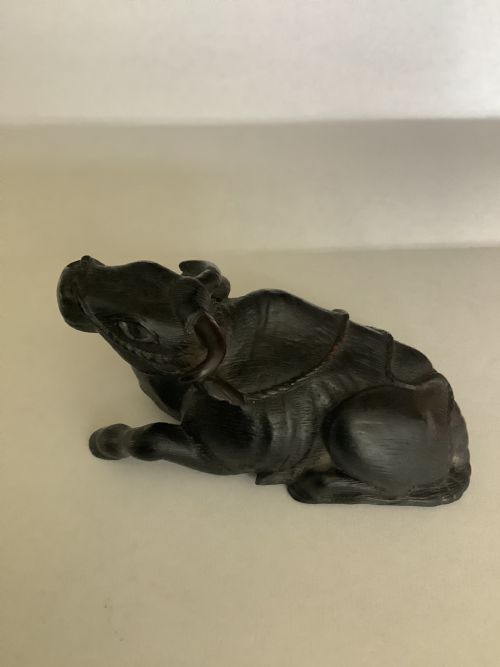
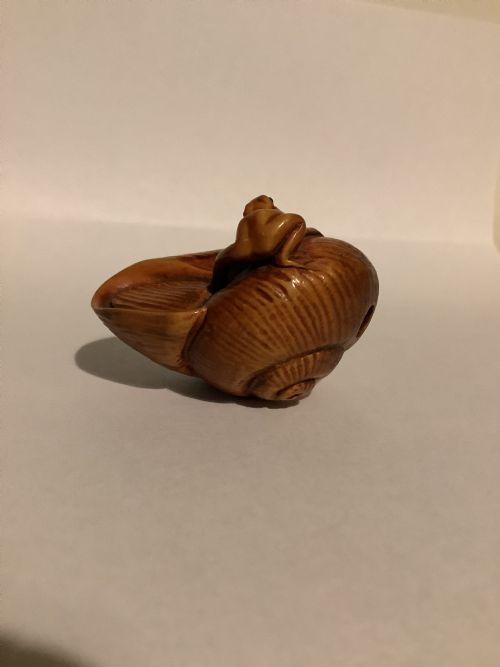
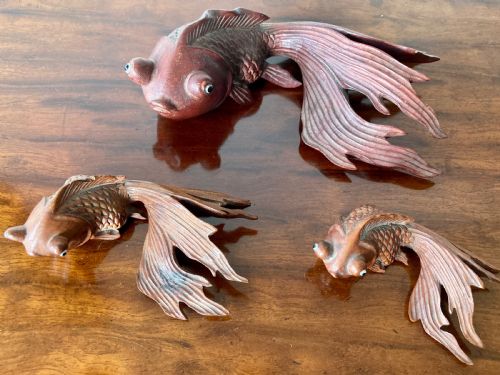
Carved wood okimono are decorative sculptures originating primarily from Japan, created to sit on a display surface rather than to be worn. When you search for carved wood okimono, you encounter pieces depicting figures such as gods, men, and boys alongside animals like tigers, rabbits, toads, and carp. These subjects reflect both daily life and traditional folklore.
The versions most commonly met in these listings date from the nineteenth century and the Meiji period, often rendered in boxwood or hardwood. Smaller formats such as netsuke sometimes cross over into this category, alongside miniature bamboo and root wood figures. Each piece serves as a compact study in form, proportion, and texture.
How they were made
Makers occasionally combined wood with contrasting elements, incorporating horn, bronze, bamboo, or gold lacquer accents into the composition. Surfaces were often polished smooth or left with textured tool marks to emphasise the grain and warmth of the natural material.
What varies in quality
Quality rests upon the sensitivity of the carving and the precision with which anatomical or textural details are rendered. Superior pieces demonstrate a mastery of proportion, capturing lifelike movement in animals or expressive personality in human figures.
Signed examples by known carvers often command greater attention, showing a higher degree of finish in hidden areas and complex undercutting. The natural ageing of the wood, combined with a rich patina developed through handling, further distinguishes the finer examples.
Tomochika·Gyoko·Masanao·Nishikawa Suketsugu
The Carved Wood Okimono Glossary
- Okimono
- A Japanese display figurine designed for placement in an alcove or on a cabinet. These sculptures range from miniature carvings to larger standalone decorative figures.
- Netsuke
- A small carved toggle fastened to the end of a cord on a traditional pouch or box. Many pieces share similar subject matter and carving techniques with okimono.
- Meiji Period
- The era in Japanese history spanning from 1868 to 1912. This period saw a surge in the production of finely detailed decorative arts intended for both domestic and export markets.
- Boxwood
- A dense, pale wood prized by carvers for its fine, even grain. It permits minute, crisp detailing without the risk of splitting.
- Edo Period
- The period of Japanese history running from 1603 to 1867. Work from this time often laid the stylistic foundations for later Meiji carvings.
Carved Wood Okimono: Frequently Asked Questions
What is a carved wood okimono?
A carved wood okimono is a traditional Japanese decorative sculpture intended for display on a shelf or table. These pieces depict animals, deities, and human figures carved from boxwood or hardwood.
Unlike netsuke, which served a practical fastening function on traditional clothing, okimono were created purely for aesthetic appreciation and interior adornment.
How do I identify a Meiji period piece?
Meiji period carvings are generally dated between 1868 and 1912, a time when Japanese craftsmanship reached exceptional levels of naturalism and technical precision. These works frequently feature dynamic animal poses or expressive human subjects.
Signatures or artist ciphers are often incised into the base or underside, providing a direct link to the carver or workshop.
Where should I display an okimono?
These sculptures are best placed on a flat surface in a room with stable temperature and humidity away from direct sunlight. A low table, cabinet top, or dedicated shelf allows the piece to be viewed closely from multiple angles.
Because many are small and detailed, placing them where they can be appreciated at eye level reveals the finer points of the carving.
How do I care for wooden sculptures?
Maintain boxwood and hardwood okimono by dusting them gently with a soft, dry brush to prevent dirt settling in the crevices. Avoid using water, polishes, or chemical cleaners, which can damage the aged patina of the timber.
Keep the pieces away from extreme temperature fluctuations and radiators to prevent the wood from drying out or cracking.