
Antique Asian Wood Carving
An antique asian wood carving brings sculptural presence and dense grain to a room, offering functional furniture or figurative art from centuries past.
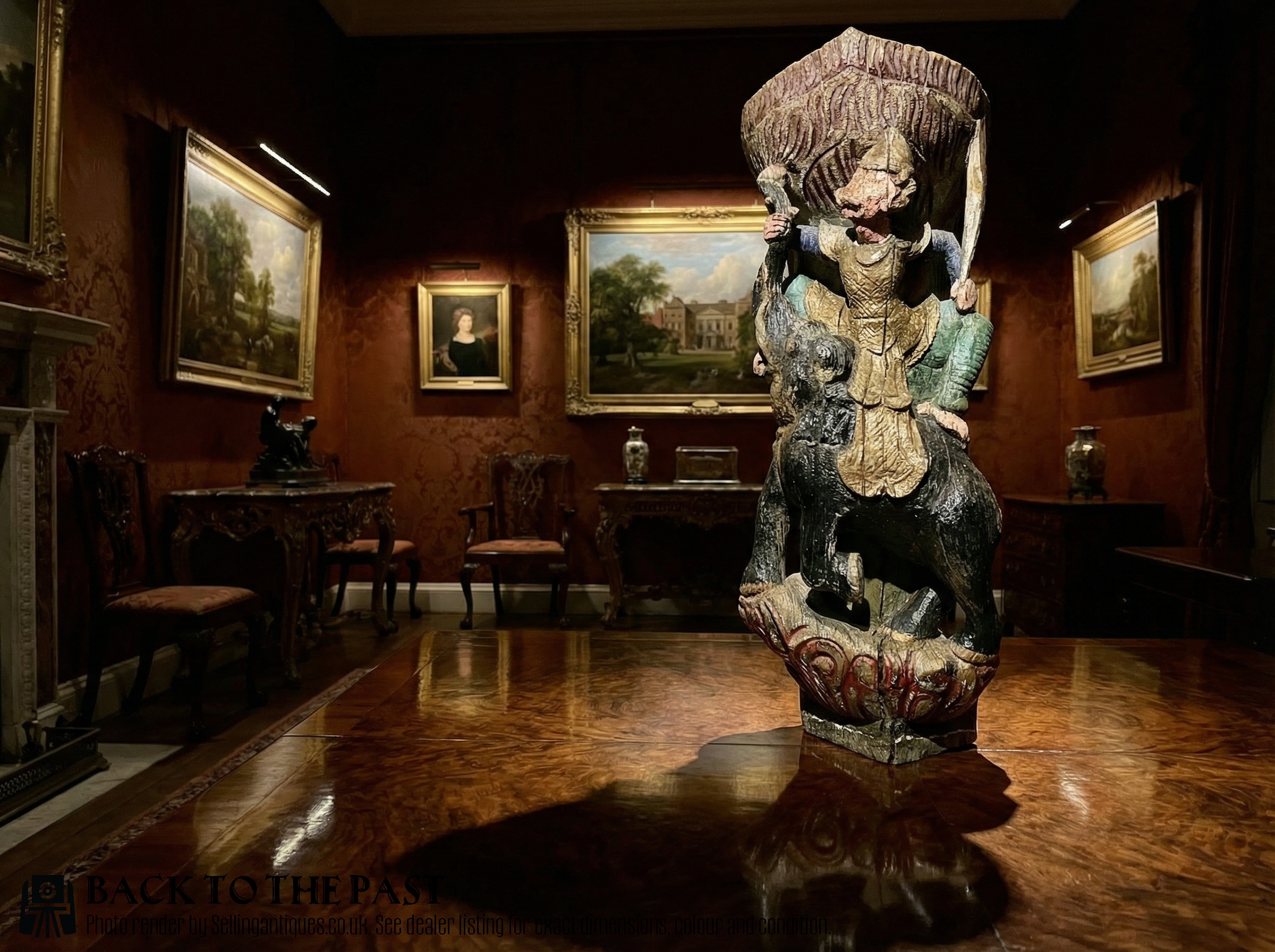
Antique Asian Wood Carving
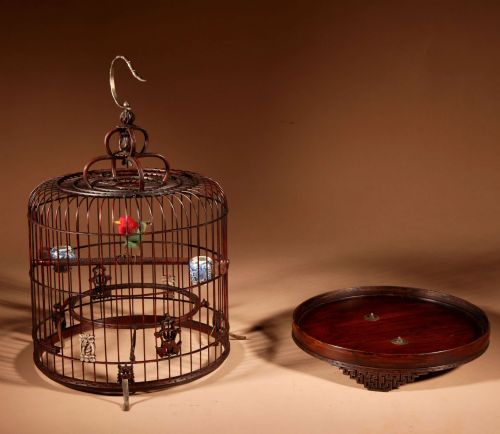
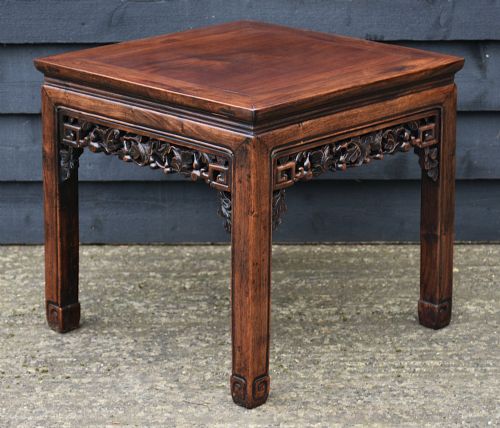
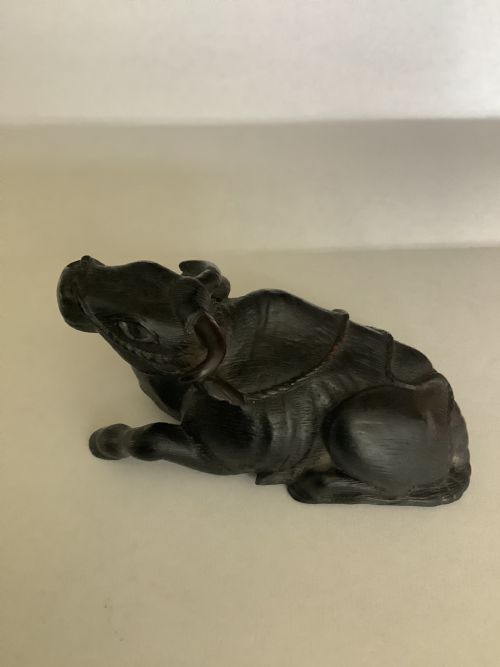
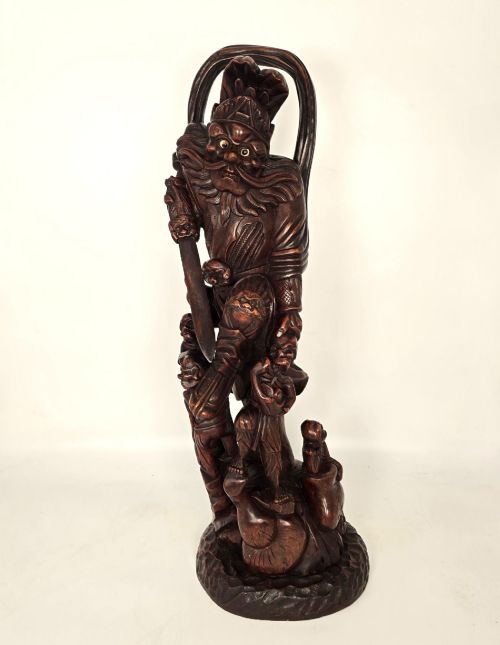
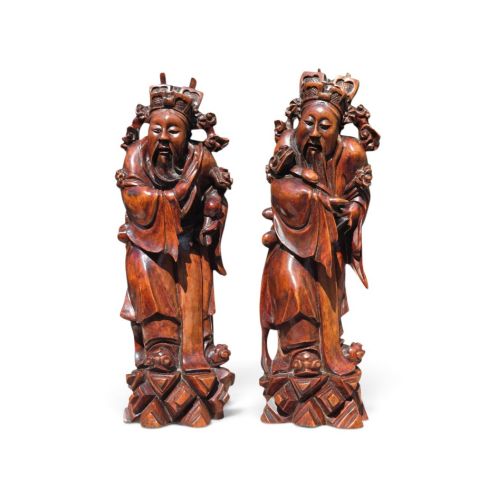
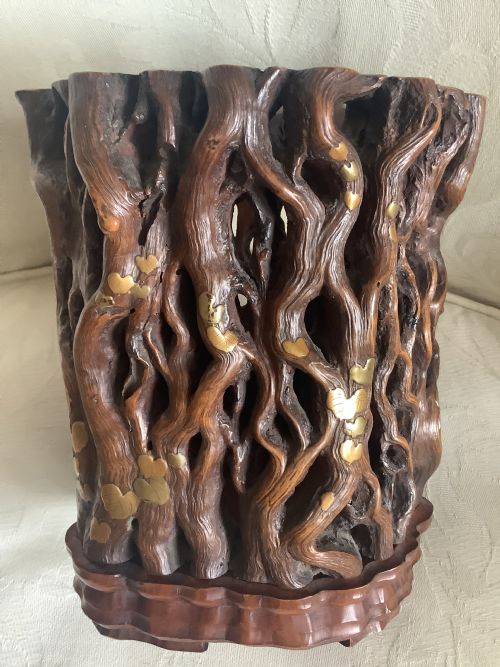
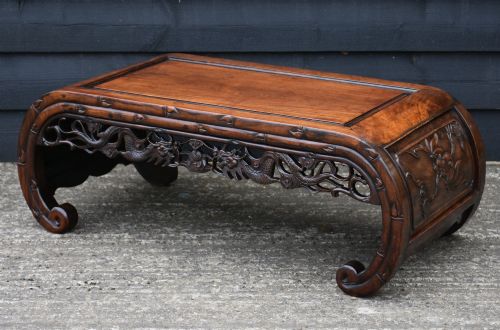
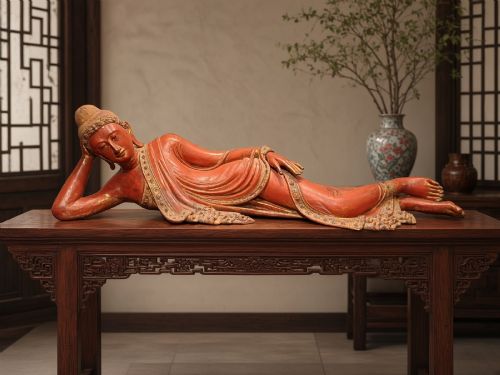
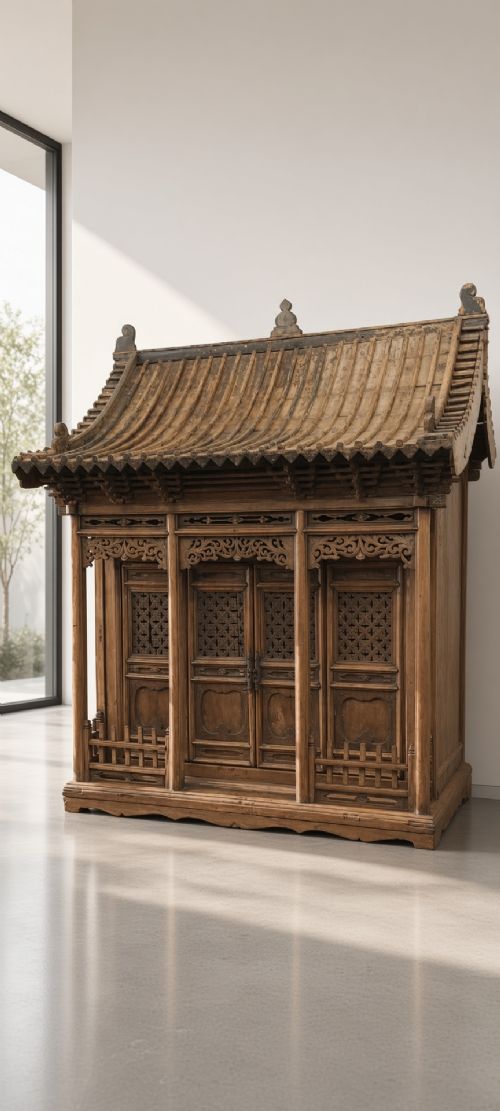
Every antique asian wood carving gathered here spans a period from the nineteenth century into the mid twentieth century, originating from workshops across China, Japan, Burma, and South East Asia. Buyers searching this phrase encounter substantial furniture such as altar tables, opium low tables, armchairs, and display cabinets alongside smaller decorative items including brush pots, panels, and figural sculptures.
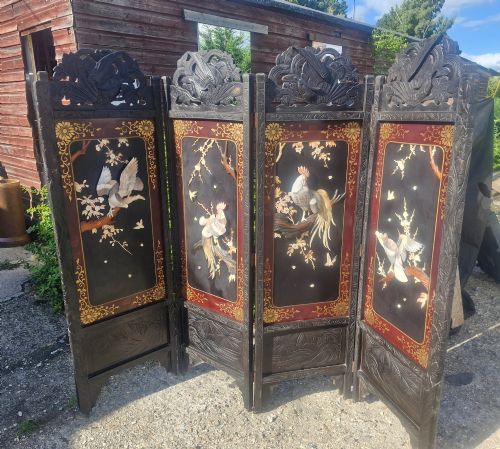
The objects on this page reflect distinct cultural styles, most notably Qing Dynasty traditions and Japanese Meiji period craftsmanship. Functional pieces dominate the domestic forms, constructed alongside architectural elements like window seats and folding screens that integrate carved detail into everyday utility.
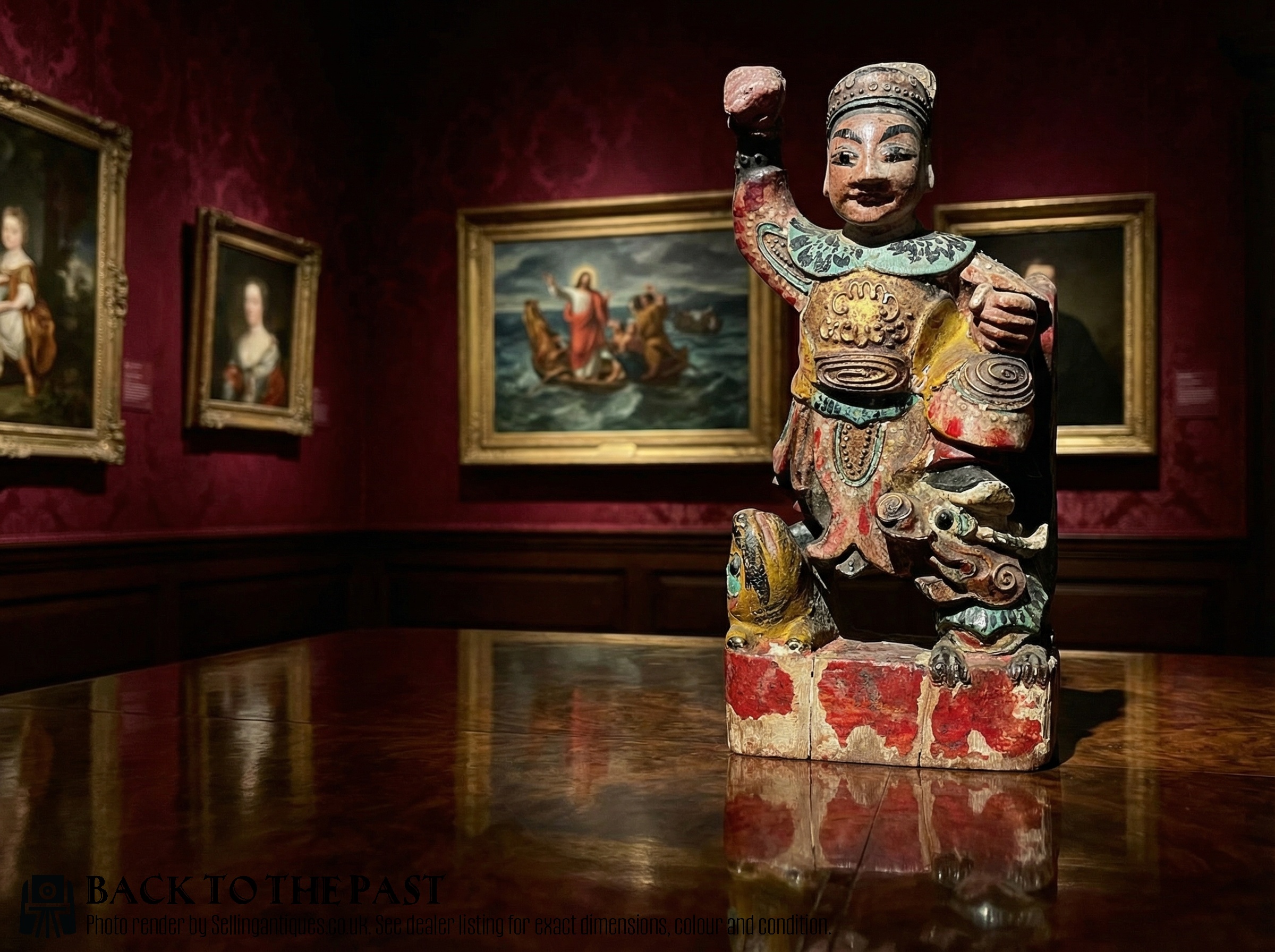
Materials and construction methods
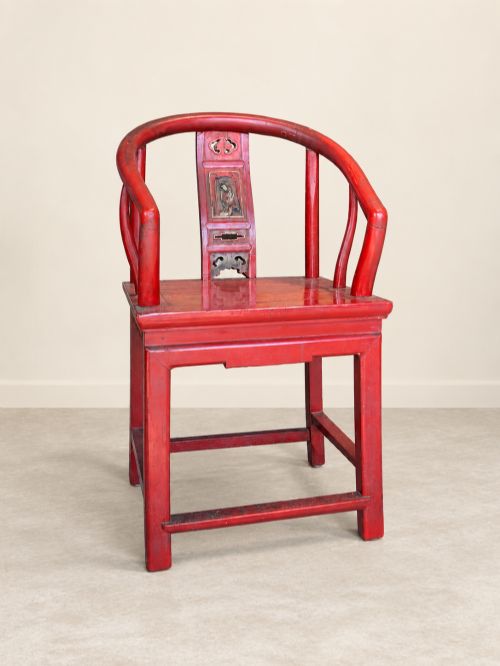
Makers utilised dense timbers such as rosewood, hongmu, padouk, elm, and general hardwood, valuing each for weight and a capacity to hold crisp, deep relief. These woods frequently receive applied finishes of red lacquer, polychrome paint, or simple polish that highlights the natural grain.
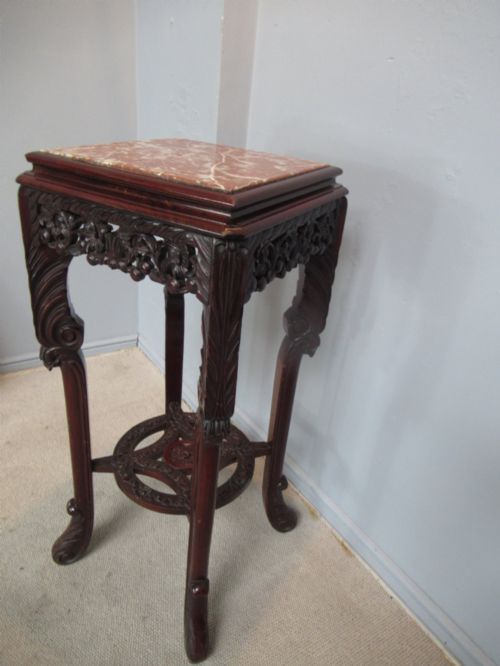
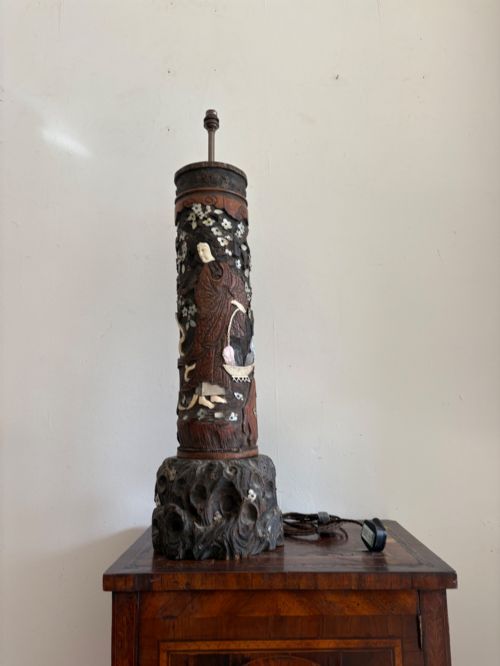
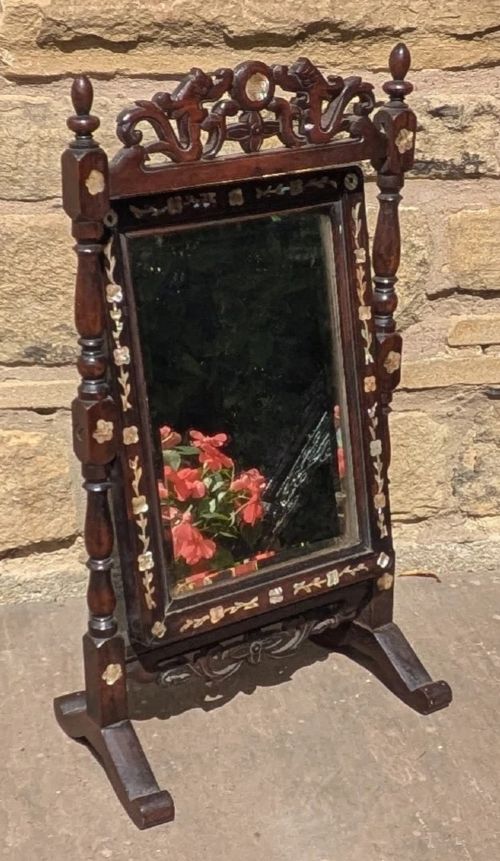
Many items combine timber with contrasting mediums, incorporating mother of pearl inlay, bone figures, marble tops, and brass mounts. Joinery relies on traditional methods suited to heavy timbers, allowing large pieces like altar tables and cabinets to endure without modern mechanical fasteners.
Antique Asian Wood Carving Retail Price Guide 2026
Typical asking prices for asian wood carving among the pieces listed under this phrase on Sellingantiques today, from the lower quarter to the upper quarter. They describe what is for sale here now, not the wider market.
Object forms span large furniture such as display cabinets and altar benches alongside small items like shoes, masks, and tobacco pouches.
Distinctions in craftsmanship
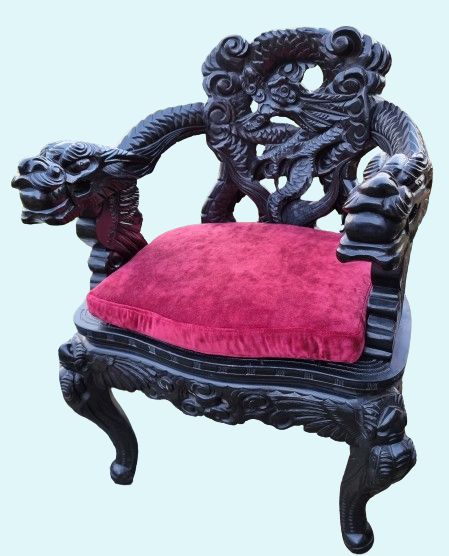
The finest examples display depth and precision in the carving, where figures and dragon details exhibit crisp relief rather than flat or hesitant incisions. Superior pieces maintain their original surface patination, particularly on elm and lacquer surfaces where handling over generations creates a soft, warm sheen.
Proportion and structural integrity separate standard utility items from masterwork furniture such as horseshoe-back armchairs or nested tables. Well-executed pieces balance intricate fretwork or bone inlay with solid joinery that resists the shifting pressures of age.
The Antique Asian Wood Carving Glossary
- Meiji Period
- The era in Japanese history spanning from 1868 to 1912, known for sophisticated decorative arts and detailed carving. Pieces from this time often show exceptional mastery in miniaturised or high-relief wood and bone work.
- Qing Dynasty
- The last imperial dynasty of China, lasting from 1644 until 1912, which produced much of the formal hardwood furniture and altar pieces found today. Furniture from this period frequently utilises rosewood or hongmu.
- Opium Table
- A low timber table designed for domestic leisure and tea service, typically featuring short legs and restrained carving. These low forms showcase the grain of rosewood or elm.
- Hongmu
- A translation meaning red wood, referring to a category of dense, heavy tropical hardwoods prized in Chinese furniture making. This material takes a dark, rich polish.
- Shibayama
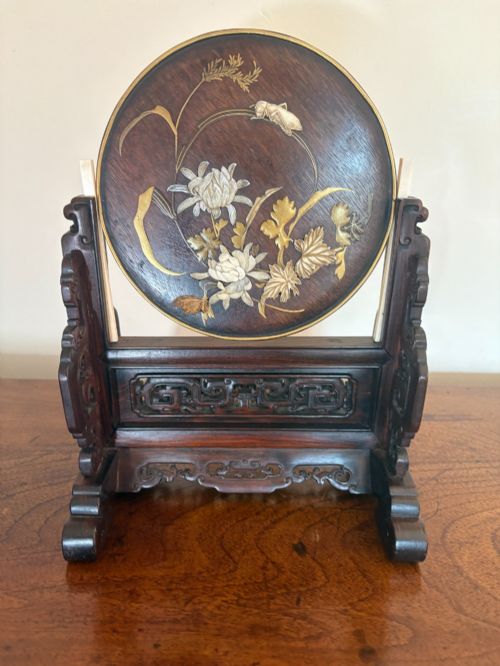
- A Japanese decorative technique utilising inlaid shell, ivory, and bone to form pictorial scenes on wood or lacquer backgrounds. This method appears on decorative panels and table screens.
Antique Asian Wood Carving: Frequently Asked Questions
How do I care for antique hardwood furniture?
Keep wooden pieces away from direct heat sources and sudden humidity changes to prevent the timber from splitting. Dust regularly with a dry cloth and occasionally apply a neutral wax to maintain the patina.
Avoid using modern liquid polishes or silicone sprays, which can build up on the surface and dull the original finish. Gentle maintenance preserves the natural lustre of rosewood, elm, and lacquered surfaces.
What is the difference between an altar table and a low table?
Altar tables stand high and narrow, originally designed for ritual display against a wall in domestic or temple settings. They frequently feature scrolled ends and structured aprons.
Low tables sit close to the floor for seating or serving, requiring less vertical height and often incorporating subtle dragon details or plain panel construction.
How do I identify a Meiji period Japanese carving?
Meiji pieces date from the late nineteenth or early twentieth century and often incorporate delicate bone inlay, Shibayama work, or realistic figurative subjects. The execution shows high technical precision in the rendering of flora, fauna, and human expression.
Many of these objects take the form of tabletop screens, brush pots, or smoking ensembles rather than large architectural furniture.
Are these pieces suitable for modern interiors?
The clean lines of nineteenth-century elm armchairs and hardwood coffee tables integrate easily into contemporary rooms. Their natural wood tones and architectural forms provide functional surfaces with sculptural presence.
Smaller decorative items like brush pots or carved panels add focal points to sideboards and walls without dominating a space.