




Japanese Satsuma Urns
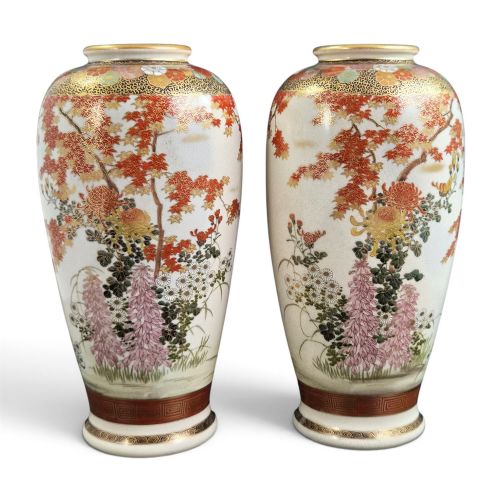
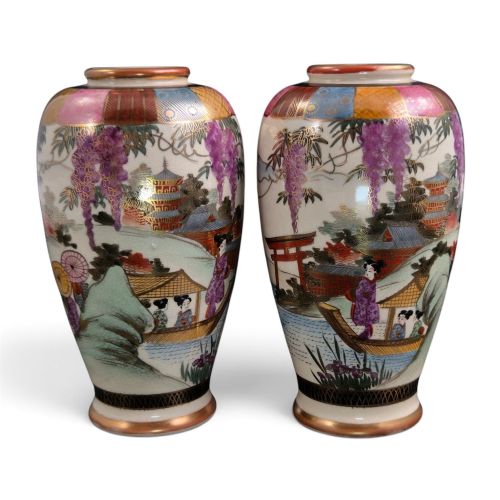
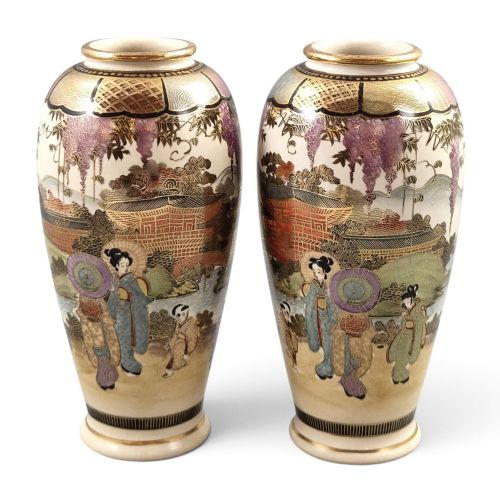
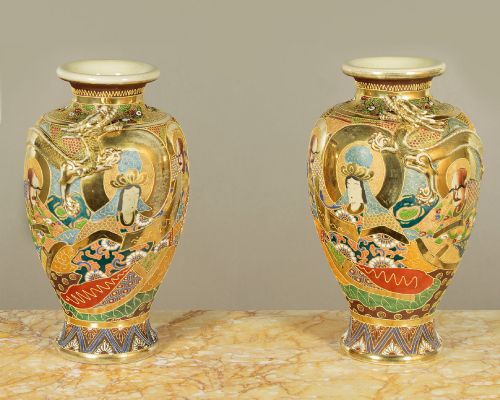
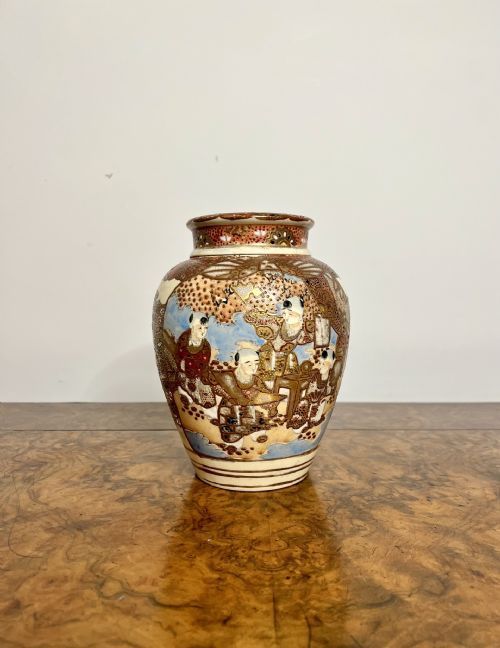
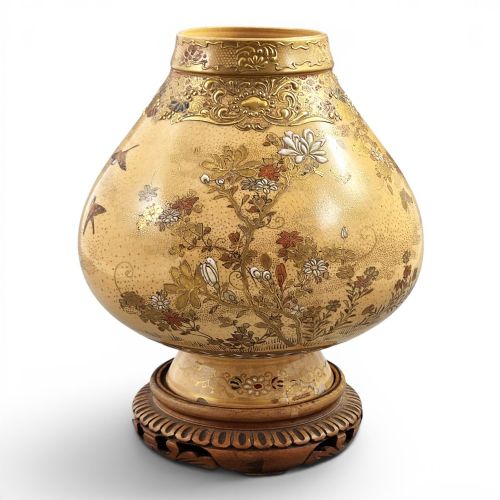
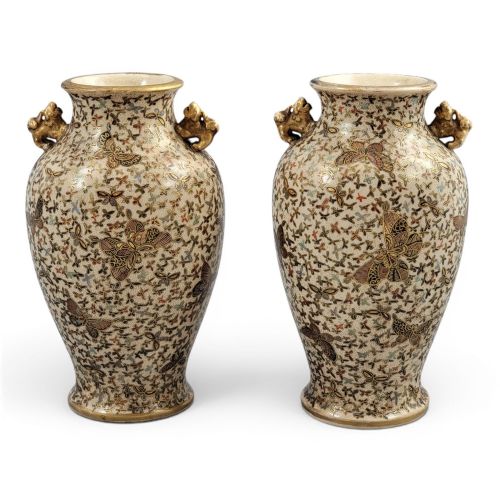
These Japanese satsuma urns and vases bring intricate hand-painted narratives and rich gilt work straight from the Meiji and Taisho periods into your home.
Japanese Satsuma Urns
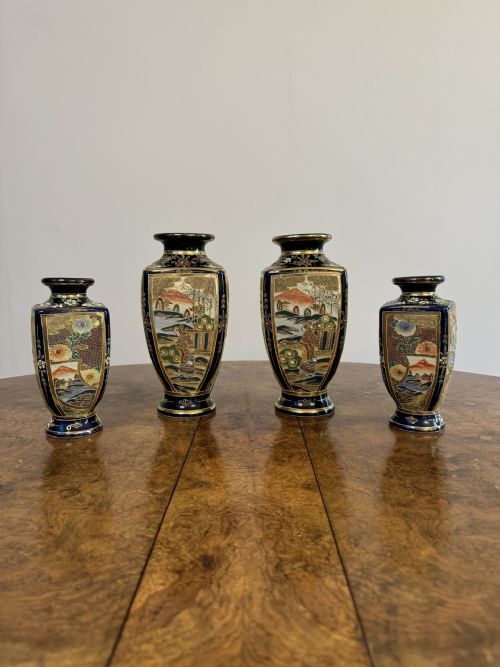
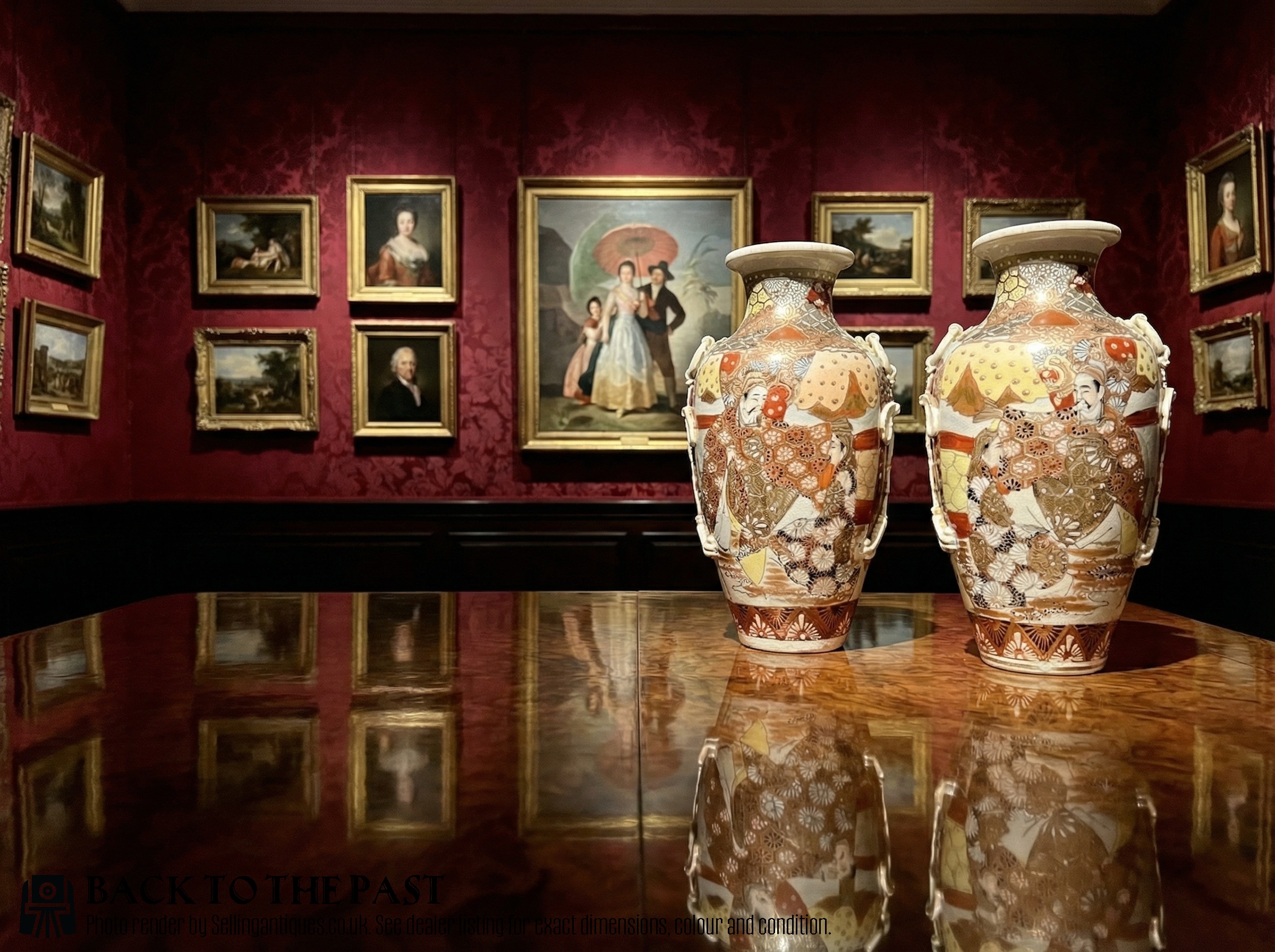
When you search for Japanese satsuma urns, you encounter earthenware vessels ranging from miniature cabinet pieces to monumental floor-standing examples created across the late nineteenth and early twentieth centuries.
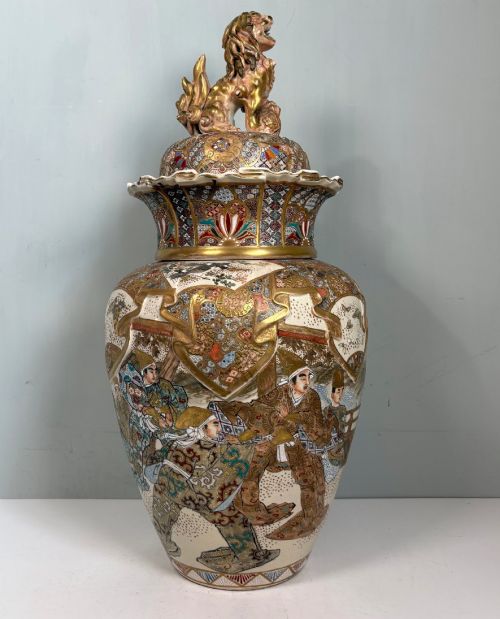
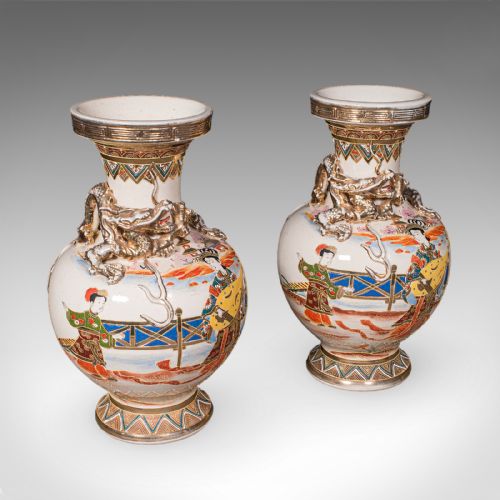
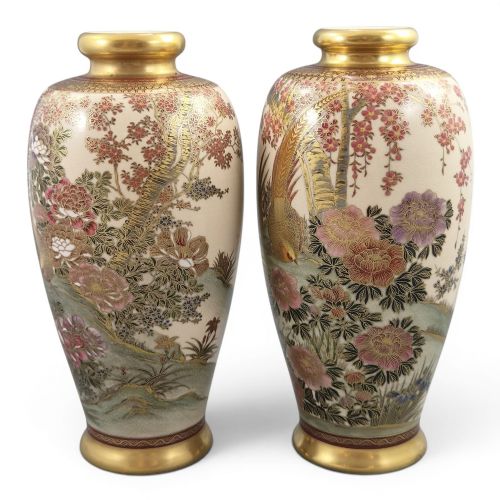
The selections here most frequently take the form of baluster vases, lidded ginger jars, incense burners, and matched pairs decorated with figures, landscapes, or floral motifs.
These items span the Meiji, Taisho, and early Showa periods, reflecting both traditional Kyoto craftsmanship and export-focused production from workshops in Kobe and other centres.
Materials and production techniques
Potters shaped these vessels from earthenware and ceramic bodies, applying a characteristic finely crackled cream glaze that provided a stable canvas for detailed pictorial work.
Artists decorated the surfaces using enamel pigments and gold leaf, frequently employing raised moriage techniques to build up tactile details on court figures, dragons, and floral grounds.
Listings feature earthenware vessels spanning the Victorian, Edwardian, and Meiji periods.
Distinguishing quality across the range
The finest examples display remarkable precision in miniature figure painting, where complex processions, arhats, and landscapes are rendered with extreme discipline and clarity.
Superior pieces also exhibit generous, unblemished applications of gilt and rich cobalt grounds, alongside clear maker signatures from celebrated Kyoto and Kobe workshops.
Maruni Kobe·Shozan·Manpei·Kinkōzan·Hotoda·Chosei·Nanzan·Hakusan
The Japanese Satsuma Urns Glossary
- Moriage
- A Japanese ceramic technique using slip to build up raised dots and lines before glazing and gilding. This creates a distinct textural relief on robes, borders, and floral patterns.
- Koro
- A traditional Japanese incense burner fitted with a pierced cover. These tripod or footed vessels often feature guardian lions or detailed figural scenes.
- Mon
- A Japanese heraldic badge or family crest. The Shimazu clan crest frequently appears on high-quality Satsuma ware associated with the Satsuma domain.
- Meiji Period
- The era of Japanese history spanning from 1868 to 1912. Pieces from this time are particularly noted for intricate export ornamentation and fine enamel work.
Japanese Satsuma Urns: Frequently Asked Questions
What is Satsuma ware?
Satsuma ware is a type of Japanese earthenware traditionally characterised by an ivory-coloured, crackled glaze. It originated in Satsuma Province and later became a major export genre produced in workshops across Kyoto and Kobe.
These vessels are heavily decorated with polychrome enamels and gold leaf, often depicting narrative scenes, court figures, and dense floral arrangements.
How do I care for Satsuma vases?
Keep these earthenware pieces out of direct sunlight to protect the delicate enamel pigments and gold leaf from fading over time. Dust them gently with a dry, soft cloth rather than using liquid cleaners.
Avoid placing them in areas with high humidity or fluctuating temperatures, as the porous ceramic body and crackled glaze are sensitive to moisture.
How do I identify Meiji period pieces?
Meiji period items generally date between 1868 and 1912, a time when Japanese workshops produced highly ornate decorative arts for Western export markets. Look for dense, meticulous enamel work, raised moriage details, and traditional artist signatures.
Many pieces from this era also feature cobalt blue grounds paired with heavy gilding, reflecting the aesthetic preferences of international exhibitions.