
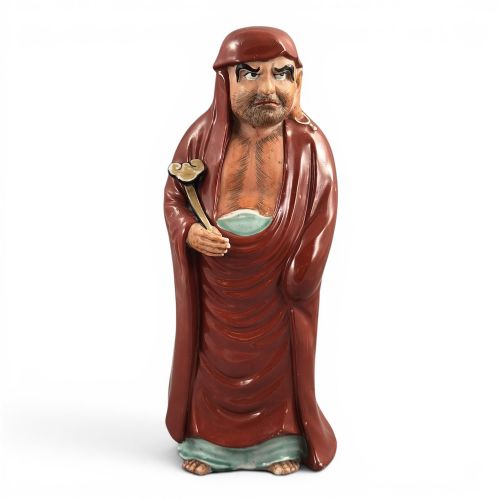
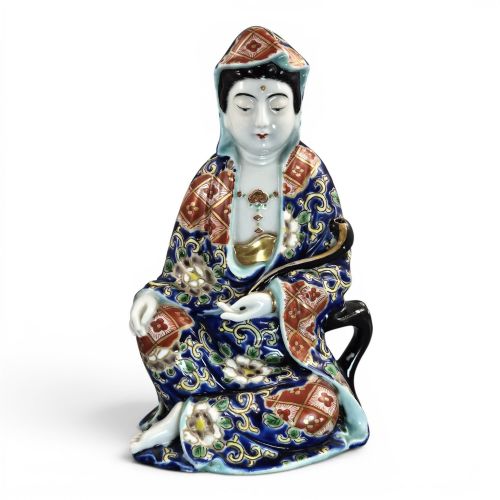


Japanese Porcelain Figurine
A Japanese porcelain figurine brings the detailed artistry of the Meiji and Edo periods directly to your shelves through figures of deities, animals, and traditional characters.
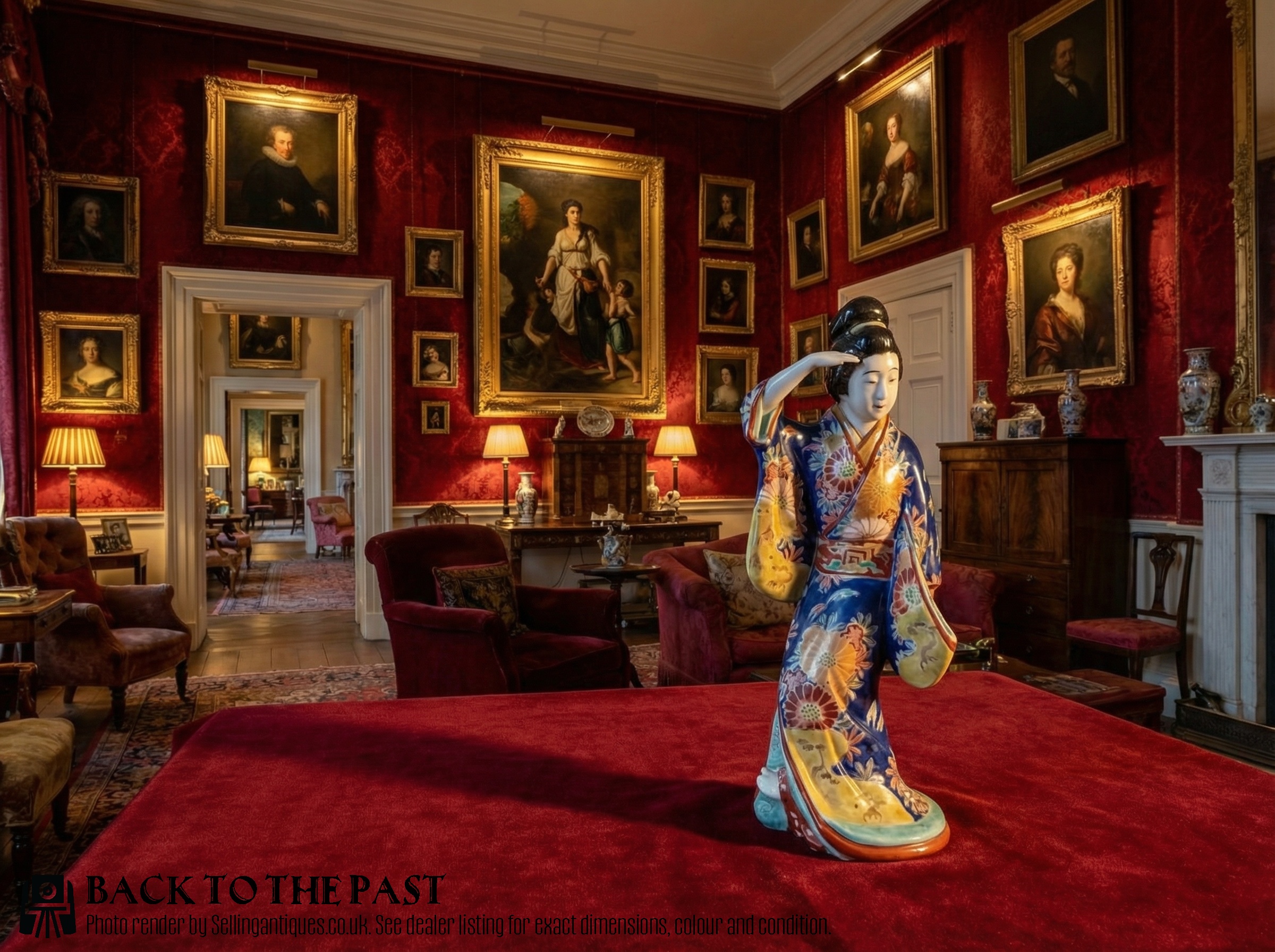
Japanese Porcelain Figurine
A Japanese porcelain figurine represents deities, legendary figures, and animals created during the 18th, 19th, and early 20th centuries. The selection ranges from deities such as Daikoku and Hotei to depictions of courtesans, monks, and guardian lion dogs.
Most examples you will encounter date from the Meiji and Edwardian periods, utilising traditional forms like okimono and statues. These works capture specific cultural narratives through ceramic sculpture.
How they were made
Potters shaped porcelain, earthenware, and glazed bodies by hand or in moulds before applying ceramic glaze, cobalt underglaze, and enamel. Many works incorporate detailed surface decoration such as moriage relief work.
Finishing touches often involve the application of gold leaf and gold gilt to highlight garments and decorative elements. Kilns across various regions, including Arita and Kutani, employed distinct firing and painting methods.
Japanese Porcelain Figurine Retail Price Guide 2026
Typical asking prices for japanese porcelain figurine among the pieces listed under this phrase on Sellingantiques today, from the lower quarter to the upper quarter. They describe what is for sale here now, not the wider market.
Listings feature pieces spanning the 18th century through the Edwardian era, incorporating materials like porcelain, earthenware, enamel, and gold leaf.
What varies in quality
The degree of refinement in the facial expressions and hand-painted details separates standard figures from exceptional works. Finer examples show precise control of cobalt underglaze, enamel pigments, and gold leaf application.
The complexity of the modelling, such as multi-figure compositions or intricate robes, indicates the skill of the maker and the standing of the kiln.
Makuzu Kozan II·Mikawachi Kilns·Kizan
The Japanese Porcelain Figurine Glossary
- Okimono
- A small Japanese decorative sculpture designed for display on a shelf or in a tokonoma alcove. These ornaments depict everything from mythical deities to animals and daily life.
- Kutani
- A style of Japanese coloured porcelain characterised by vibrant enamel palettes and intricate pictorial designs. Pieces from this tradition often feature bold reds, greens, and gold.
- Satsuma
- A type of Japanese earthenware featuring a crackled ivory glaze and elaborate polychrome enamel and gold decorations. It frequently depicts historical figures, deities, and court scenes.
- Moriage
- A decorative ceramic technique where slip is piped onto the surface of a vessel or figurine to create raised patterns. This adds a tactile, three-dimensional element to the piece.
- Karashishi
- A traditional Japanese guardian lion dog symbolising protection and strength. These mythical beasts appear frequently in ceramic sculpture.
Japanese Porcelain Figurine: Frequently Asked Questions
What do Japanese porcelain figurines depict?
These figures portray a wide range of subjects drawn from mythology, folklore, and daily life. Common representations include Buddhist deities, Taoist immortals, historical figures, courtezans, and animals such as guardian lions, horses, and dogs.
Many pieces carry specific symbolic meanings related to longevity, prosperity, and protection. Deities like Hotei and Daikoku are chosen to bring good fortune to a household.
How can I tell the period of a figurine?
Dating relies on stylistic markers, materials, and signatures associated with specific eras such as the Edo, Meiji, and Taisho periods. Earlier 18th and 19th-century pieces often display simpler forms or distinct cobalt underglaze styles, while late Meiji and Edwardian works frequently utilise dense moriage and vibrant enamels.
Examining the base and any kiln marks or artist signatures helps narrow down the origin. Regional traditions like Arita and Kutani also evolved distinct aesthetic traits over time.
Where were these figures displayed?
In traditional Japanese interiors, decorative sculptures and okimono were placed within a tokonoma alcove or displayed on low tables in reception rooms. They served as focal points for quiet contemplation and appreciation during gatherings.
Today, collectors place these figurines on mantelpieces, bookshelves, and dedicated display cabinets where their detailed enamel work and gold leaf can be examined closely.