




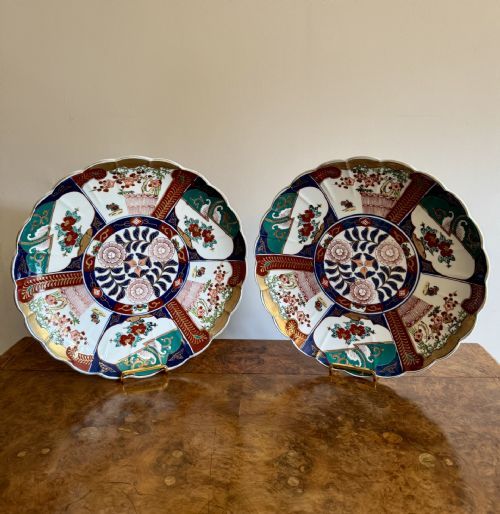


Japanese Porcelain Display Platter
A Japanese porcelain display platter brings intricate hand-painted design and traditional form into a room.
Japanese Porcelain Display Platter
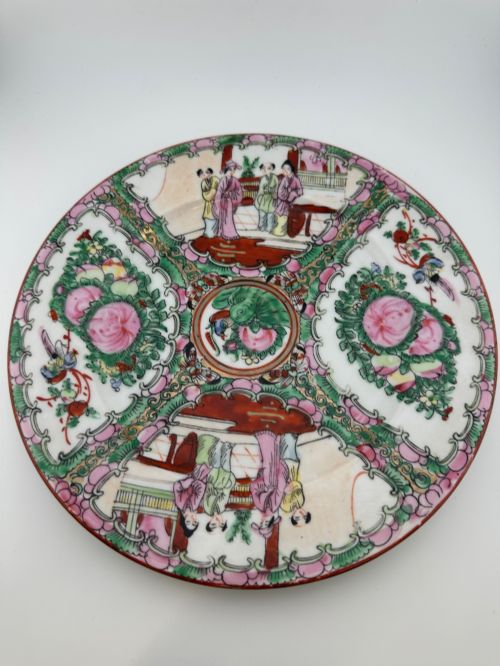
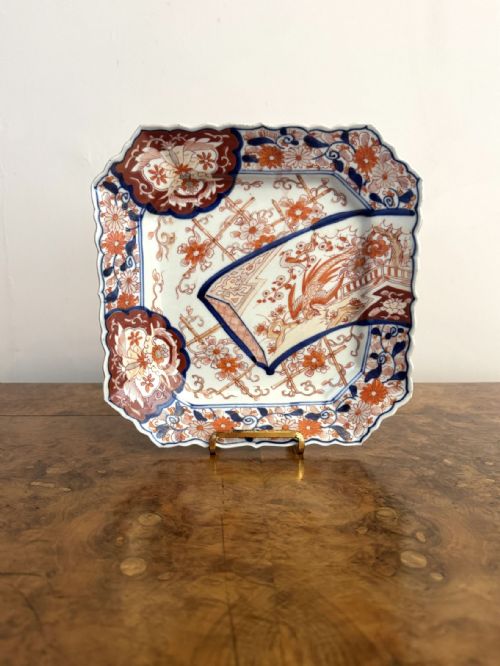
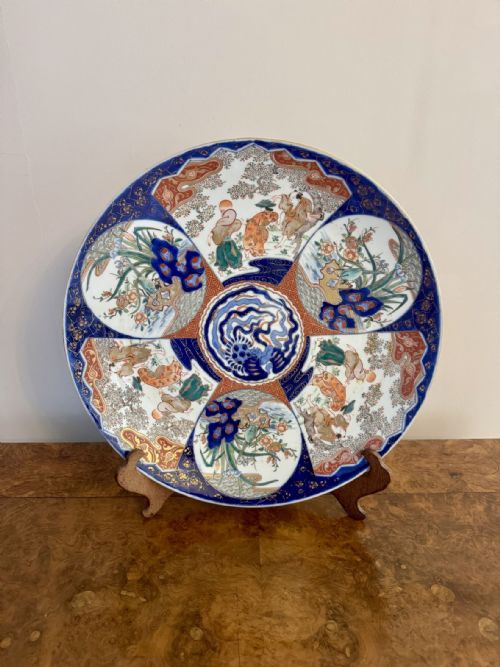
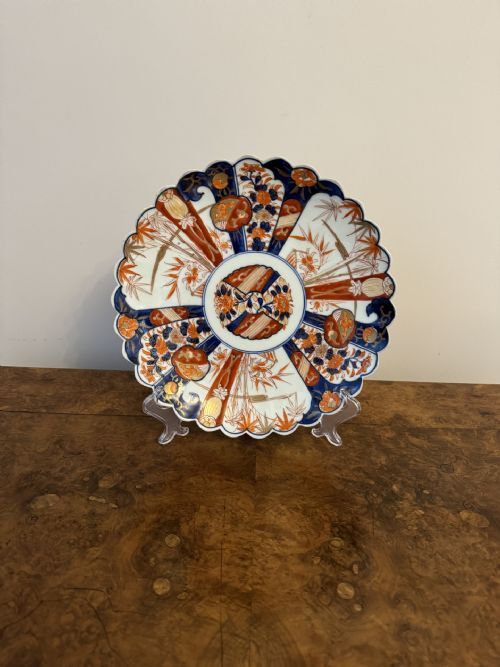
A japanese porcelain display platter encompasses large decorative chargers, plates and wide dishes produced across the nineteenth and early twentieth centuries. These forms include round chargers, square plates, fan shapes and scalloped edges designed for visual presentation.
The pieces appearing most frequently originate from the Meiji period, alongside examples spanning the Edo period, Victorian era and the early twentieth century. Designs often incorporate traditional motifs such as floral patterns, birds and the Seven Lucky Gods.
Makers utilised distinct regional styles, with Imari and Kutani aesthetics appearing prominently among the porcelain bodies. Each item functions primarily as a decorative dish rather than utilitarian tableware.
Materials and construction methods
The foundation relies on hard-paste ceramic porcelain, shaped into large plates and deep chargers before firing. Artisans applied cobalt underglaze, enamel colours and gold leaf highlights directly onto the surface.
Hand painting forms the core of the decorative technique, executed with precise brushwork across floral and figurative scenes. Certain items combine porcelain bodies with specialised finishes like cloisonné tree bark decoration.
Listings feature porcelain pieces spanning the Edo period, Meiji period, Victorian era and early twentieth century.
Distinguishing quality across examples
Quality rests in the precision of the hand-painted brushwork and the complexity of the design composition. Pieces depicting intricate subjects like koi carp or multiple figures demonstrate greater artistic ambition than simpler floral repeats.
The handling of enamel colours and the application of gilding determine the visual depth of the platter. Unusual forms, such as square or fan-shaped plates, reflect higher manufacturing difficulty than standard round chargers.
The Japanese Porcelain Display Platter Glossary
- Charger
- A large decorative plate intended for display rather than dining use. These items form the largest portion of the available porcelain dishes.
- Imari
- A traditional Japanese style of porcelain characterised by cobalt blue underglaze and iron red overglaze, frequently enriched with gilding. The aesthetic originated in Arita and gained international popularity.
- Meiji Period
- The historical Japanese era spanning from 1868 to 1912. Many decorative plates and chargers date from this period of increased export to Western markets.
- Cobalt Underglaze
- A blue pigment applied to the raw porcelain body before glazing and firing. This technique creates durable designs that resist fading over time.
Japanese Porcelain Display Platter: Frequently Asked Questions
How do I date a Japanese platter?
Dating relies on stylistic markers, historical periods such as the Meiji or Edo eras, and the specific characteristics of the porcelain body. Examination of the painted motifs and glazes provides further clues.
Comparing the border work and colour palette helps place the item within the nineteenth or early twentieth century.
Where should I display my charger?
These platters suit placement on dedicated plate stands, heavy furniture tops or secure wall mounts. Their generous scale demands a stable surface with adequate clearance.
Keeping them away from direct sunlight preserves the vibrancy of the enamels and gold leaf.
What motifs appear on these platters?
Common subjects include botanical arrangements, birds, koi carp and figures from Japanese folklore such as the Seven Lucky Gods. Artisans arranged these themes symmetrically or across panelled sections.
Each motif was executed by hand using traditional pigments and gold detailing.