







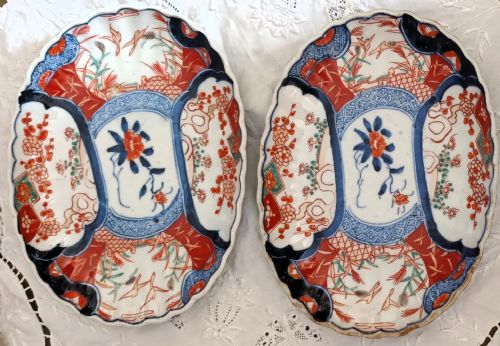
Japanese Porcelain Display Charger
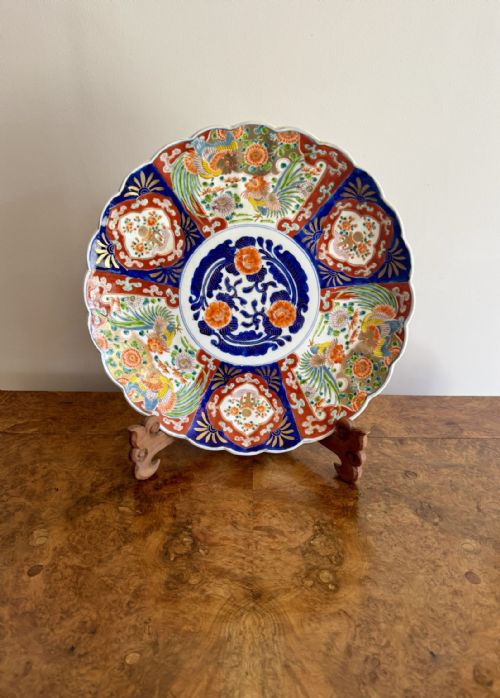
When you handle a Japanese porcelain display charger, you hold a substantial ceramic plate intended for visual display rather than dining.
Japanese Porcelain Display Charger
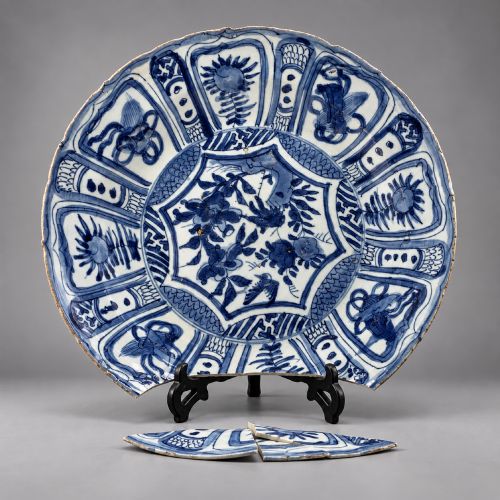
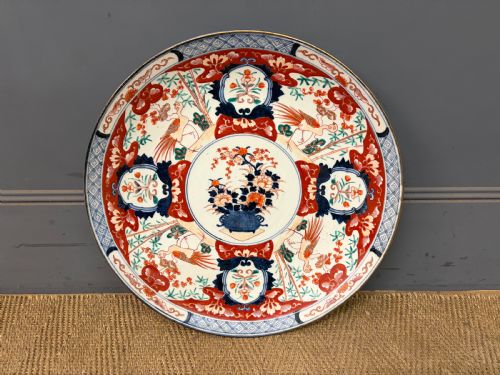
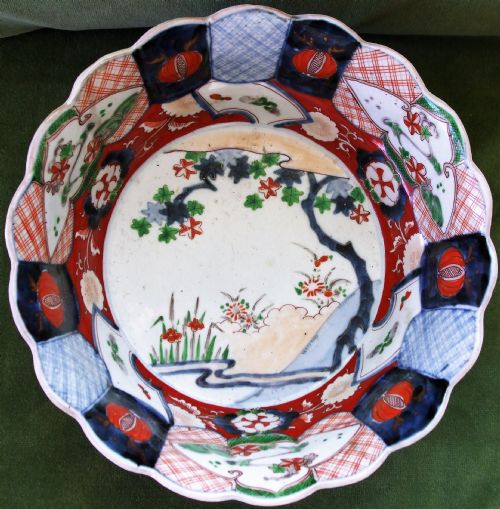
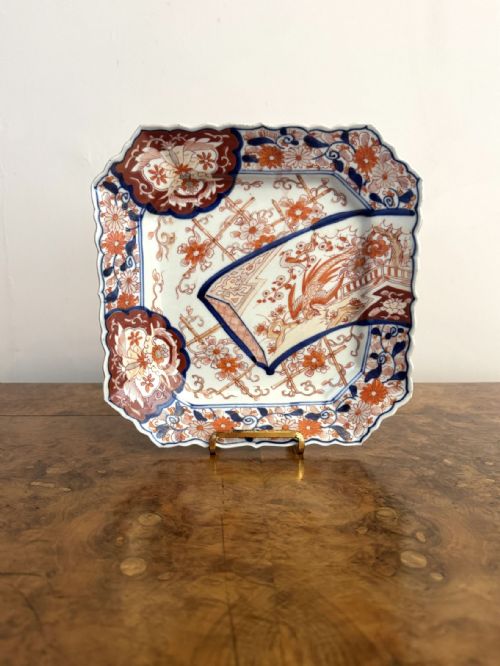
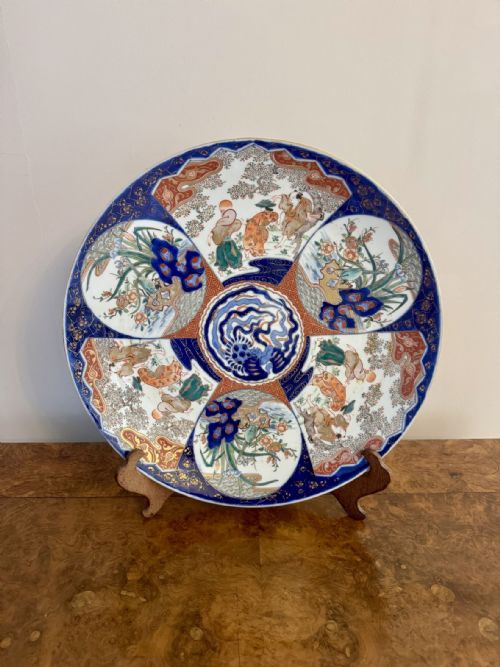
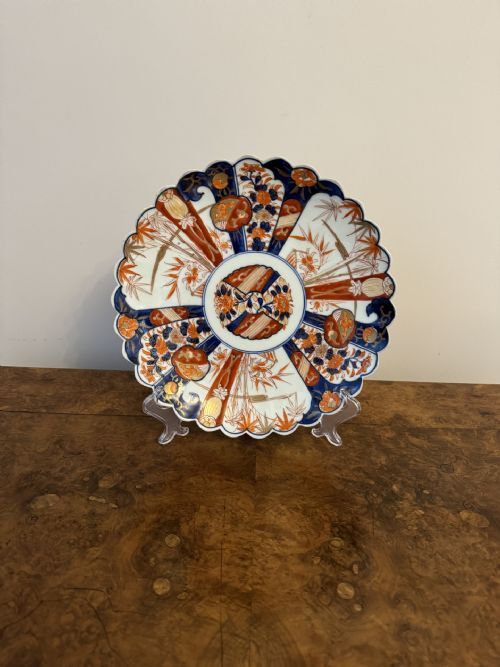
A Japanese porcelain display charger is a large decorative plate or dish produced in various forms during the nineteenth and early twentieth centuries. These pieces appear primarily as circular chargers, scalloped edge dishes, and large decorative bowls originating from the Meiji, Taisho, and Edo periods.
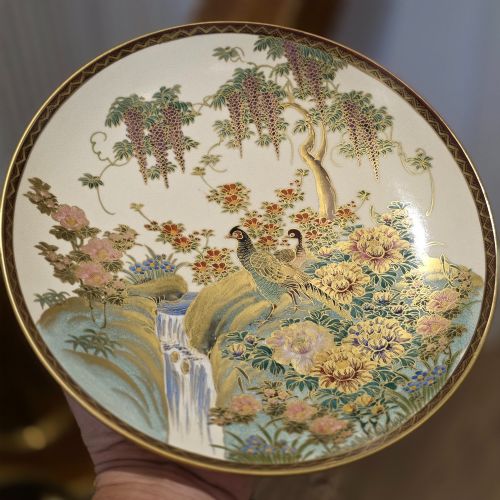
The objects frequently display traditional Japanese Imari patterns alongside Arita, Kutani, and Satsuma designs. Collectors encounter single pieces, matched pairs, and larger sets utilised for wall hanging or surface display.
Makers and workshops produced these wide decorative plates with generous diameters designed to showcase intricate hand-painted floral, bird, and figural compositions. The surviving examples reflect decades of export trade and domestic appreciation across the Victorian era and beyond.
Materials and Techniques
The makers utilised white porcelain clay shaped into wide plates and bowls, then fired at high temperatures to achieve a hard and durable body. Artisans applied underglaze cobalt blue and iron red pigments before the final glaze firing.
Many examples incorporate supplementary surface ornamentation using enamel, gold leaf, and gilt details over the glaze. Cloisonne techniques also appear on select plates, combining porcelain bodies with decorative wirework and enamel infill.
Object forms span circular chargers, scalloped edge dishes, hexagonal plates, and large decorative bowls.
Evaluating Quality
The fineness of the hand-painted brushwork separates standard production pieces from superior works. Artisans who executed precise lines and complex compositions in the floral and bird motifs produced the most desirable examples.
The application of gold leaf and enamel embellishments influences the visual depth of a charger. Pieces featuring rich, layered gilding and balanced palettes demonstrate greater artistic ambition than simpler utilitarian items.
Koshida
The Japanese Porcelain Display Charger Glossary
- Imari
- A style of Japanese porcelain featuring a distinct palette of underglaze blue, iron red, and added gold highlights. The tradition originated in Arita and became immensely popular for export.
- Charger
- A large decorative plate utilised for display on walls or sideboards rather than for serving food at table. These pieces measure significantly wider than standard dining plates.
- Meiji Period
- The historical era spanning from 1868 to 1912, associated with rapid modernisation and the creation of elaborate decorative arts for international markets.
- Arita
- The Japanese town and surrounding region renowned as the birthplace of domestic porcelain production. Artisans here supplied vast quantities of blue and white and Imari wares.
- Totai Shippo
- A specialised technique where enamel is applied over a porcelain base to create the visual effect of cloisonne metalwork. It bridges ceramic and metalworking traditions.
Japanese Porcelain Display Charger: Frequently Asked Questions
How were display chargers used?
Historic households placed these large ceramic plates on mantelpieces, sideboards, or mounted them directly onto walls to showcase artistic wealth.
Unlike smaller dining ware, their generous surface area served primarily to display complex painted scenes of nature and mythology.
How do I identify Imari porcelain?
Imari pieces feature a signature combination of deep underglaze blue and vibrant iron red, frequently accented with gold leaf. Artisans often filled the entire surface with dense floral, geometric, and avian motifs.
This distinct aesthetic developed during the Edo period and remained prominent through the Meiji era.
What is the Meiji period?
The Meiji period spans the reign of the Emperor Meiji from 1868 to 1912, marking a major opening in international trade. Craftspeople produced exceptional export porcelain that catered to Western demand for Japanese decorative arts.
Pieces from this era exhibit high technical skill in painting and glazing.
How should I display a charger safely?
Use professional plate hangers designed specifically for heavy ceramics to distribute the weight evenly across the rim. Ensure the mounting hardware secures firmly into a wall stud if you choose vertical display.
Alternatively, stable wooden easel stands support large chargers securely on flat furniture surfaces.