


Japanese Porcelain Bottle
A japanese porcelain bottle brings centuries of kiln artistry into a room, offering striking shapes and rich hand-painted detail for collectors.
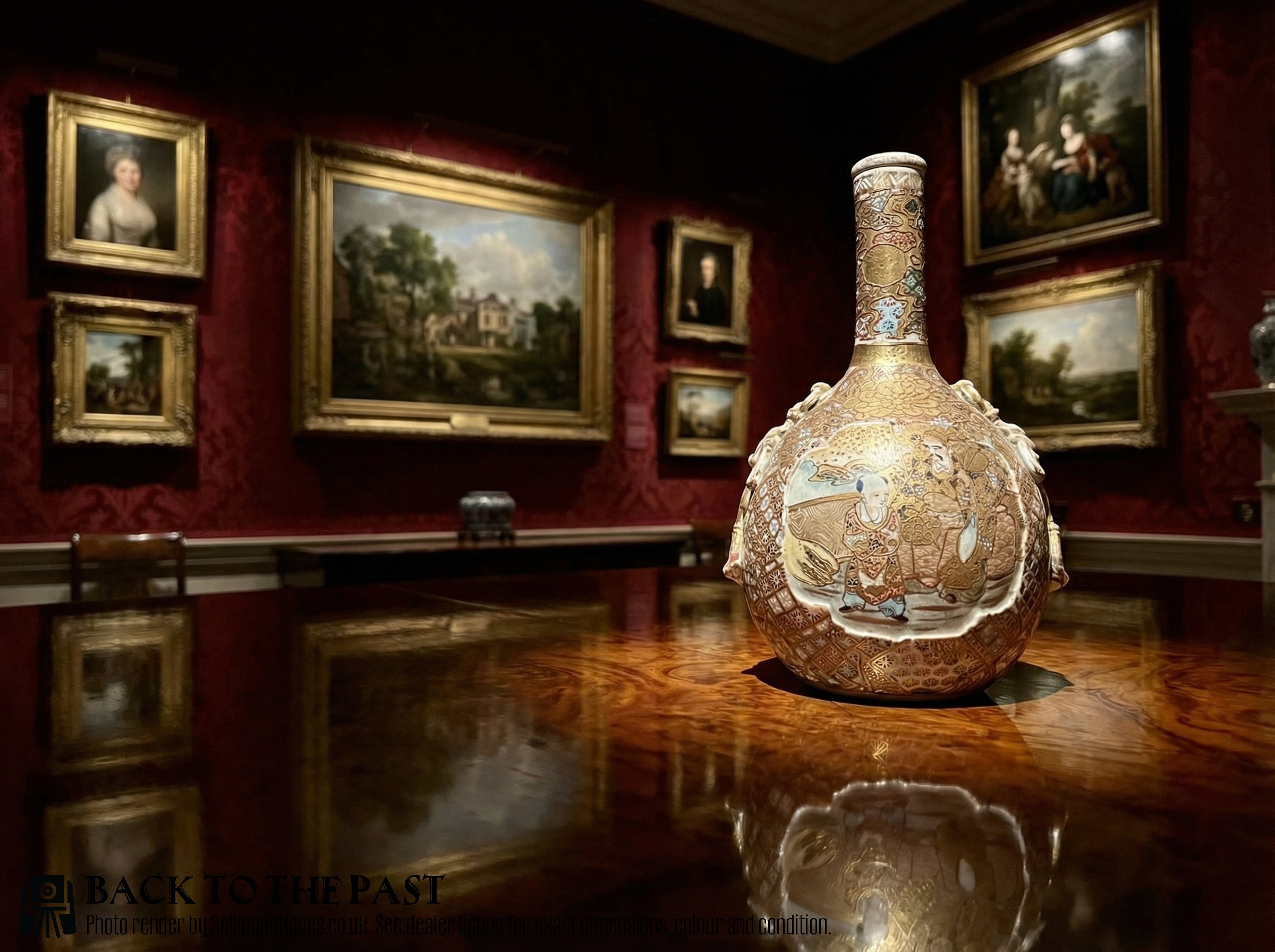
Japanese Porcelain Bottle
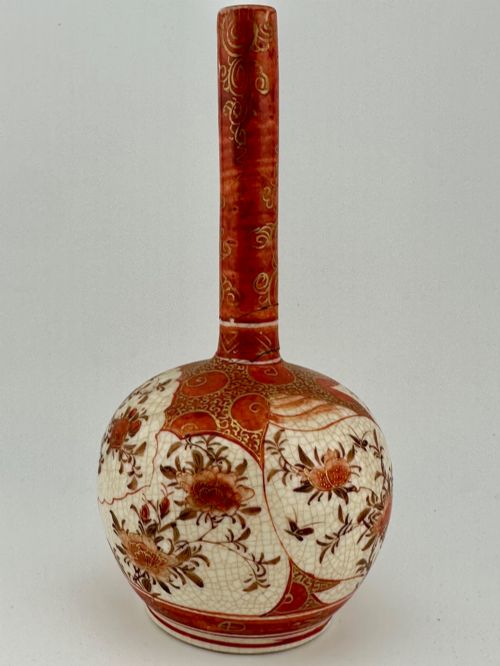
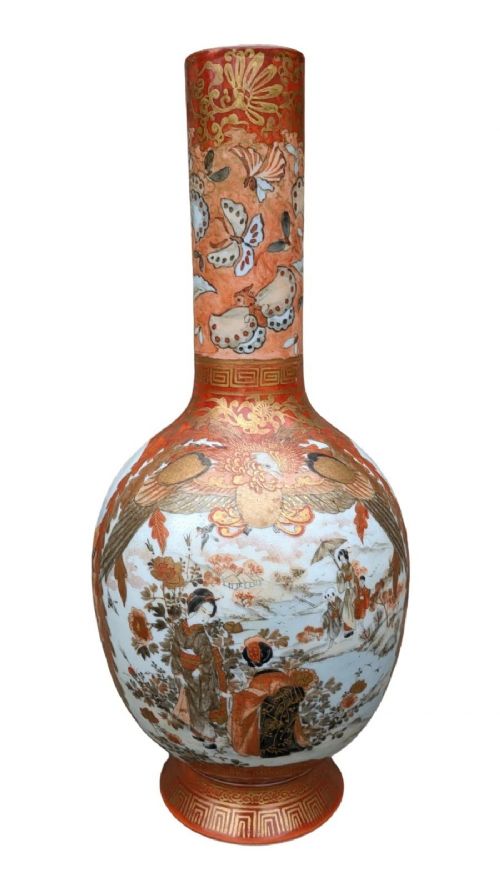
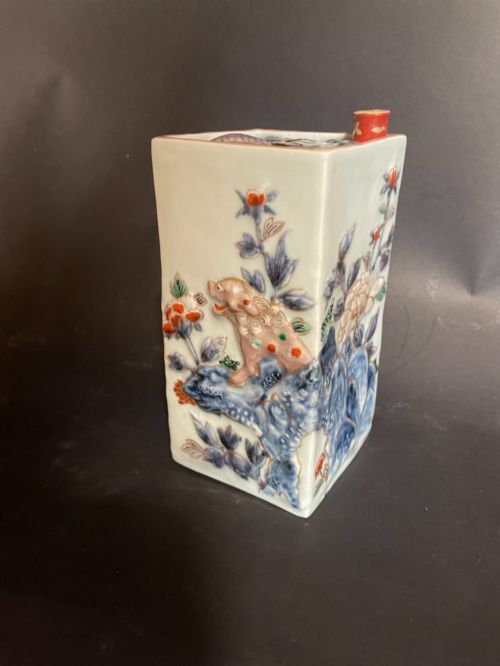
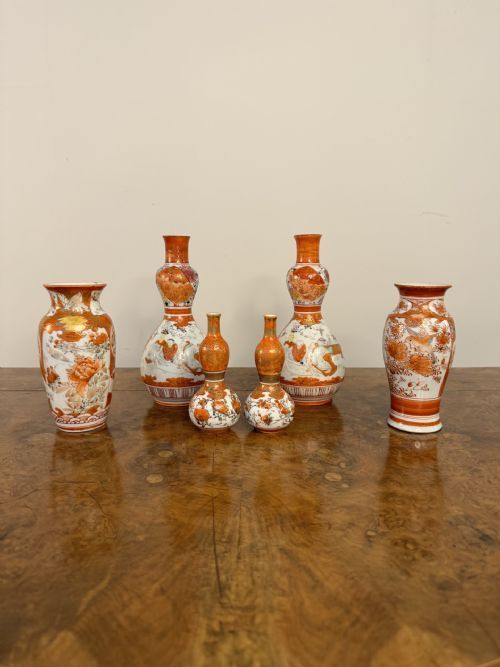
A japanese porcelain bottle appears in various historical forms, from small sake flasks to tall slender neck vessels and large display pieces. The listings show works originating across several centuries, including the seventeenth century and the Meiji period.
Buyers will most frequently encounter Japanese Imari designs alongside Kutani, Arita, and Satsuma wares on this page. These vessels serve primarily as decorative objects, often grouped in pairs or larger collections.
Forms span wine bottles, tokuri, and bottle shaped vases showing diverse regional painting traditions. Many examples reflect export markets or traditional domestic use from the Edo and Victorian eras.
Materials and Techniques
Potters shaped these vessels from ceramic and porcelain bodies, applying cobalt glazes and rich enamel colours by hand. Many pieces integrate gold leaf highlights to accent intricate patterns and figures.
Kiln methods evolved across the seventeenth century to the early twentieth century, utilising high-fired techniques for durability. Artisans combined underglaze blue with overglaze enamel decoration to achieve complex pictorial surfaces.
Materials documented across the collection include porcelain, earthenware, cobalt glaze, enamel, and gold leaf.
Assessing Quality
The refinement of the hand-painted decoration and the crispness of the cobalt glaze distinguish finer examples from standard production. Superior specimens display precise brushwork, balanced composition, and well-preserved gold leaf detailing.
The sophistication of the ceramic form, whether a delicate slender neck or a substantial bottle vase, contributes significantly to the overall distinction of the piece. Period execution and clarity of regional style further define the tier of each vessel.
Stevenson and Hancock
The Japanese Porcelain Bottle Glossary
- Imari
- A traditional style of Japanese porcelain decorated in underglaze blue, iron red, and gold. This aesthetic heavily influenced European ceramic production during the export periods.
- Kutani
- A style of Japanese pottery and porcelain known for vibrant overglaze colour palettes. These pieces frequently feature detailed figurative or natural scenes.
- Arita
- A Japanese town and production centre famous for early porcelain manufacturing. Kilns here produced foundational wares for both domestic use and international export.
- Tokuri
- A traditional Japanese flask or bottle used primarily for serving sake. These vessels typically feature narrow necks designed to retain liquids.
- Meiji Period
- An era in Japanese history spanning from 1868 to 1912 marked by significant artistic production for export. Works from this time often exhibit exceptional decorative complexity.
Japanese Porcelain Bottle: Frequently Asked Questions
What is a tokuri?
A tokuri is a traditional Japanese ceramic flask designed for holding and serving sake. These vessels typically feature a constricted neck and a rounded body.
Collectors prize them for their compact forms and historical utility in Japanese dining traditions.
How do I display a bottle vase?
Bottle vases suit placement on mantelpieces, sideboards, or open shelving where their slender silhouettes can stand alone. Pairs or small collections look striking when arranged together on a flat surface.
Ensure they sit away from heavy foot traffic to protect fragile slender necks from accidental knocks.
How are Imari and Kutani different?
Imari porcelain relies on a distinct palette of underglaze blue, iron red, and gold leaf. Kutani wares tend to feature bolder overglaze enamel colours and detailed pictorial scenes.
Both styles originated in Japan but developed separate visual traditions over centuries of kiln production.
Can these bottles hold water?
Many antique porcelain bottles can hold water safely, though porous antique ceramic bodies require careful handling. Most collectors use these vessels for dry display rather than as functional flower vases.
Checking the interior for old hairline cracks ensures liquid safety if utilised.