


Figural Satsuma Vase
A figural satsuma vase brings intricate Meiji Period artistry into a room, offering hand painted scenes filled with gold leaf and enamel.
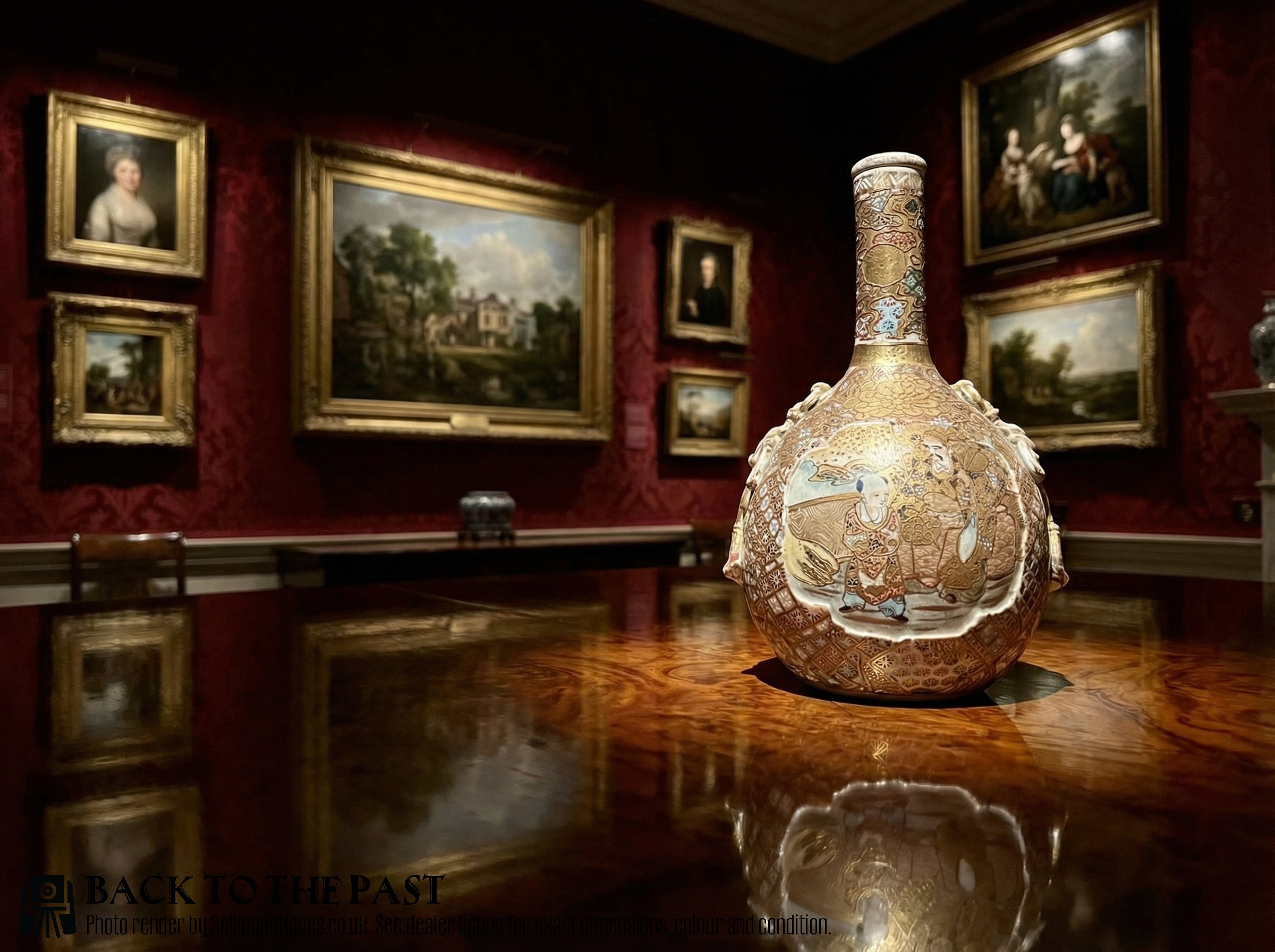
Figural Satsuma Vase
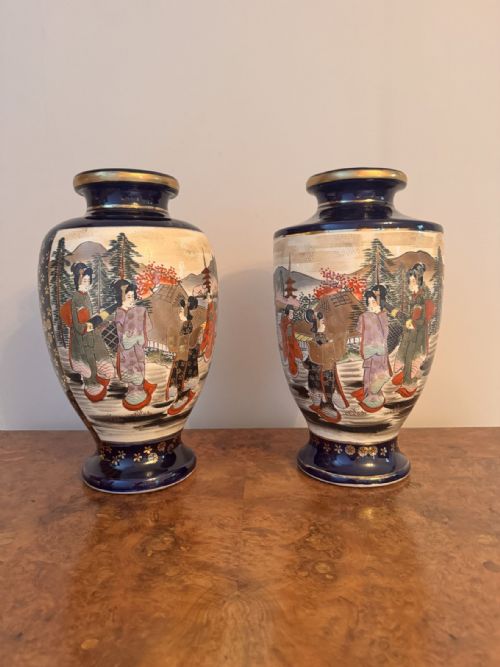
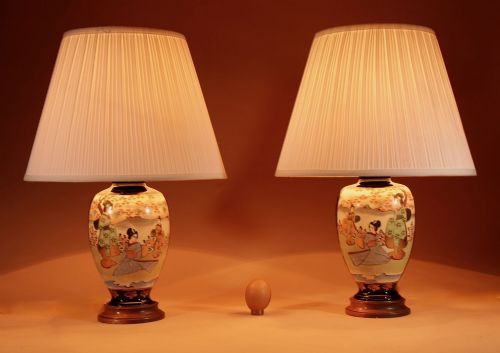
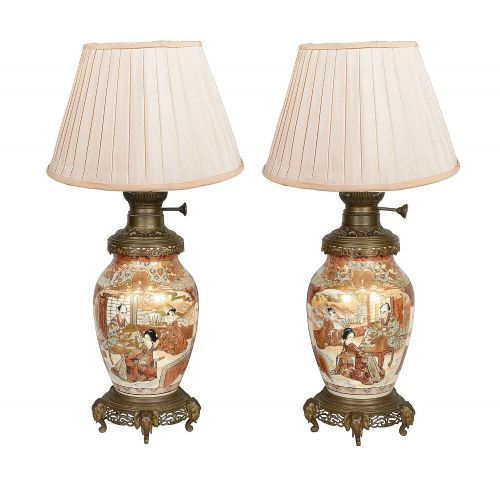
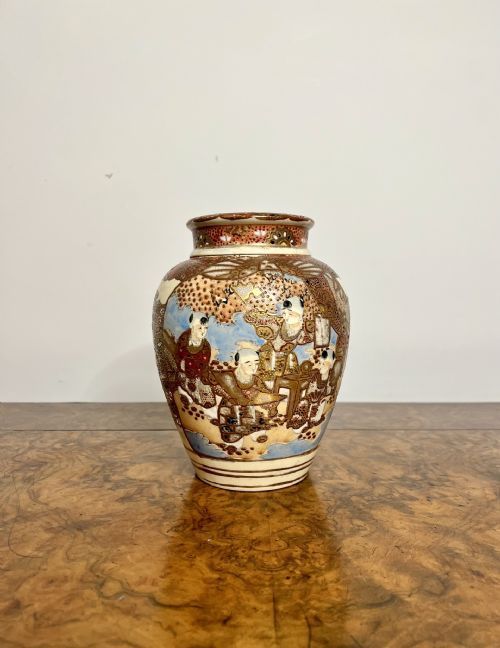
A figural satsuma vase is an earthenware vessel adorned with detailed human processions, figures, and traditional Japanese motifs. These decorative vases emerge primarily from the Meiji Period, spanning the late nineteenth century into the early twentieth century. Buyers encounter various forms on this page, including miniature vases, globular vases, ginger jars with covers, bottle vases, and pairs converted into table lamps.
The objects connect closely to nineteenth-century Japanese craftsmanship, showcasing diverse scales from tiny cabinet pieces to substantial display items. Some examples carry specific signatures from prominent makers, while others reflect the broader output of Japanese workshops from the period. Whether standing alone as an urn or wired as a lamp, each piece retains its distinct earthenware body and enameled surface decoration.
How they were made
Makers shaped these vessels from earthenware, creating porous ceramic bodies that received fine crackle glaze finishes before hand painting commenced. Artisans applied coloured enamels and gold leaf to build up complex figurative processions and decorative borders across the surface. Certain conversions also incorporate supplemental materials like silk, fabric, wood, and brass, particularly in lamp mountings.
The decoration relies on meticulous brushwork executed during the Meiji Period, sealing intricate narratives onto the ceramic substrate. Gilding highlights key figures within the processions, creating contrast against the matte or glossy enamel backgrounds. This combination of ceramic forming, enamel painting, and gold leaf application defines the physical reality of the pieces.
The listings span the Victorian era, the nineteenth century, and specific years from eighteen eighty up to nineteen twenty, featuring earthenware, enamel, gold leaf, silk, fabric, wood, and brass.
What varies in quality
Quality rests in the precision of the hand painted figural work and the density of the gold leaf application across the earthenware surface. Superior examples display exceptionally fine brush control in miniature processions, whereas lesser items show broader, less distinct enamel strokes. Signed pieces by established makers represent a higher standard of artistic execution.
The overall condition of the enamel and gilt layers determines the visual impact of the vase over time. Pairs matched in size and decoration command greater attention than single vessels, while converted table lamps depend on how sympathetically the wiring integrates with the ceramic body.
Chosei Mark·Kinkozan
The Figural Satsuma Vase Glossary
- Satsuma
- Earthenware pottery originating from the Satsuma Province in Japan, noted for its cream-coloured, crackle-glazed body. Makers decorated these wares with elaborate enamel and gold leaf designs.
- Meiji Period
- The era in Japanese history spanning from eighteen sixty-eight to nineteen twelve, coinciding with the reign of Emperor Meiji. Most pieces listed derive from this period of intense artistic output.
- Globular
- Having a spherical or rounded body shape. This form provides a wide canvas for circumferential figural processions.
- Ginger jar
- A ceramic vessel with a rounded body and matching cover, originally intended for storing spices. These jars feature similar enamel and gilt decoration to standard vases.
- Enamel
- Opaque or translucent glass paste fused to a ceramic surface through firing. It supplies the vibrant background colours for figurative scenes.
Figural Satsuma Vase: Frequently Asked Questions
How do I date a satsuma vase?
Dating relies on stylistic markers from the Meiji Period, nineteenth-century manufacturing techniques, and occasional artist signatures or kiln marks on the base. Pieces from the eighteen eighties and nineties often display finer hand painted detail than later iterations.
Comparing the style of the figural processions and the quality of the gold leaf helps establish the approximate production era.
Are satsuma lamps original?
Many satsuma lamps began life as decorative vases or ginger jars before receiving electrical fittings at a later date. This conversion was common during the early twentieth century to adapt antique vessels for modern domestic lighting.
Original ceramic bodies remain intact, though mounted with materials like brass, wood, silk, or fabric for functional stability.
How should I clean my vase?
Cleaning requires a soft, dry cloth to remove dust gently from the enameled and gilt surfaces without moisture. Avoid chemical cleaning agents or abrasive materials that could damage the delicate gold leaf and crackle glaze.
Regular, gentle dusting preserves the historic surface finish of the earthenware.