
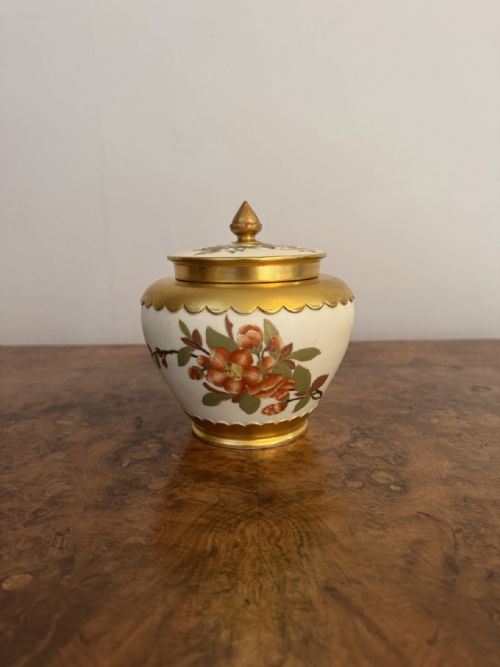
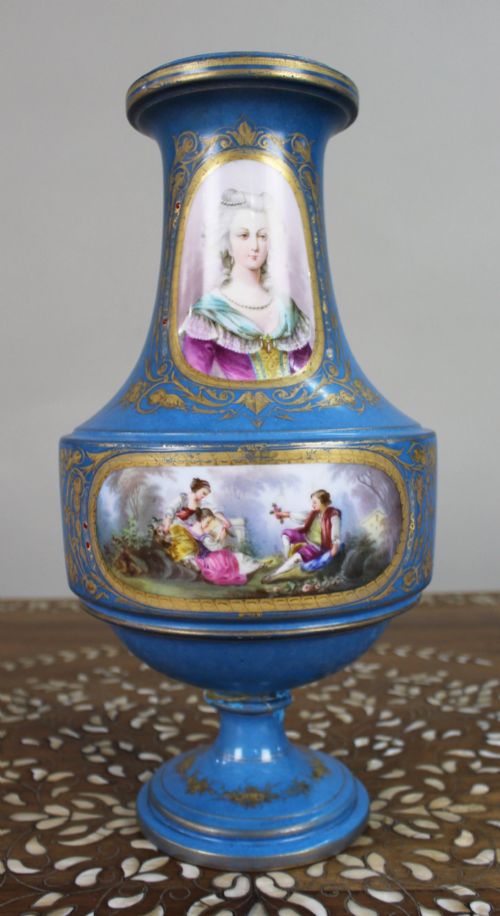
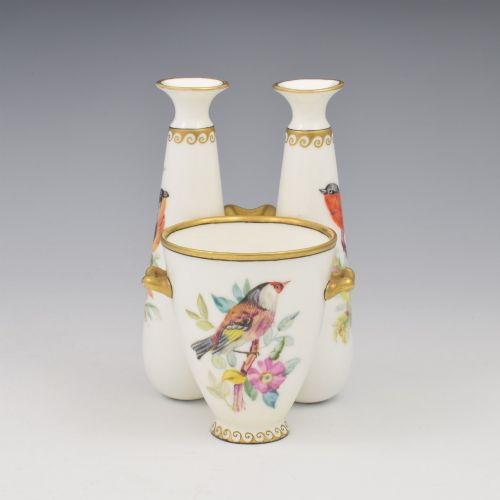

Gilt Painted Ceramic Vase
When you search for a gilt painted ceramic vase, you meet centuries of European and Japanese porcelain, earthenware and bone china touched with gold leaf, enamel and gilding.
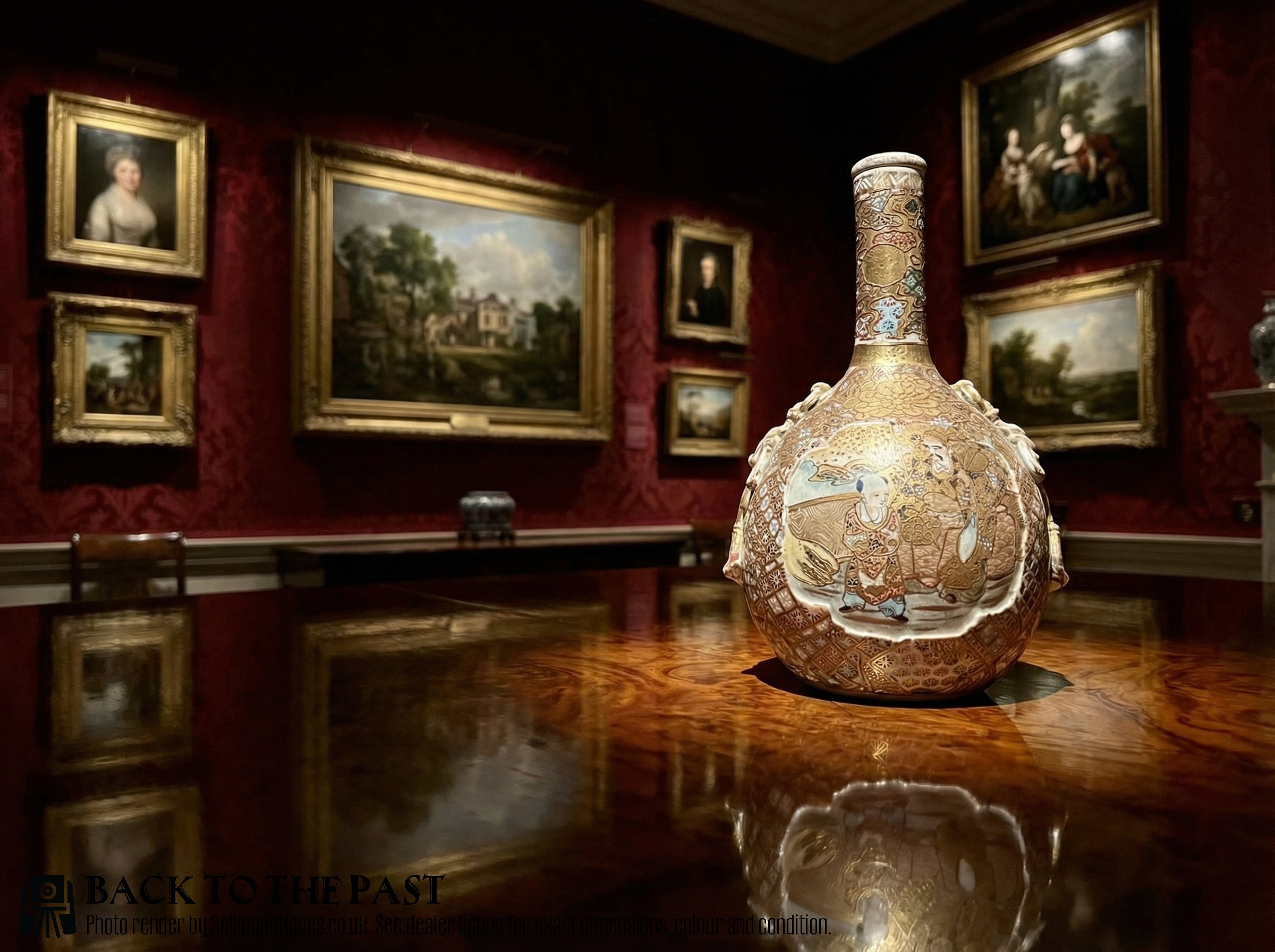
Gilt Painted Ceramic Vase
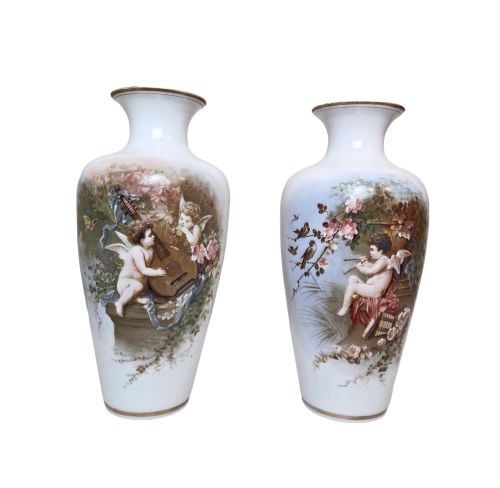
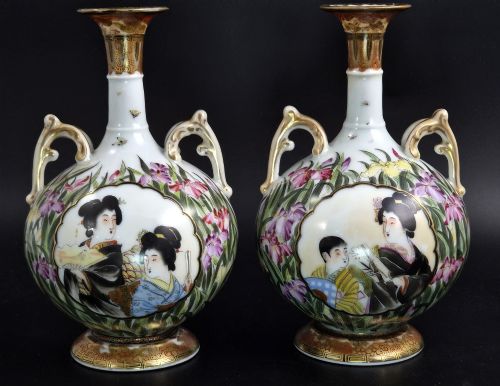
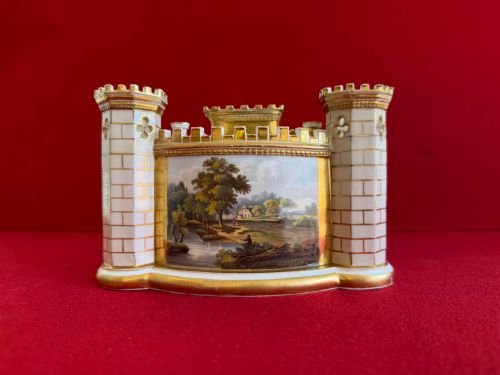
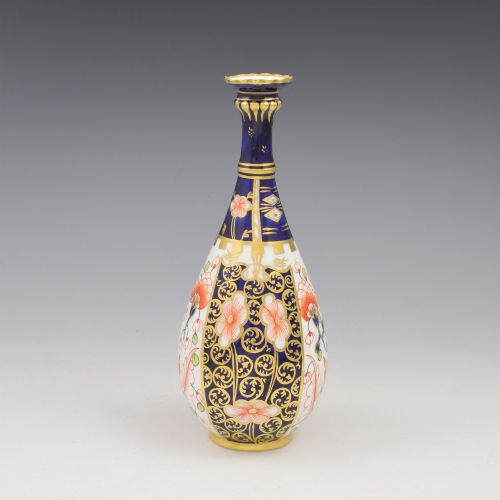
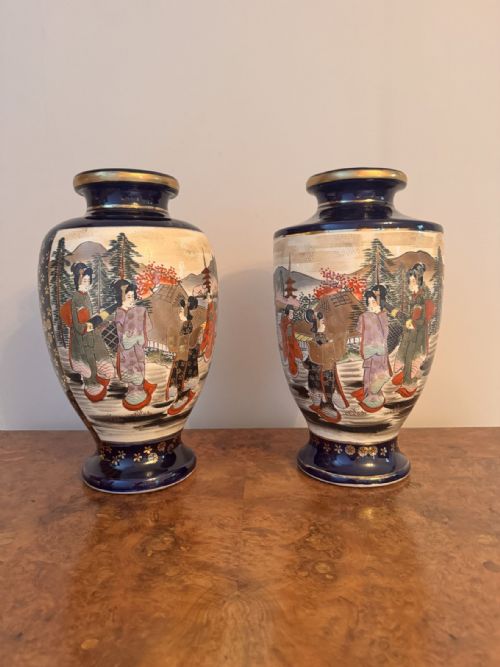
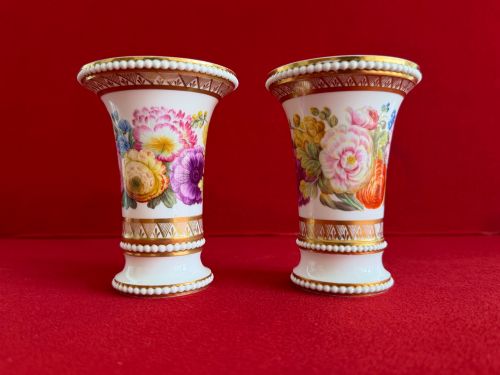
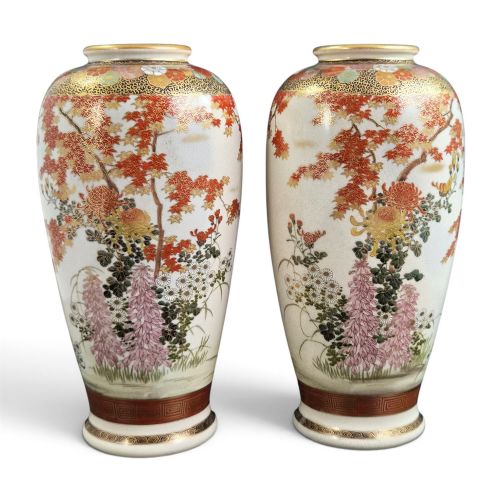
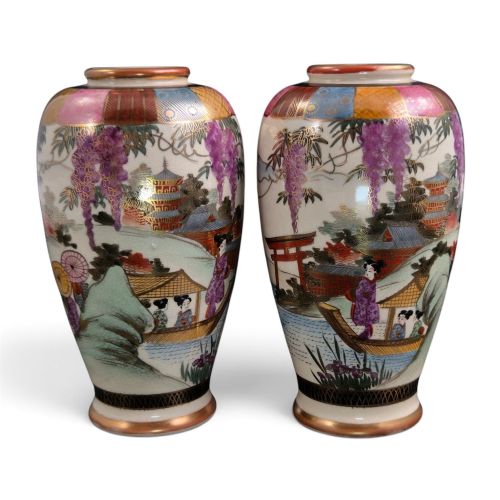
A gilt painted ceramic vase brings together the potter's art and the gilder's hand, spanning English porcelain, French porcelain, German porcelain and Japanese earthenware from the Georgian period through to the Edwardian era. You encounter forms ranging from campagna urns, potpourri pots and table lamps to cabinet vases and garniture sets. The selection draws heavily upon nineteenth-century production alongside Japanese Satsuma and Imari pieces created for export during the Meiji period.
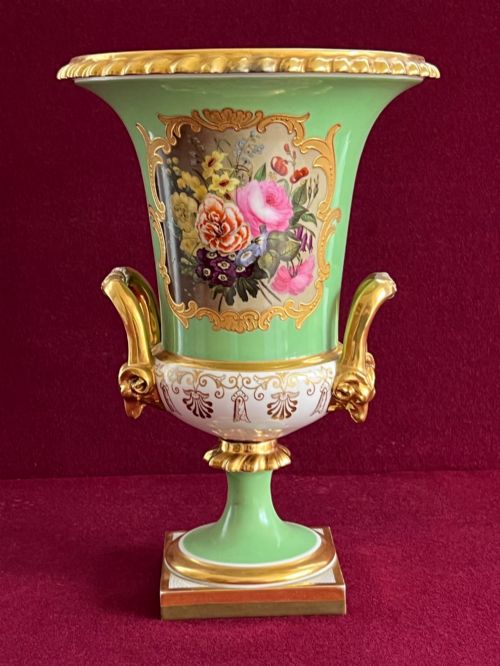
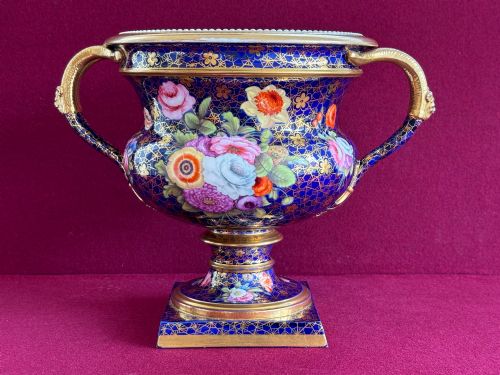
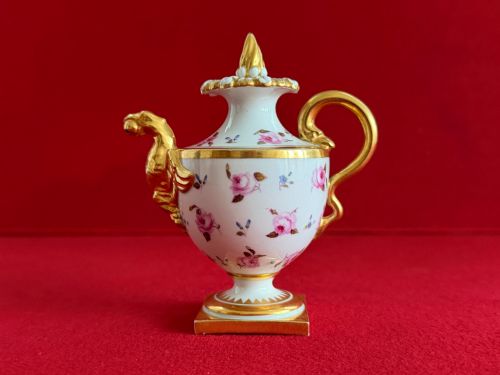
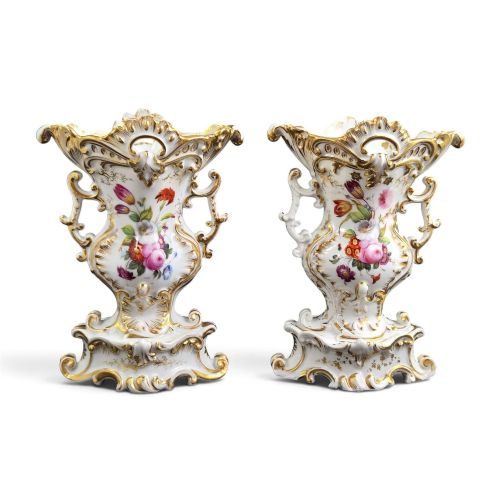
Makers such as Royal Worcester, Flight, Barr & Barr, and Chamberlain Worcester represent the high standard of English porcelain production, often featuring hand-painted floral panels or ornithological studies enriched with raised gilding. Alongside these sit continental works from Sèvres, Meissen, and Paris, together with intricate Japanese earthenware vessels signed by Kyoto and Kobe studios. Each piece demonstrates how ceramic bodies provided a stable ground for elaborate gold decoration.
Materials and Technique
The foundation of every gilt painted ceramic vase rests upon refined ceramic bodies, encompassing hard-paste porcelain, soft-paste porcelain, bone china and earthenware. Potters shaped these materials on the wheel or cast them in moulds to create urns, amphorae, and spill vases before firing them to secure the clay or porcelain body.
Painters applied enamel colours and gold leaf, utilising liquid gold or metal leaf before a secondary low-temperature kiln firing fused the precious metal to the glaze. Gilding techniques included burnishing the metallic surface with agate stones to create contrasting matte and bright gold details across the ceramic ground.
Several Japanese export vases include miniature scenes featuring bustling figural processions painted entirely by hand beneath microscopic layers of gold.
Understanding Quality
Quality in a gilt painted ceramic vase rests upon the crispness of the porcelain throwing or moulding and the precision of the hand-painted decoration. Superior examples display finely rendered botanical or figural scenes executed by named artists, whereas lesser pieces rely on transfer-printing beneath simple gilt lines.
The application and preservation of the gold leaf or gilding distinguish finer productions, particularly where burnishing creates varied textures against cobalt blue, blush ivory, or turquoise grounds. Well-preserved pieces retain the integrity of their raised gilding without rubbing or loss to the high points of the design.
Flight Barr and Barr·Jacob Petit·Royal Worcester·Helena Wolfsohn·Royal Vienna·Royal Doulton
The Gilt Painted Ceramic Vase Glossary
- Gilding
- The application of gold leaf or gold powder to the ceramic surface to ornament the vessel. This technique creates borders, highlights, and intricate motifs that catch the light.
- Bleu Céleste
- A bright turquoise blue glaze colour developed at the Sèvres porcelain factory in France. It often forms a rich ground colour behind gilt painted panels.
- Campagna Urn
- A classical bell-shaped vessel with a flared rim and pedestal foot, commonly produced in porcelain during the nineteenth century. These forms provide wide surfaces for painted and gilded scenes.
- Potpourri Pot
- A lidded ceramic vessel pierced to allow dried scented flowers and spices to release fragrance into a room. These containers frequently feature elaborate gilding and painted decoration.
- Satsuma
- Japanese earthenware pottery produced in the Satsuma domain and decorated with intricate enamel and gold motifs. These pieces often depict historical figures, landscapes, and floral arrangements.
Gilt Painted Ceramic Vase: Frequently Asked Questions
How should I clean a gilt ceramic vase?
Dust these vessels gently with a soft, dry brush to protect the delicate gold leaf and enamel decoration from abrasion.
Avoid using water, chemical cleaners, or damp cloths, as moisture can lift old gilding and damage vulnerable ceramic glazes.
Can I use these vases for fresh flowers?
Most antique porcelain and earthenware vessels were intended for display rather than daily utilitarian use with water. Thermal shock and internal moisture can compromise old ceramic bodies and historical glazes.
Utilise a small glass liner inside the neck if you wish to display fresh stems without exposing the interior to standing water.
How do I identify the period of a piece?
Examine the base for factory marks, pattern numbers, and impressed ciphers that correspond to known nineteenth-century or early twentieth-century registers.
Consider the painting style, palette, and ceramic paste, as Georgian and Victorian bodies differ noticeably in weight and translucency from later Edwardian productions.
What is a garniture set?
A garniture set consists of three or more matching vases designed to be displayed together on a mantelpiece or sideboard. Typically comprising a central urn flanked by matching side vases, these matched groups create a balanced decorative display.
Collectors prize complete surviving sets where the gilding and hand-painted motifs remain uniform across every vessel.