


Japanese Porcelain Baluster Vases
Japanese porcelain baluster vases bring centuries of kilncraft into a room, offering swelling curves and hand-painted palettes that anchor traditional and modern interiors alike.
Japanese Porcelain Baluster Vases
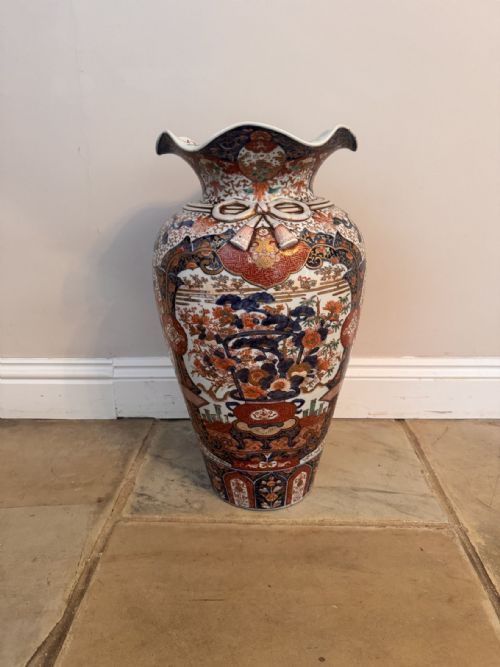
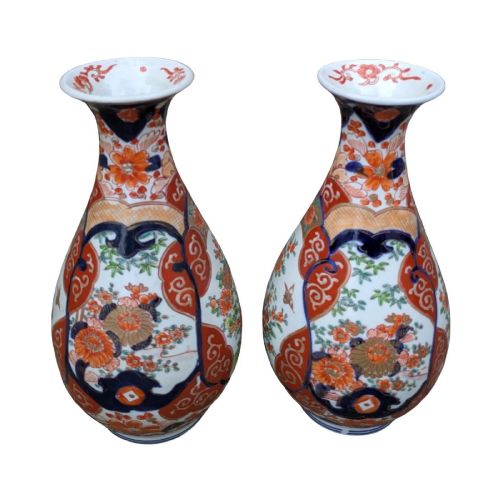
Japanese porcelain baluster vases present a distinctive profile characterised by a narrow neck, a rounded body that swells toward the middle, and a stable foot. When searching for japanese porcelain baluster vases, collectors commonly encounter pieces spanning the Edo, Meiji, and Victorian eras up to the Edwardian period.
Origins trace from early Arita kilns through to later nineteenth-century workshops, providing buyers with options ranging from compact cabinet items to large decorative vases and urns.
How they were made
Potters shaped fine porcelain clay on the wheel into the characteristic baluster silhouette before applying underglaze blue and overglaze enamel colours. Artisans then integrated gold leaf, gilding, and gilt highlights to enrich the decorative surface.
Firing took place in traditional wood or coal-fired kilns, which imparted unique variations to the glaze and enamel finish. Certain specimens received supplementary mounts in ormolu during later European repurposing.
Some industrious Victorian owners turned grand export vases into floor lamps, wiring them for electricity.
What varies in quality
The standard of painting defines the division between ordinary production and superior works, separating rushed output from meticulous brushwork. Precision in the handling of the Imari palette and the crispness of the porcelain body dictate the overall merit of a piece.
Scale and ambition also influence standing, with monumental floor vases and complex lidded garnitures demanding greater technical mastery from the potter. The integration of gold leaf and the preservation of the original glaze condition further determine the rank of the object.
Makuzu Kozan
The Japanese Porcelain Baluster Vases Glossary
- Baluster
- A vertical architectural form resembling a pillar or vase, curving out gently from a narrow neck toward a rounded base. This shape provides the structural foundation for the pieces in this category.
- Imari
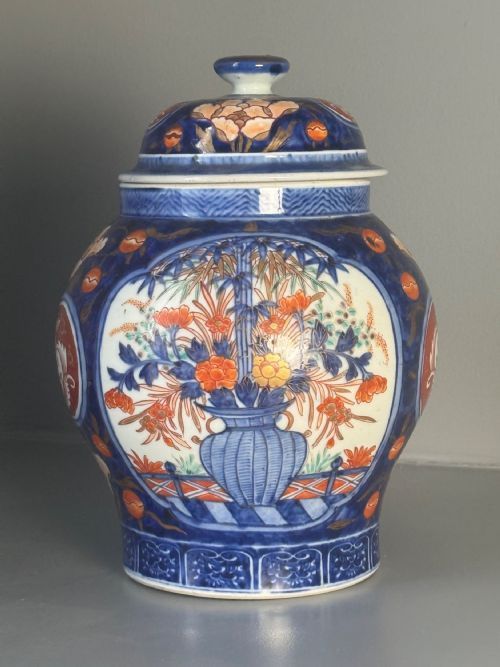
- A traditional Japanese style of porcelain decoration originating from Arita, typically featuring a distinctive palette of underglaze blue, iron red, and gold. Artisans applied these rich colours in intricate geometric and floral patterns.
- Satsuma
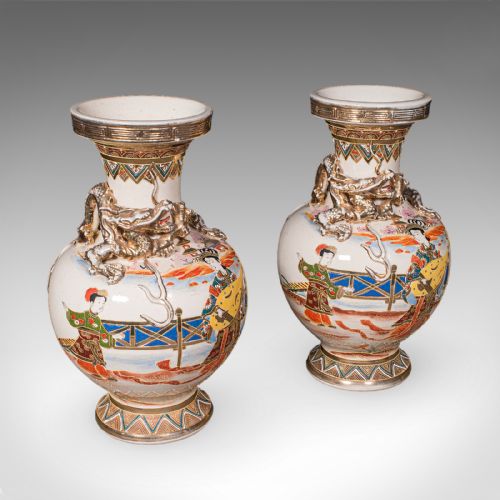
- A type of Japanese earthenware characterised by a warm, ivory-coloured cracked glaze decorated with polychrome enamels and gilding. These wares frequently depict figures, landscapes, and detailed floral motifs.
- Meiji Period
- The era in Japanese history spanning from 1868 to 1912, noted for a surge in export ceramics created for Western markets. Pieces from this time often display ambitious scale and elaborate ornamentation.
- Garniture
- A set of matching vases or vessels, usually numbering three or five, designed to be displayed together on a mantelpiece or sideboard. They typically include a mix of lidded and open forms.
- Arita
- The Japanese town and surrounding region renowned as the birthplace of Japanese porcelain production. Kilns here produced the early blue and white wares as well as classic export Imari.
Japanese Porcelain Baluster Vases: Frequently Asked Questions
How were baluster vases used originally?
These vessels served primarily as decorative objects within traditional Japanese interiors and later as prominent display pieces in European and American homes. Large examples often anchored mantel garnitures or stood directly upon the floor in reception rooms.
Over time, some vases were adapted into table lamps or fitted with custom mounts, transitioning from purely ornamental displays to functional home furnishings.
How do I date a Japanese porcelain vase?
Dating relies on examining the stylistic markers, potting techniques, and the historical context of the piece. Edo period examples often show earlier Arita characteristics, while Meiji period items typically reflect the elaborate export aesthetic of the late nineteenth century.
Evaluating the condition of the glaze, the composition of the ceramic body, and any associated signatures helps narrow the period of manufacture.
What is the difference between Imari and Satsuma?
Imari describes porcelain decorated in a distinct palette of cobalt blue, iron red, and gold, featuring crisp glazes and hard bodies. Satsuma refers to a crackle-glazed earthenware body painted with detailed polychrome enamels and heavy gilding.
While both styles gained immense popularity during the export eras, their underlying ceramic material and surface textures remain entirely distinct.
How should I care for antique porcelain?
Dust the surface gently with a soft, dry cloth to prevent the accumulation of dirt within the intricate enamel work and crevices. Avoid using chemical cleaners, water, or abrasive materials that could damage the delicate gold leaf and overglaze decoration.
Position the vase away from direct sunlight and areas subject to sudden temperature fluctuations to protect the integrity of the antique glaze and body.