


Japanese Polychrome Enamel Vases
Japanese polychrome enamel vases are decorative vessels of remarkable colour and detail, offering collectors intricate artistry from the Meiji period onwards.
Japanese Polychrome Enamel Vases
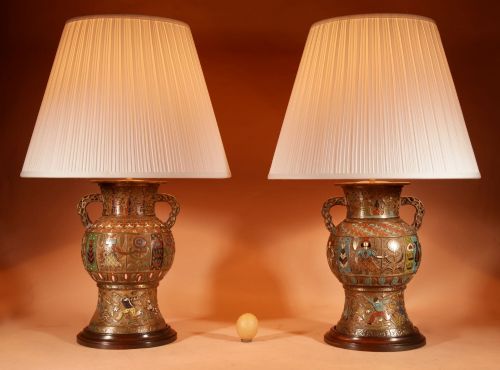
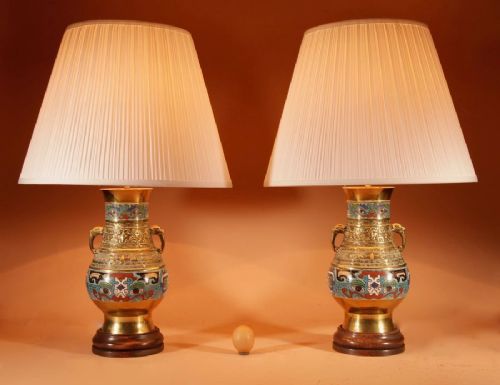
When you search for Japanese polychrome enamel vases, you are looking at decorative vessels and palace vases created during the 19th and early 20th centuries, predominantly spanning the Meiji, Edo, and early Showa periods. These pieces encompass Satsuma earthenware, Champlevé and Cloisonné enamel on bronze, brass, or copper foundations.
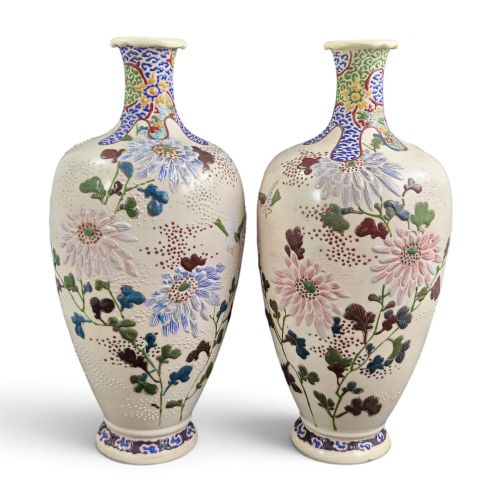
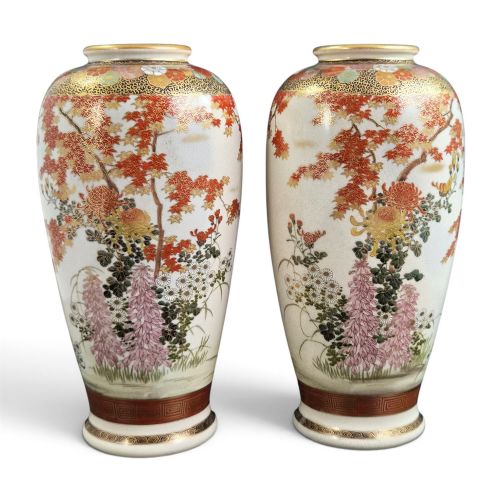
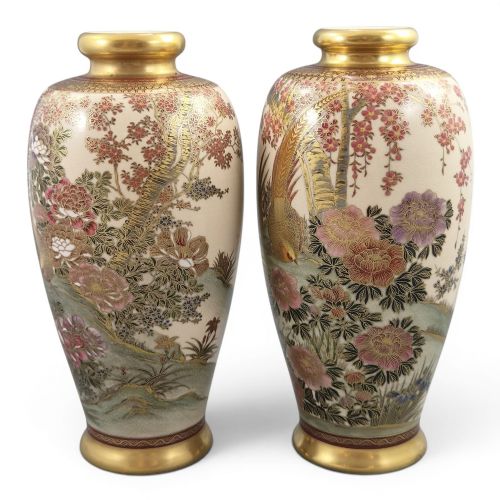
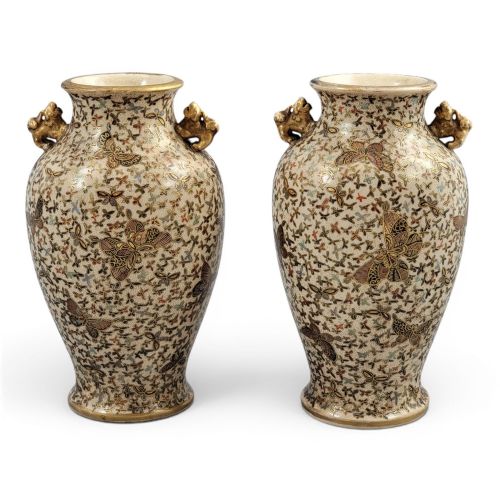
The most common examples you will encounter on this page are Satsuma vases featuring moriage decoration, floral motifs, and thousand-butterfly patterns, alongside bronze table lamps adapted from Champlevé enamel vessels. They originate from workshops and makers in Kyoto and Kobe, reflecting traditional Asian antique styles.
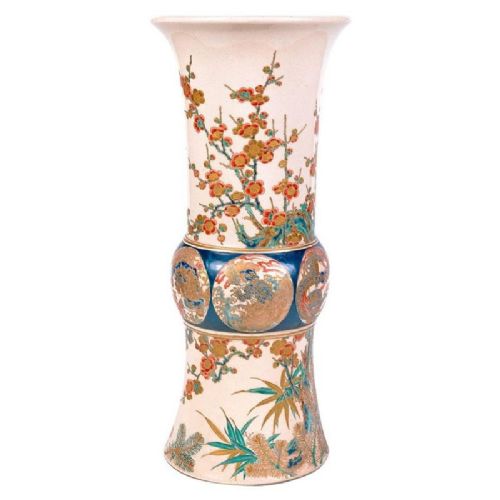
The forms range from modest table vases to huge palace vases standing over ninety centimetres tall, often bearing signatures or mon symbols. Each piece represents the intersection of traditional Japanese craftsmanship and international export demands during the late Victorian and Edwardian eras.
How they were made
The makers formed these vessels using earthenware, bronze, brass, or copper as a foundational body before applying detailed surface ornamentation. Cloisonné and Champlevé techniques utilised wire cells or carved troughs filled with coloured enamel pastes, which were then fired and polished to a smooth finish.
Satsuma ware pieces relied upon a finely crackled cream glaze over earthenware, painted by hand with polychrome enamels and enriched with gold leaf. Specialised workshops applied raised moriage details and intricate flowerhead patterns using dense enamel pastes built up in layers.
Countless tiny butterflies flutter across Satsuma surfaces, preserved mid-flight in enamel since the nineteenth century.
What varies in quality
Quality rests in the precision of the enamel work, the complexity of the painted motifs, and the clarity of the underlying bronze or earthenware body. Pieces bearing identifiable maker signatures or mon symbols demonstrate higher workshop standards.
The scale and ambition of the vessel dictate distinction, moving from standard decorative items to exhibition quality palace vases and matched pairs. Superior examples display meticulous hand-painted detail without blurring across the enamel cells or glaze fields.
Manpei Kobe·Kinzan·Kinkozan·Maruni Kobe·Hododa
The Japanese Polychrome Enamel Vases Glossary
- Satsuma
- Earthenware pottery originating from Satsuma Province, known for its ivory crackle-glaze and polychrome enamel decoration. It became a primary export for Japan during the late 19th century.
- Cloisonné
- An enamel technique where metal wires are soldered to a metal base to form compartments, which are filled with paste and fired. This method creates intricate patterns defined by thin metal lines.
- Champlevé
- An enamelling method where troughs or cells are carved directly into a thick metal surface to hold the coloured paste. The resulting vessels have heavier bronze or brass walls than standard cloisonné.
- Moriage
- A decorative ceramic technique using raised slip or enamel to create a textured, three-dimensional surface on pottery. It frequently outlines floral and butterfly motifs on Satsuma vases.
- Mon
- A traditional Japanese emblem or crest used to identify families, clans, or organizations. They often appear on high-quality exported ceramics and metalwork.
Japanese Polychrome Enamel Vases: Frequently Asked Questions
How do I identify a Meiji period vase?
Meiji period vases typically display dense polychrome decoration, precise cloisonné wirework, or Satsuma earthenware with rich gilding. Many pieces carry signatures from prominent makers or specific workshop marks.
Examine the weight and the base of the vessel for signs of traditional manufacturing methods characteristic of the late 19th century.
What is the difference between cloisonne and champleve?
Cloisonné involves soldering thin metal wires onto a metal base to create cells for enamel paste, resulting in a distinct grid of fine metal lines. Champlevé involves gouging or carving troughs directly into a thicker metal body to hold the enamel.
Champlevé vessels usually use bronze or brass foundations and feel heavier in the hand than standard cloisonné pieces.
Where were Satsuma vases made?
Satsuma wares originated in the Satsuma Province of Kyushu, but during the Meiji period production expanded significantly to major urban centres like Kyoto and Kobe. Master workshops in these cities produced refined pieces specifically for international export.
Studio artists and prominent makers signed their work to distinguish their output in global markets.
How should I display a large palace vase?
Large palace vases require stable, sturdy placement away from heavy foot traffic due to their height and weight. Positioning them on dedicated pedestals or low tables protects the ceramic or bronze body from accidental knocks.
Keep them out of direct sunlight to preserve the vibrancy of the polychrome enamels and gold leaf details.