




Asian Decorative Floor Vases
Asian decorative floor vases bring scale and striking colour to a room, ranging from monumental temple jars to large palace vessels.
Asian Decorative Floor Vases
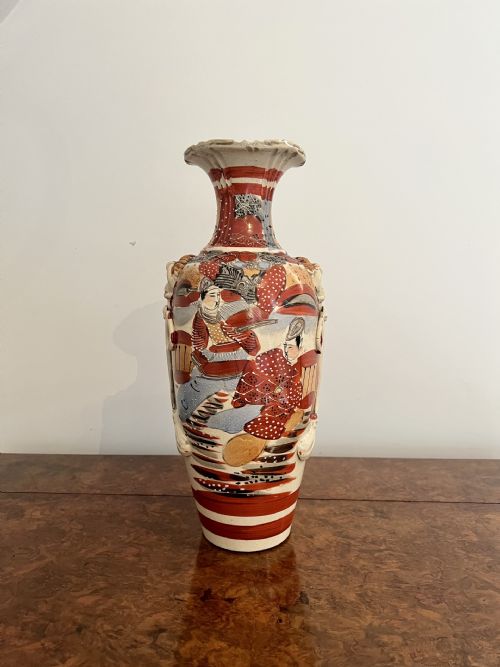
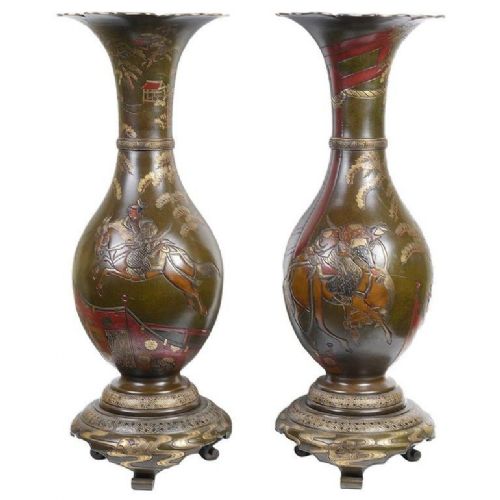
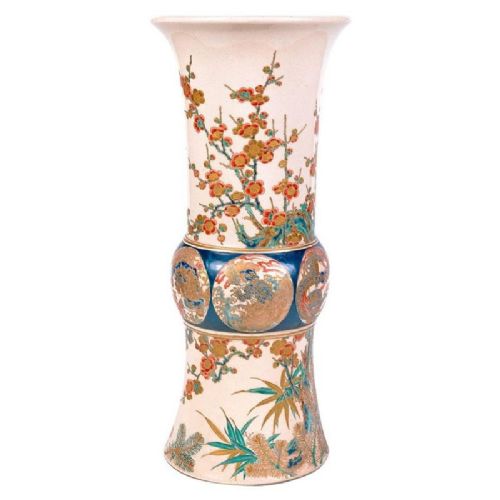
Asian decorative floor vases are large-scale vessels designed to stand directly on the floor rather than on furniture, filling empty corners and wide hallways with substantial presence. The examples seen here include towering temple jars, palace vessels, and tall baluster shapes that command attention in any large interior space.
You will most frequently encounter Japanese Imari, Satsuma, and Cloisonne pieces alongside Chinese export and Chinoiserie works. These span from the nineteenth century through to the early twentieth century, taking the form of monumental pairs and individual statement pieces.
The decorative schemes span traditional bird and floral motifs, dramatic koi fish, and mythological phoenix designs rendered in rich enamels, gold leaf, and cobalt blue. Many pieces reflect specific historical eras such as the Meiji and Edo periods, offering a clear window into traditional craftsmanship.
Materials and methods
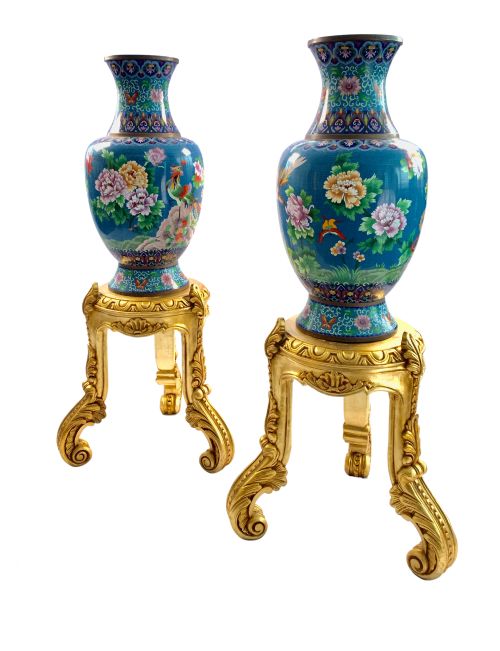
These vessels are built from heavy porcelain, earthenware, or bronze foundations, often shaped into massive proportions that require advanced kiln technology and careful structural support during firing. Cloisonne examples employ fine copper or brass wire soldered to a metal base to create individual cells which are subsequently filled with enamel paste and fired repeatedly.
Surface decoration relies on meticulous hand-painting using rich enamel palettes, underglaze blue, and applied gold leaf to build intricate pictorial narratives. Some pieces incorporate layered techniques such as lacquer applied over black paint or carved wood components to add texture and depth to the finished form.
Several giant palace vessels feature painted phoenixes and swimming koi fish that have kept watch over quiet corners for over a century.
Judging quality and execution
The distinction between ordinary and exceptional pieces lies in the discipline and precision of the brushwork or the exactness of the wirework in enamel pieces. Finer examples display crisp, controlled lines and harmonious colour palettes without the muddiness or misalignment seen in lesser executions.
Scale and proportion dictate much of the desirability, particularly when considering monumental pairs where symmetry and matching decorative panels must balance across immense heights. The depth of the gilding and the clarity of the underlying ceramic body or metal foundation further separate standard production from masterworks.
The Asian Decorative Floor Vases Glossary
- Cloisonne
- A decorative metalwork technique where thin wires form compartments that are filled with enamel paste and fired. This method creates vibrant, patterned surfaces across bronze and copper vessels.
- Imari
- A traditional Japanese style of porcelain decorated in underglaze blue, iron red, and gold. These pieces often feature dense, symmetrical floral and geometric arrangements.
- Satsuma
- Earthenware pottery featuring a characteristic ivory-coloured, crackle-glazed surface decorated with polychrome enamels and rich gilding. It gained immense popularity for export during the late nineteenth century.
- Meiji Period
- A span of Japanese history lasting from eighteen sixty-eight to nineteen twelve characterised by a surge in decorative arts created for international export. Work from this era often exhibits supreme technical mastery.
- Chinoiserie
- European artistic styles reflecting Chinese motifs and decorative techniques, often applied to lacquer and furniture. This aesthetic influenced various large decorative items made for Western markets.
Asian Decorative Floor Vases: Frequently Asked Questions
Where should I place a floor vase?
These large vessels sit best in wide entryways, grand hallways, or empty corners where their height and scale can be fully appreciated without obstructing movement.
They function independently as sculptural focal points and do not require floral arrangements to fill the space.
How do I care for antique enamel?
Dust the surface gently with a soft, dry cloth and avoid using chemical cleaners or abrasive materials that might scratch the delicate enamel or lift the gilding.
Keep the vessel away from direct sunlight and damp environments to protect both the metal foundations and the painted decoration.
Are these vases heavy?
Due to their substantial height and dense materials like porcelain, bronze, and thick enamel, these pieces possess considerable weight and require a stable, level floor surface.
Moving them usually requires two people to ensure the base and rim remain secure during repositioning.
What defines an Edo period piece?
The Edo period represents a time of internal peace and artistic development in Japan, predating the more commercially driven Meiji export era.
Vessels from this time often show restrained elegance and traditional craftsmanship intended for domestic appreciation rather than foreign trade.