




Japanese Painted Ceramic Vessel
A Japanese painted ceramic vessel brings intricate painted detail and rich history into a room, spanning centuries of skilled artisan work.

Japanese Painted Ceramic Vessel
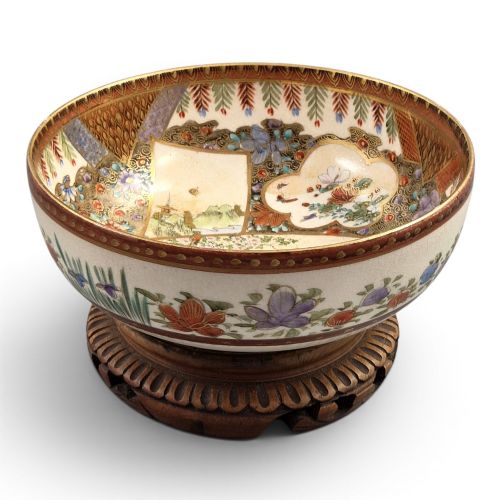
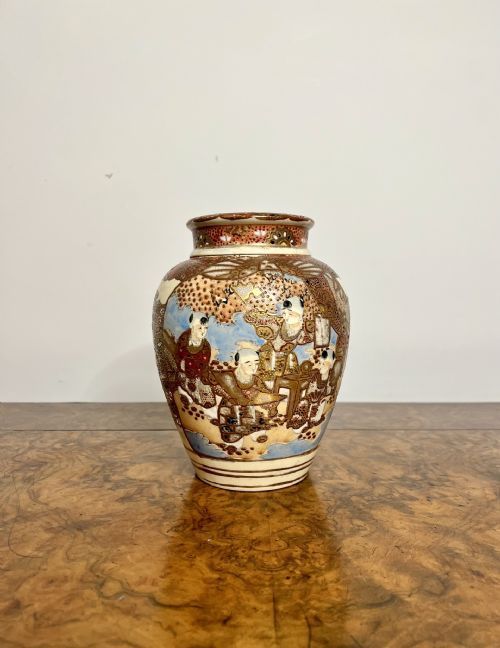
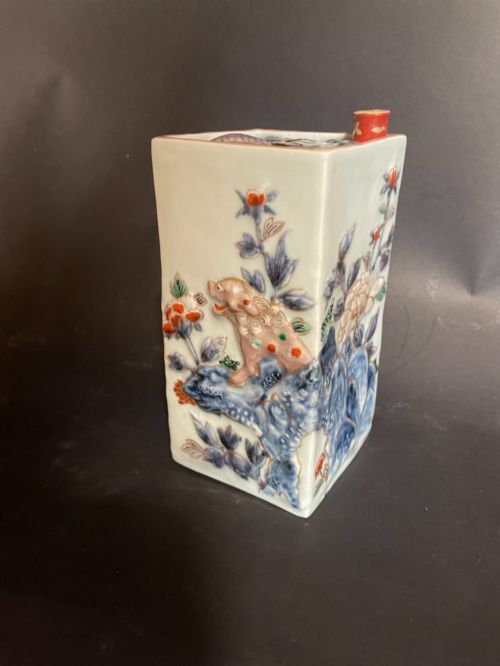
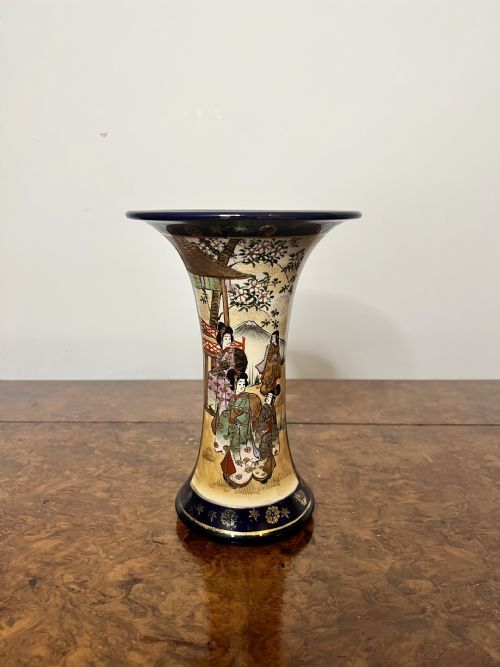
A japanese painted ceramic vessel encompasses varied ceramic forms created for utility and display across several centuries, with pieces from the Meiji period forming a prominent part of the selection.
The objects take shapes such as vases, incense burners, decorative bowls, and ginger jars, originating from distinct historical periods ranging from the Edo period through to the Showa period.
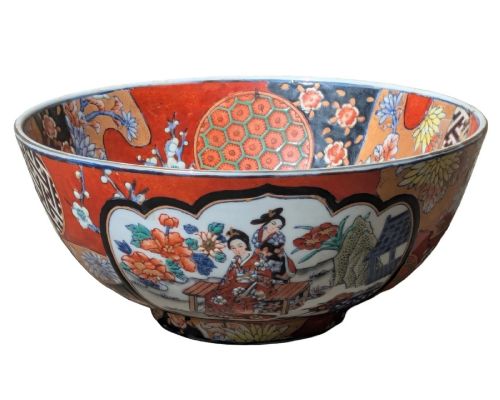
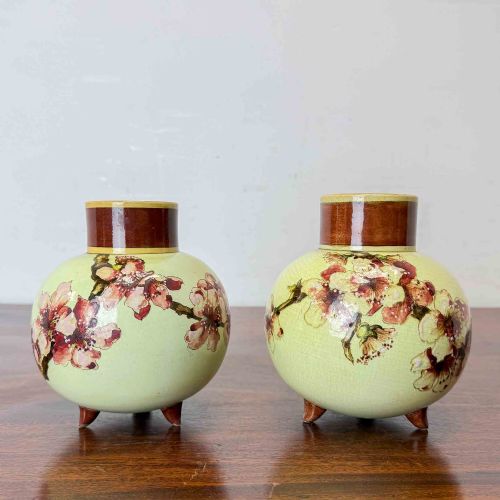
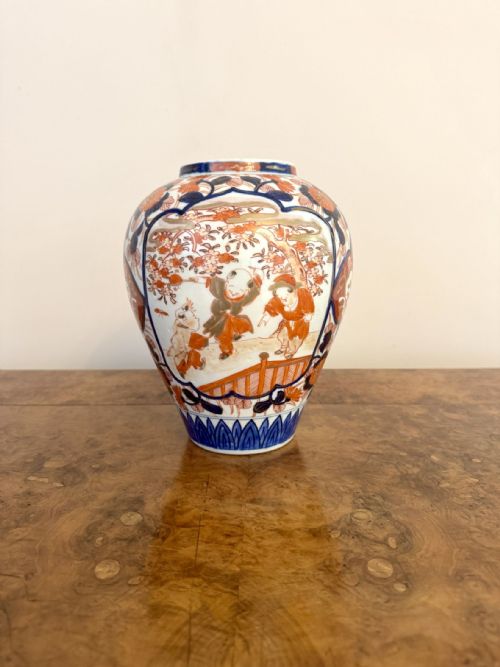
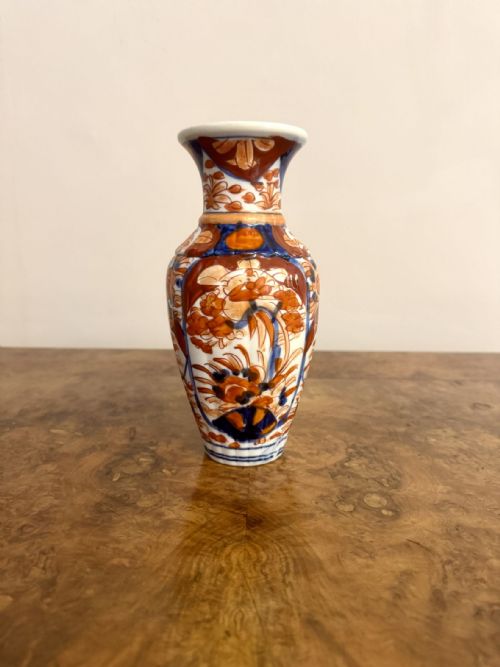
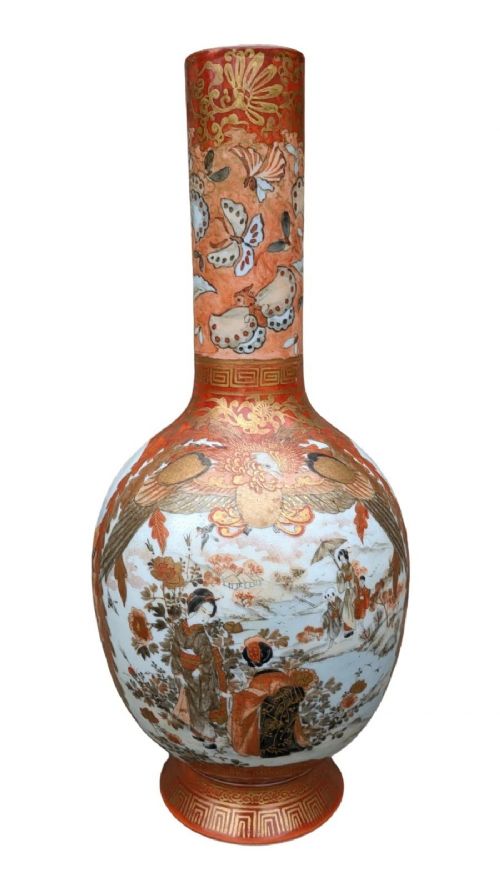
Buyers seeking a japanese painted ceramic vessel encounter diverse regional styles like Imari, Satsuma, and Kutani, each displaying characteristic forms and painted palettes.
Assessing quality
Quality depends upon the precision of the painted detail, the complexity of the figural or floral composition, and the refinement of the ceramic body itself.
Pieces bearing signatures from notable workshops or individual artists demonstrate higher levels of artistic execution in the enamelling and gilding.
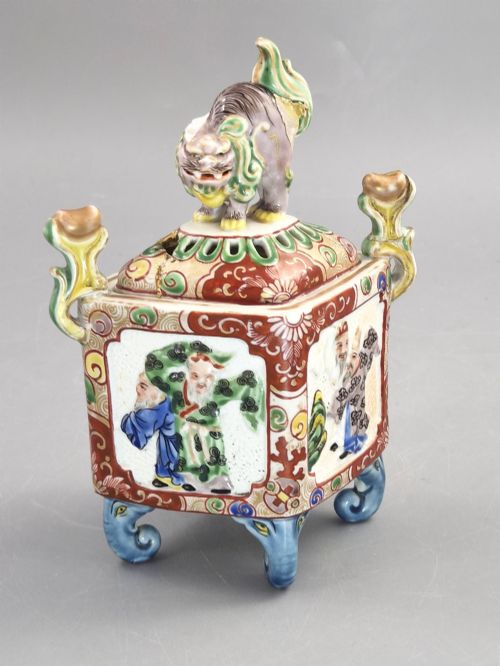
Several incense burners feature sculptural shishi lion finials keeping watch over the rim.
Kinkozan·Kozan·Chosei·Ippo·Tokyo Taizan
The Japanese Painted Ceramic Vessel Glossary
- Imari
- A style of Japanese porcelain characterised by underglaze blue and overglaze red, gold, and green designs. It originated in Arita and became widely exported.
- Satsuma
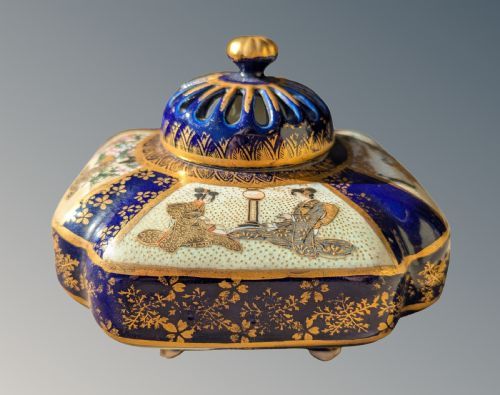
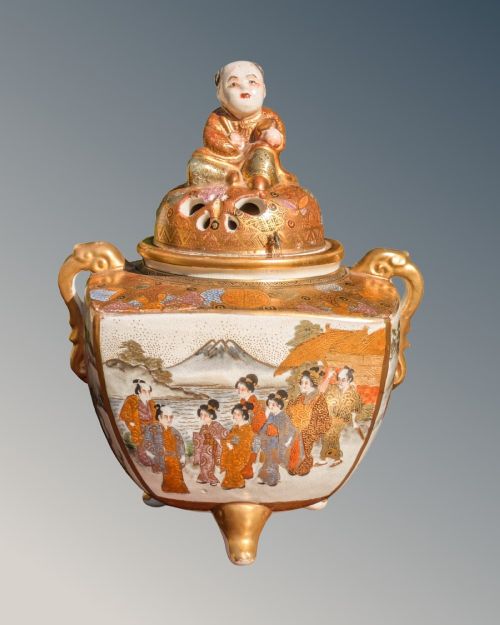
- A type of earthenware with a pale, ivory-crackled glaze, typically decorated with elaborate polychrome and gilt enamel scenes. It was produced extensively during the Meiji period.
- Kutani
- Japanese porcelain or pottery known for bold, colourful painted designs, often featuring greens, blues, yellows, and purples alongside extensive gilding.
- Koro
- A traditional Japanese incense burner, usually featuring a pierced lid and standing on small feet. These vessels often include sculptural elements like shishi lions.
- Moriage
- A ceramic decoration technique where clay slip is piped onto the vessel before firing to create raised, textured patterns.
Japanese Painted Ceramic Vessel: Frequently Asked Questions
What is a koro used for?
A koro functions as an incense burner, designed with a removable pierced lid to allow fragrant smoke to escape during use.
These lidded vessels frequently sit on small feet and serve as decorative objects when not actively burning incense.
How do I distinguish Satsuma from Imari?
Satsuma pieces feature a characteristic ivory-coloured earthenware body with a fine crackle glaze and dense enamel painting. They often depict figural scenes and heavy gilding.
Imari pieces utilise a hard porcelain body decorated in a distinctive palette of underglaze blue combined with iron red and gold.
Where were these ceramics made?
These ceramics originated in various production centres across Japan, including the kilns of Arita, Satsuma province, and Kyoto.
Different regions developed distinct potting traditions, materials, and painting styles that defined their output.
How should I display these vessels?
These ceramic pieces suit placement on stable surfaces where their painted details and glazes receive adequate light. Vases, bowls, and jars function well as standalone display items.
Handling should remain minimal, supporting the base of the vessel and avoiding pressure on delicate elements like handles or raised enamel.