


Japanese Metalwork Charger
These Japanese metalwork chargers are decorative plates and trays formed in copper, bronze, and iron, offering intricate depictions of birds, dragons, and landscapes to collectors.
Japanese Metalwork Charger
A japanese metalwork charger is a large decorative plate, tray, or plaque designed to be displayed on walls or stands rather than used for dining. These pieces primarily emerge from the Meiji period, alongside examples from the late Edo and Taisho periods.
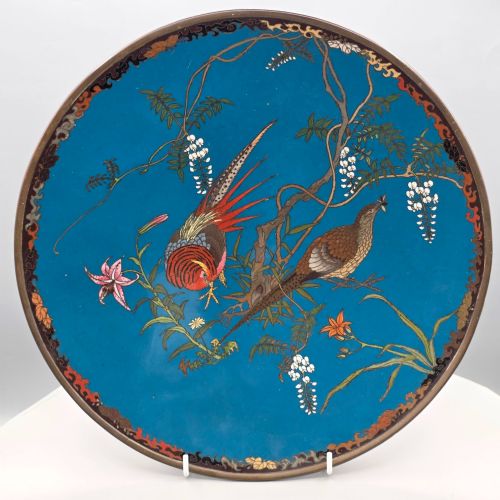
The form encompasses round chargers, square trays, and decorative dishes featuring pictorial subjects such as dragons, Ho-o birds, phoenixes, koi, and Mount Fuji. Most items encountered on this page belong to the late nineteenth century, reflecting a peak era of metalworking and enamel production in Japan.
Materials and construction methods
Artisans constructed these pieces using copper, iron, and brass foundations, often employing cloisonne enamel where thin brass wire creates cells to hold coloured vitreous pastes. The wirework forms complex outlines of birds, flowers, and auspicious symbols before firing and polishing.
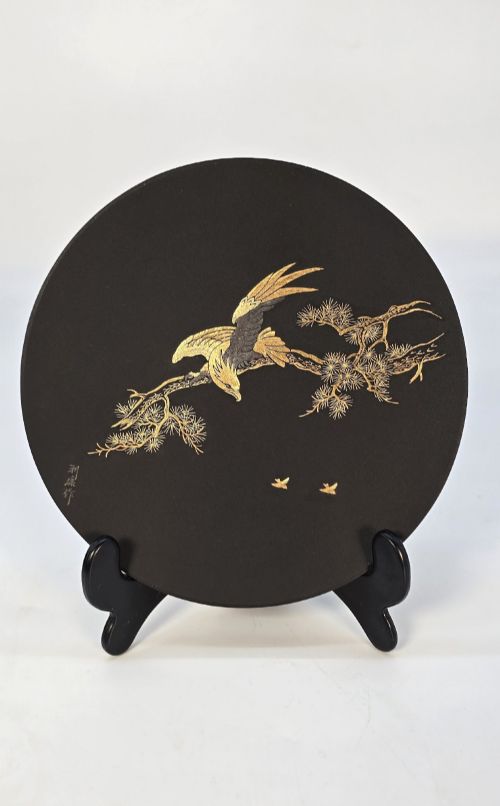
Alternative techniques involve patinated iron plates decorated with intricate gold and silver inlay, particularly in the Komai style. Skilled metalworkers combined mixed metals to achieve contrasting textures and tones across the surface of each dish or plaque.
Listings span from the late Edo period through the Meiji and Taisho periods, showcasing copper, iron, brass, and cloisonne enamel.
Distinctions in quality
Quality rests upon the precision of the wirework, the complexity of the pictorial composition, and the finish of the enamel or metal inlay. Pieces displaying fine, uniform cell work and ambitious subject matter demonstrate superior technical mastery.
The presence of signatures from prominent workshops or makers adds distinction. Scale and ambition also separate standard production from exceptional masterworks that demand closer inspection.
Kinkozan
The Japanese Metalwork Charger Glossary
- Charger
- A large decorative plate or dish intended for display. These objects measure considerably larger than standard dining plates.
- Cloisonne
- An enamel technique where metal wire is soldered to a metal base to create compartments for coloured glass paste. Firing fuses the enamel within these wired cells.
- Patination
- The chemical treatment or natural ageing applied to metal surfaces to alter colour and texture. Iron plaques frequently utilise patination to create dark, atmospheric backgrounds for gold inlay.
- Komai style
- A method of iron inlay originating from Kyoto workshops, characterised by dense gold and silver geometric and pictorial patterns. This work requires immense precision.
- Ho-o bird
- A mythical Chinese phoenix adopted into Japanese iconography, frequently depicted with elaborate plumage on chargers and plates.
Japanese Metalwork Charger: Frequently Asked Questions
How were japanese metalwork chargers displayed?
These large plates and trays were produced primarily for decorative display within interiors rather than for serving food. Artisans often incorporated hanging loops or designed them to rest upon specialised stands.
Collectors placed them on cabinet tops, walls, or display shelves to showcase the intricate enamel work and metal inlay to visiting guests.
What is the difference between a charger and a plate?
In this context, a charger refers to a significantly larger format, typically exceeding thirty centimetres in diameter. Plates and dishes generally measure smaller and feature simpler compositions.
Both forms utilise the same copper foundations and cloisonne enamel techniques, but chargers provided artisans with a broader canvas for complex subjects like dragons and Mount Fuji.
How do I identify Meiji period metalwork?
Meiji period pieces date from eighteen sixty-eight to nineteen twelve, a time when Japanese metalworking reached exceptional levels of refinement. Look for characteristic motifs such as dragons, Ho-o birds, and auspicious symbols executed in vibrant cloisonne enamel.
Signatures on the reverse or base sometimes point to specific makers or influential Kyoto and Nagoya workshops from this era.
What maintenance do these metal pieces need?
These decorative items require gentle dusting with a soft, dry cloth to protect the delicate enamel surfaces and metal wirework. Avoid chemical cleaners, water, or abrasive polishes that can damage the antique patination or enamel.
Stable indoor humidity and moderate temperatures prevent stress on the copper and iron foundations supporting the glass pastes.