


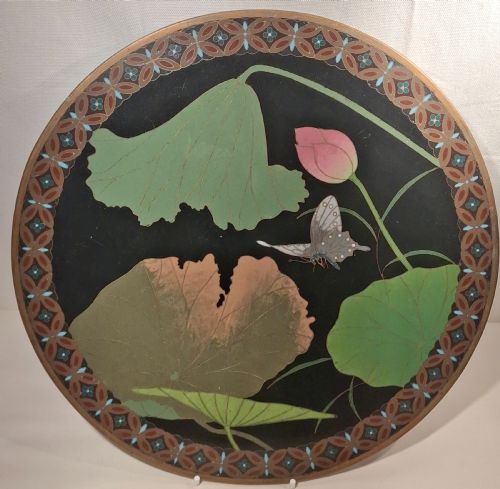


Vintage Cloisonne Wall Charger
These vintage cloisonne wall charger pieces bring intricate wirework and vibrant coloured enamels directly to your wall.
Vintage Cloisonne Wall Charger
A vintage cloisonne wall charger is a decorative metal plate or plaque intended for display rather than dining. When you search for this phrase, you encounter large plates, medium plates, plaques, and trays designed to hang on a wall.
The selections here span the eighteenth century through to the Meiji period, featuring traditional oriental motifs such as dragons, koi, owls, ibis, shrimp, and samurai figures. These large display pieces showcase detailed pictorial work created for interior decoration.
Most examples originate from Japan during the nineteenth century, alongside earlier Qing Dynasty works. These charger plates transform flat metal surfaces into rich pictorial displays using metal wires and coloured glass pastes.
How they were made
Craftsmen construct these decorative plates by soldering thin flat metal wires, typically brass, copper, bronze, or silver wire, onto a solid metal base to form intricate cellular compartments known as cloisons. These compartments map out the chosen design, such as birds, mountains, or mythical beasts.
Workers then fill the created wire cells with coloured enamel pastes before firing the piece in a kiln to fuse the glass to the metal foundation. Final grinding and polishing reveal the sharp metal outlines of the wire pattern alongside the smooth coloured enamel surface.
Vintage Cloisonne Wall Charger Retail Price Guide 2026
Typical asking prices for vintage cloisonne wall charger among the pieces listed under this phrase on Sellingantiques today, from the lower quarter to the upper quarter. They describe what is for sale here now, not the wider market.
Several plates feature remarkably stern demons sharing wall space with serene koi fish and leaping shrimp.
What varies in quality
Quality rests in the precision and complexity of the wirework, where finer metallic lines delineate much tighter, more intricate pictorial details like feathers, scales, and mon emblems. Masterpieces display immense discipline in the layout of the cells, whereas simpler pieces rely on broader, less ambitious patterns.
The depth of colour and the smoothness of the polished enamel surface further separate standard decorative plates from exceptional masterworks. Expert execution in the kiln ensures even vitrification without pitting, creating a unified sheen across the entire plaque.
The Vintage Cloisonne Wall Charger Glossary
- Cloisonne enamel
- A decorative metalwork technique where glass paste is fired inside soldered wire compartments on a copper or brass base. This method produces colourful patterns defined by thin metal lines.
- Charger
- A large ornamental plate used for display rather than service at the table. These substantial pieces provide a wide canvas for complex pictorial enamel work.
- Meiji Period
- A distinct era in Japanese history spanning from eighteen sixty-eight to nineteen twelve, noted for exceptional technical refinement in metalwork and enamel. Pieces from this time often feature highly detailed natural and mythical subjects.
- Mon
- A traditional Japanese heraldic badge or crest used to identify families or clans. These circular emblems frequently appear incorporated into the intricate border patterns of display plates.
- Qing Dynasty
- The final imperial dynasty of China, lasting from sixteen forty-four to nineteen twelve. Works from this period demonstrate distinct decorative traditions in metal plaques and display vessels.
Vintage Cloisonne Wall Charger: Frequently Asked Questions
How do I hang a wall charger?
Display chargers require specialised wall fixings designed to support the weight of solid metal and enamel plates safely without damaging the rim.
Ensure you use a bracket or spring hanger sized correctly to the diameter of the specific plaque.
Are these plates for dining?
These decorative chargers are strictly intended for visual display rather than practical food service or dining use.
The delicate enamel surfaces and raised metal wires can be easily damaged by cutlery and daily handling.
How do I clean cloisonne enamel?
Dust your wall plaque gently with a soft, dry cloth to remove surface particles without scratching the polished glass enamel.
Avoid abrasive cleaners, harsh chemicals, or soaking the metal base in water.
How can I tell the age of a charger?
Dating relies on examining the metal substrate, the style of the wirework, and the specific iconography used within the enamel design.
Nineteenth-century Meiji examples often display exceptionally fine silver or copper wire alongside distinct pictorial subjects like Mt Fuji or dragons.