
Japanese Meiji Antiques
These japanese meiji antiques capture the definitive craftsmanship of late nineteenth and early twentieth century Japan, offering collectors masterworks in bronze, porcelain and lacquer.
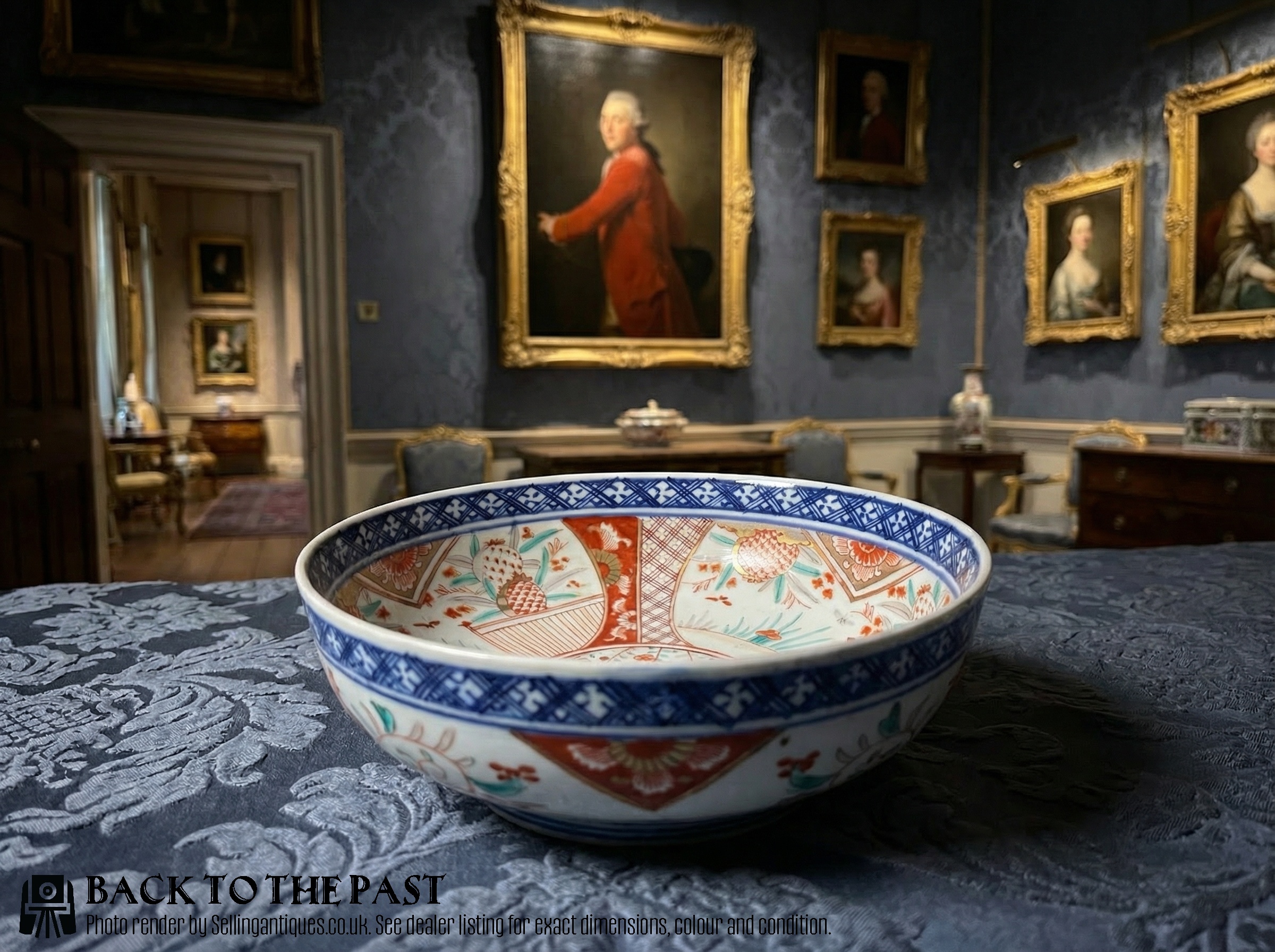
Japanese Meiji Antiques
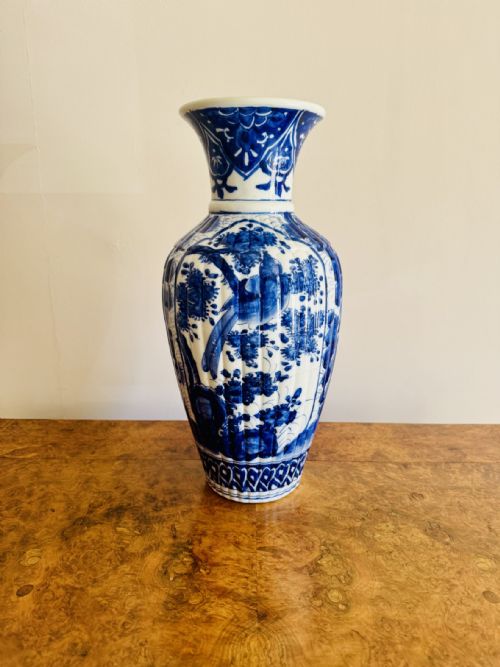
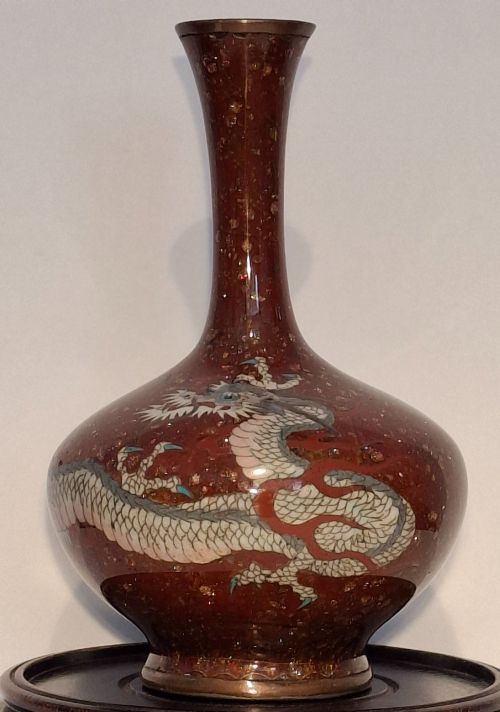
Japanese meiji antiques encompass a wide array of decorative and functional objects produced during the Meiji period, spanning from the late nineteenth century into the early twentieth century. These items range from large floor-standing Imari vases and Satsuma garnitures to intricate bronze sculptures of figures and animals.
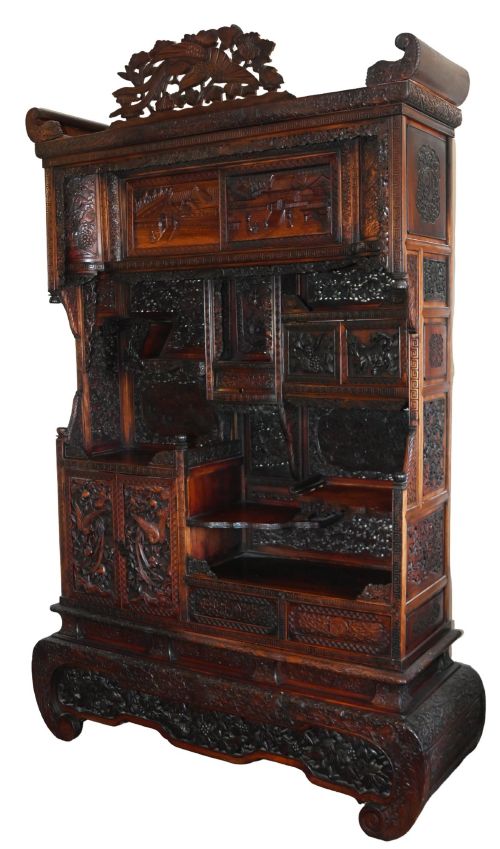
Buyers frequently encounter bronze vessels and figures, alongside porcelain dishes and lacquer table cabinets, reflecting the prolific output of Japanese artisans during this era. The selection draws heavily from traditional forms such as koro incense burners, chargers, and okimono figures.
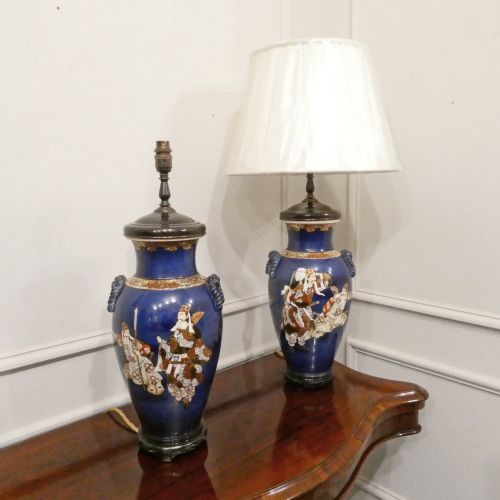
The objects serve both decorative and utilitarian purposes, encompassing items like sake tables, jewellery boxes, and floor lamps adapted for contemporary interiors. This mix of traditional craftsmanship and transitional forms defines the category on this page.
How they were made
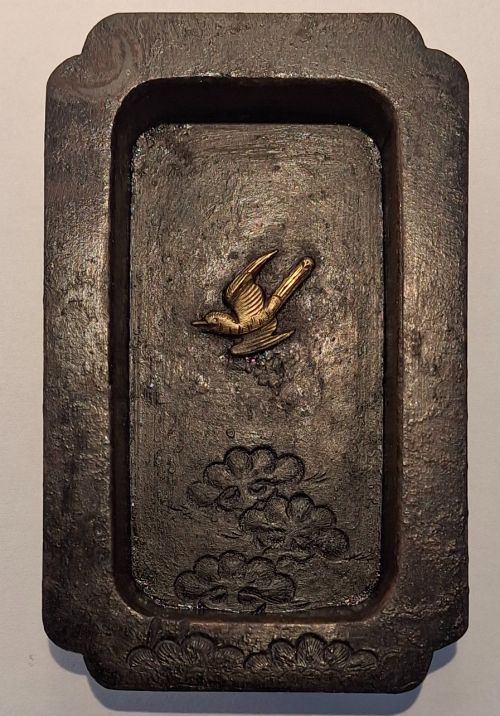
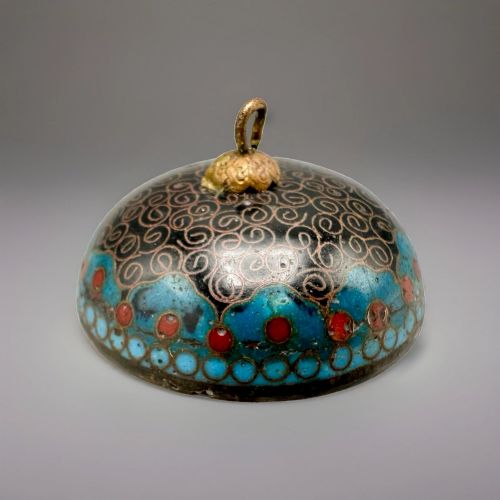
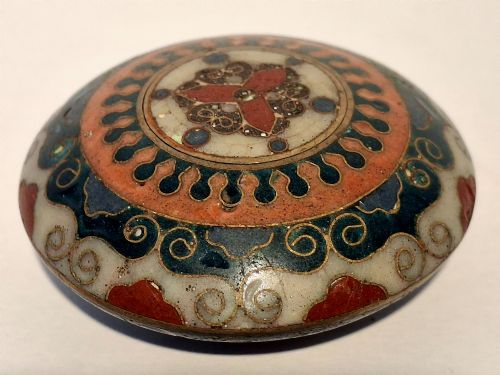
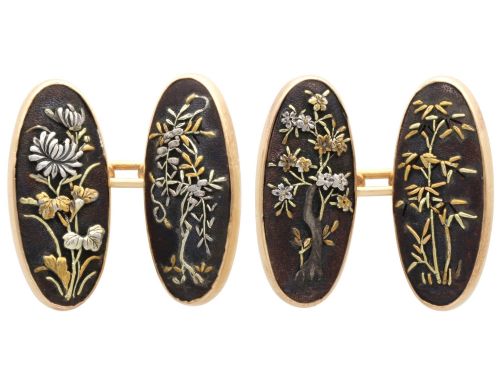
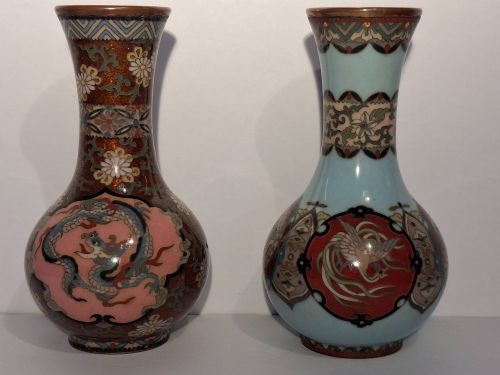
Metalwork forms a cornerstone of the selection, utilising bronze, brass, and silver, frequently enhanced with mixed-metal patination, gold leaf, and delicate inlays. Cloisonné pieces demonstrate precise wirework enclosing vibrant enamel, while lacquer items rely on multiple layers applied to wood bases.
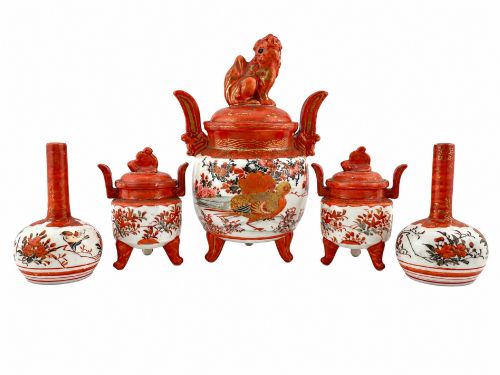
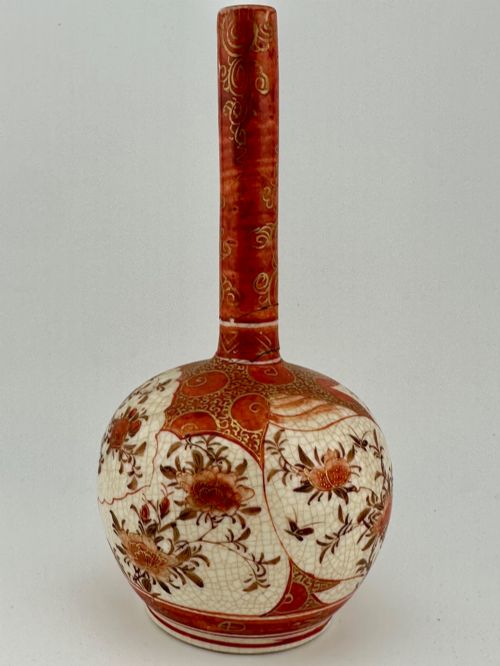
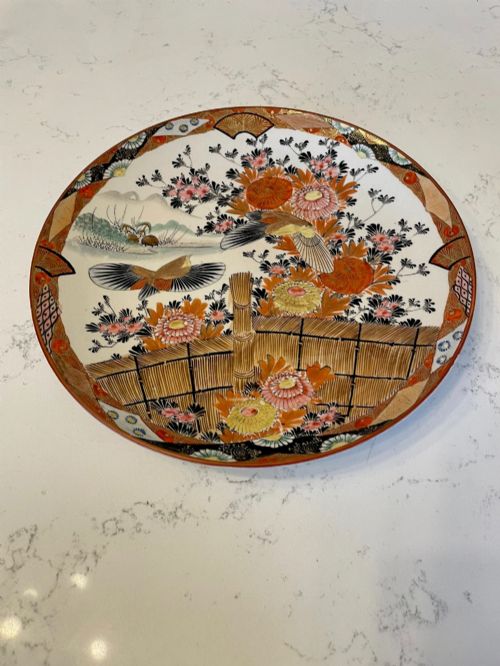
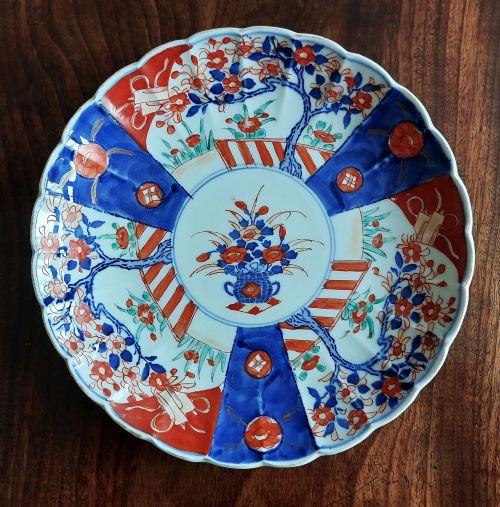
Ceramic works combine porcelain and earthenware bodies with detailed glaze painting, seen notably in Imari and Kutani wares, alongside the characteristic crackle-glaze surfaces of Satsuma pottery. Carving appears across wooden brush pots and mother-of-pearl embellishments, marrying structural rigidity with fine surface detail.
Form categories range from large floor-standing vases and chargers to delicate sake cups, table cabinets, and okimono sculptures.
What varies in quality
The distinction between standard and superior pieces rests on the precision of the artisan's hand, particularly in the crispness of bronze chasing, the complexity of mixed-metal inlays, and the symmetry of cloisonné wire cells. Finer examples display meticulous attention to anatomical details in figural okimono and animal groups.
Material richness and depth of finish set the higher tier apart, visible in the multi-layered depth of lacquer cabinets and the density of gilding on porcelain surfaces. Compositional balance and scale also dictate quality, where larger floor-standing vases maintain proportion and harmony across expansive decorative panels.
KANASAWA·Maruni Kobe·Shozan·Jomi Eisuke
The Japanese Meiji Antiques Glossary
- Okimono
- A Japanese ornamental statue or sculpture designed for display on a tokonoma or shelf. These carved or cast pieces frequently depict animals, deities, or figures from daily life.
- Imari
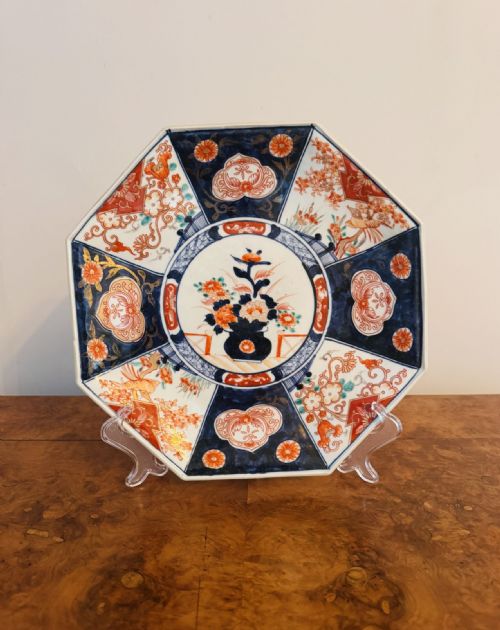
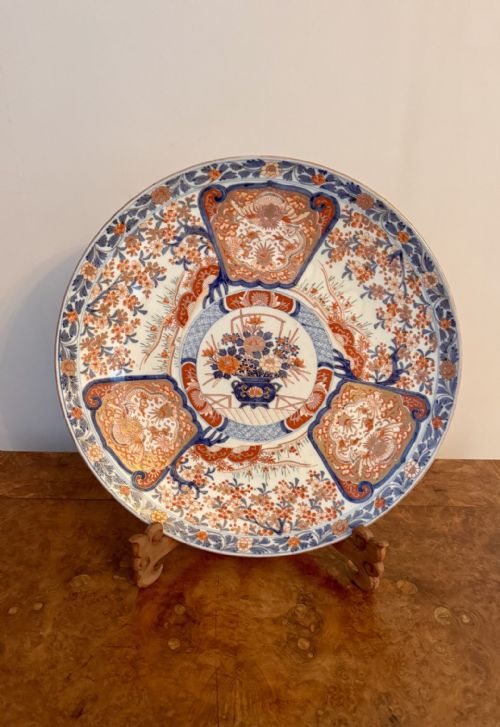
- A type of Japanese porcelain traditionally decorated in underglaze blue and overglaze red, gold, and green. These wares were widely exported and prized for their bold palettes.
- Satsuma
- A style of Japanese earthenware characterised by a ivory-colored, crackled glaze decorated with polychrome enamels and gilding. The ware gained immense popularity in the West during the late nineteenth century.
- Cloisonne
- A decorative metalwork technique where enamel paste is applied within compartments created by soldering flat metal wires to a metal base. The surface is subsequently fired and polished smooth.
- Kutani
- A style of Japanese porcelain known for its vibrant polychrome designs, particularly deep greens and golds. These pieces often feature detailed pictorial scenes or geometric patterns.
Japanese Meiji Antiques: Frequently Asked Questions
How do I identify a Meiji period bronze?
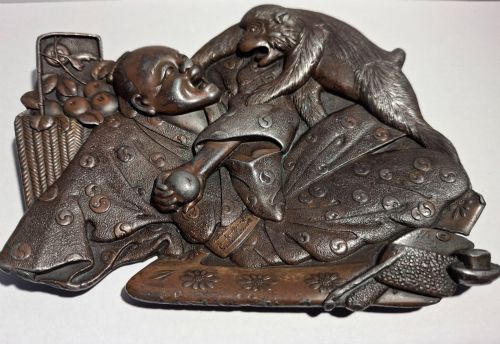
Meiji period bronzes often feature rich patination, intricate mixed-metal inlays, and subjects drawn from nature or folklore, such as eagles, hawks, or figures with animals. Examining the underside and the crispness of the chasing helps confirm the period.
These pieces rely on lost-wax casting techniques typical of late nineteenth-century Japanese metalwork workshops.
What is the difference between Imari and Kutani porcelain?
Imari porcelain characteristically uses a palette of underglaze blue combined with iron red and gold, often featuring dense floral or geometric patterns on white porcelain bodies. Kutani porcelain frequently employs a wider range of vibrant colours, notably rich greens, alongside detailed figural scenes.
Both styles represent major streams of Japanese ceramic production during the Meiji era.
How should I care for antique Japanese lacquerware?
Japanese lacquerware requires protection from direct sunlight and extreme fluctuations in humidity to prevent the wood base from warping and the lacquer from cracking. Dusting should be done gently with a soft, dry cloth.
Avoiding chemical cleaners preserves the original gloss and delicate surface embellishments.
What are okimono sculptures used for?
Okimono are ornamental sculptures traditionally placed in a home's reception room to be appreciated for their artistic merit and thematic detail. They depict everything from mythological figures to everyday scenes of workers and children.
Collectors today display them on tables, cabinets, or dedicated shelves as standalone works of art.