




Japanese Kutani Porcelain
Japanese kutani porcelain brings together detailed hand-painted scenes, figures, and vessels made primarily during the Meiji and Taisho periods.
Japanese Kutani Porcelain
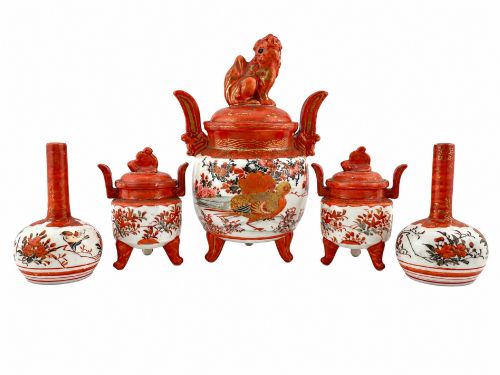
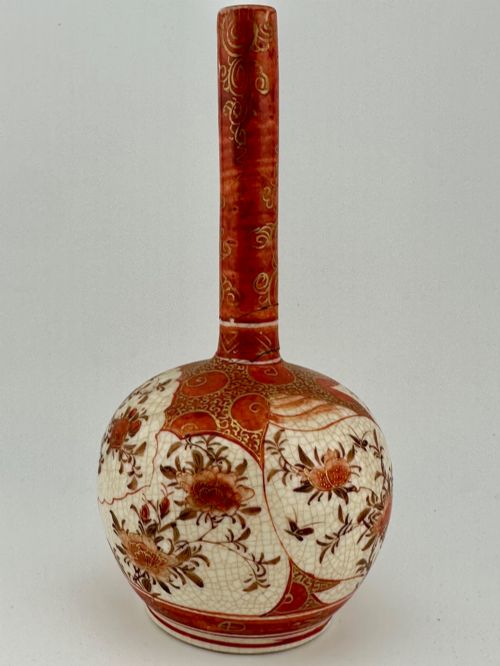
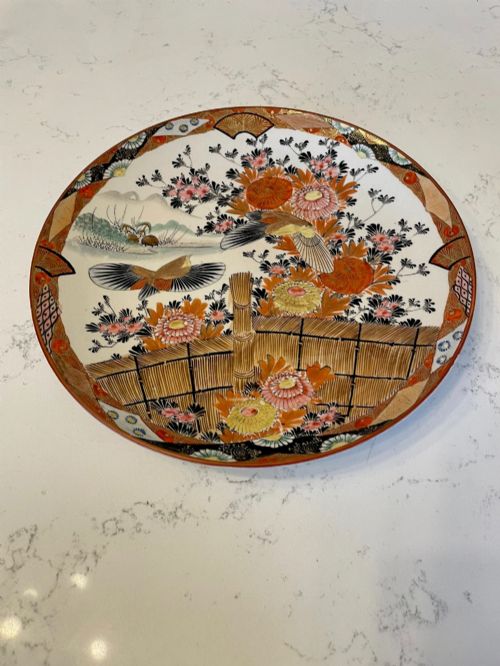
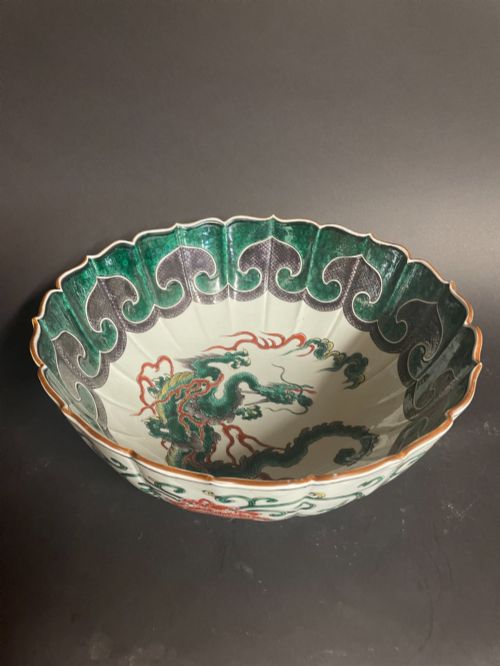
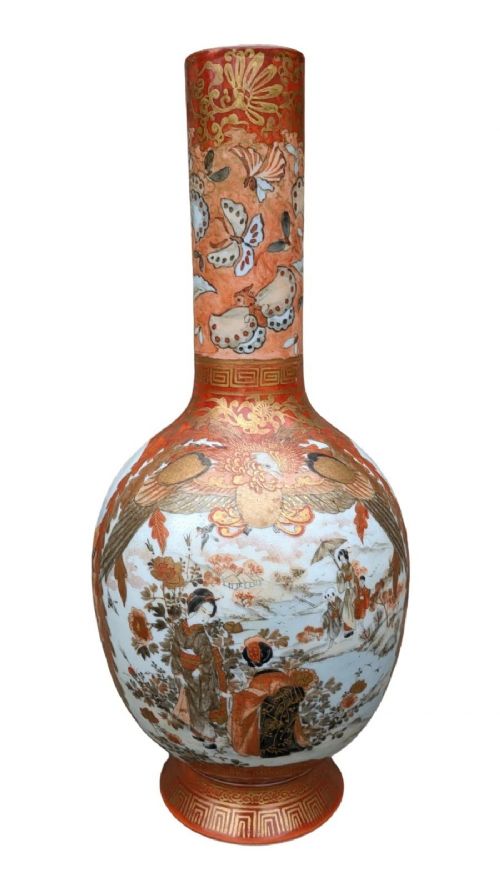
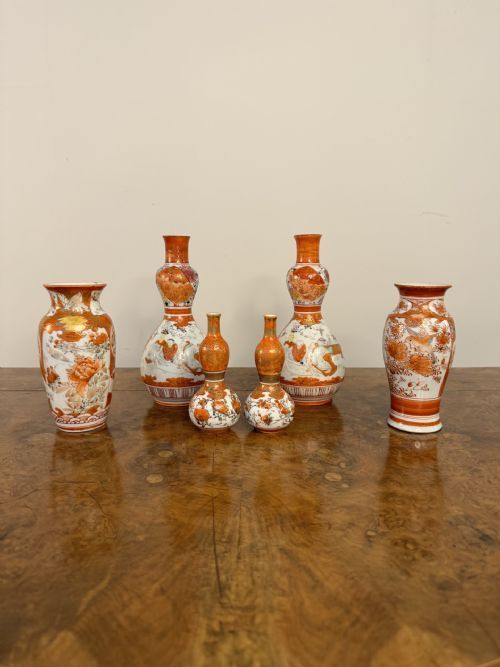
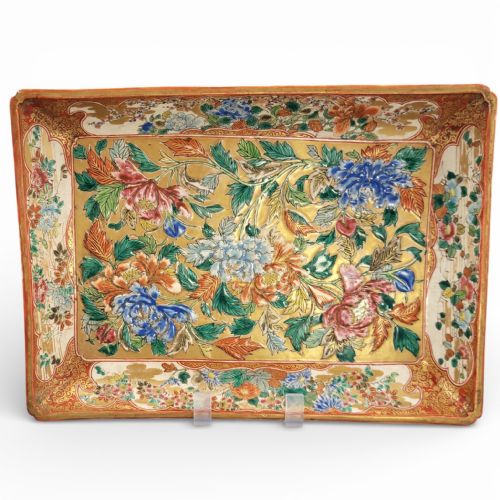
When you search for japanese kutani porcelain, you encounter a diverse range of objects intended for both display and ceremonial use, spanning vases, chargers, and figures of deities and animals. These works originate predominantly from the Meiji and Taisho periods, reflecting traditional Japanese motifs executed with careful brushwork.
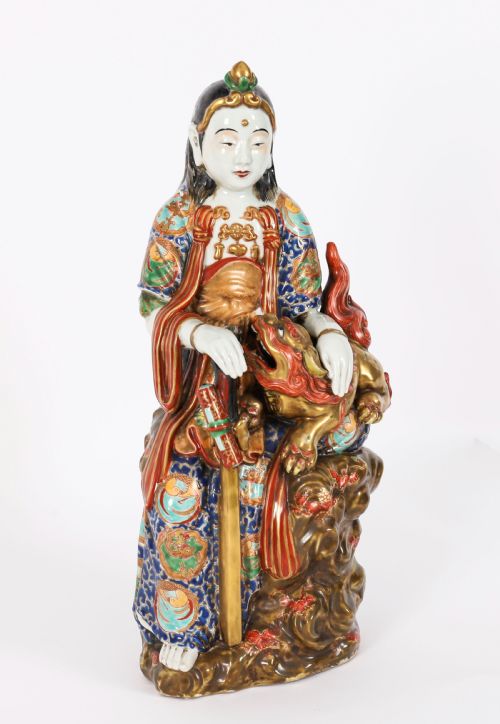
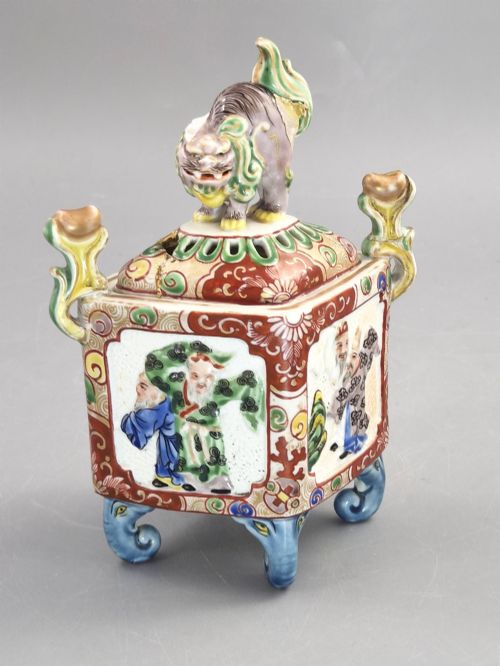
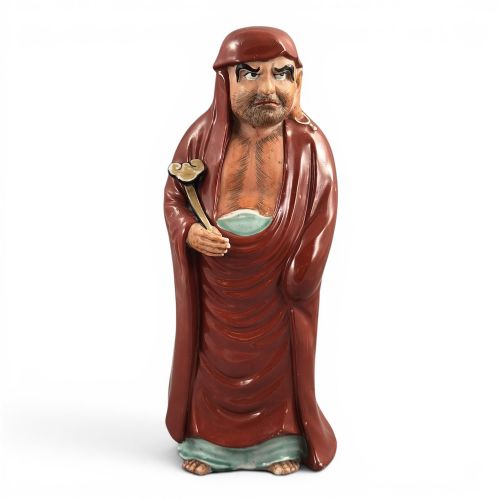
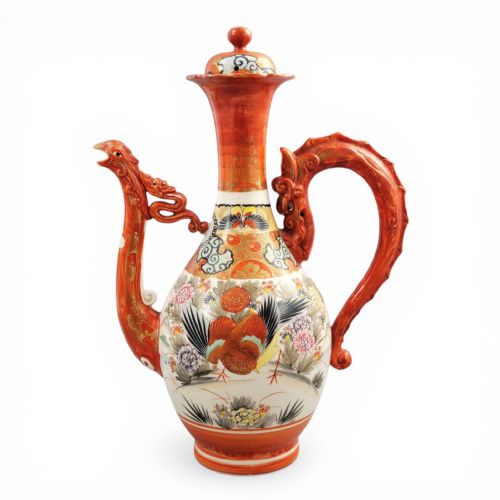
Vessels and figurative sculptures dominate the selection, including cylindrical vases, lidded ginger jars, incense burners, and detailed models of figures like Kannon and Daruma. Many pieces date from the late nineteenth century through to the early twentieth century, showcasing the characteristic styles of Kaga province production.
How they were made
The making of these pieces relies on white porcelain bodies decorated with coloured enamels and applied gold leaf or gilding. Artisans utilised hand-painting techniques to build up intricate patterns, often incorporating raised enamel work known as moriage to create texture on robes and borders.
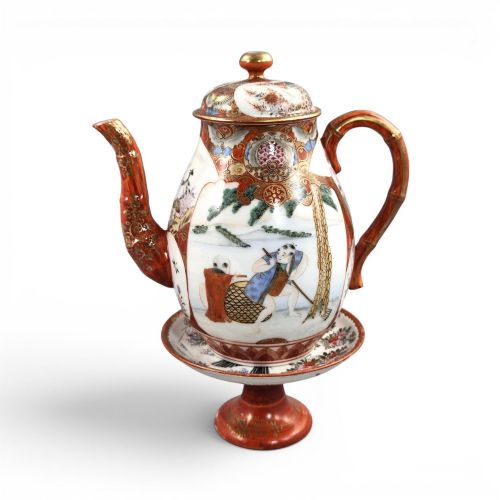
Firing techniques followed traditional kiln practices in Kaga, allowing workshops to produce both utilitarian items like teapots and decorative figures such as shishi lions and Buddhist triads. Surface embellishments frequently combine red and gold palettes with geometric or figurative inset panels.
Pieces span the nineteenth century, Edwardian era, and the Meiji and Taisho periods, alongside signed works from Kaga workshops.
What varies in quality
Quality in japanese kutani porcelain rests on the precision of the hand-painted detail and the crispness of the enamel work. Finer examples display meticulous control over gold leaf application and subtle shading in figurative subjects.
The complexity of the form and the clarity of signature marks also distinguish standard production from superior pieces. Workshops known for specific styles achieve greater depth in their glazed and enamelled surfaces.
Kinrin Workshop·Juzan·Okuda
The Japanese Kutani Porcelain Glossary
- Moriage
- A decorative technique using piped clay or thick enamel to create raised, textured patterns on the porcelain surface. This method adds a tactile dimension to robes, foliage, and borders.
- Koro
- A traditional Japanese incense burner, often featuring tripod feet and a pierced lid. These vessels frequently incorporate mythical creatures such as the shishi on the cover.
- Okimono
- A freestanding Japanese display sculpture intended for interior decoration. These figures typically represent deities, monks, or animals.
- Shoza style
- A distinctive decorative approach associated with Kutani ware known for dense red and gold painting. This style covers nearly the entire surface with intricate patterns.
- Kannon
- The Buddhist goddess of mercy frequently depicted in Kutani porcelain sculptures. Figures often show her standing, seated, or resting upon a shishi lion.
Japanese Kutani Porcelain: Frequently Asked Questions
What is kutani porcelain?
Kutani porcelain refers to Japanese ceramics traditionally produced in Kaga province, noted for vibrant enamels and gold decoration. These items encompass both functional vessels and sculptural figures.
Production flourished particularly during the Meiji period, yielding diverse forms including chargers, vases, and delicate miniature bowls.
How do I identify Meiji period pieces?
Meiji period items generally date between 1868 and 1912, aligning with the reign of Emperor Meiji. These works often feature rich gilt highlights and detailed hand-painted figural scenes.
Characteristics include specific stylistic markers such as moriage texturing and depictions of traditional deities, spirits, and mythical animals.
What are shishi handles?
Shishi handles are sculptural depictions of mythical Buddhist lions attached to the shoulders or lids of porcelain vessels. These ornaments serve both a decorative and a structural purpose.
They appear frequently on larger vases, ginger jars, and incense burners from the nineteenth century.
How should I display porcelain figures?
Porcelain figures and okimono benefit from stable surfaces away from direct sunlight to preserve the integrity of the enamel and gold leaf. Placing them on dedicated wooden stands complements their traditional presentation.
Gentle dusting with a soft, dry cloth is sufficient for routine maintenance without risking the painted surface.