

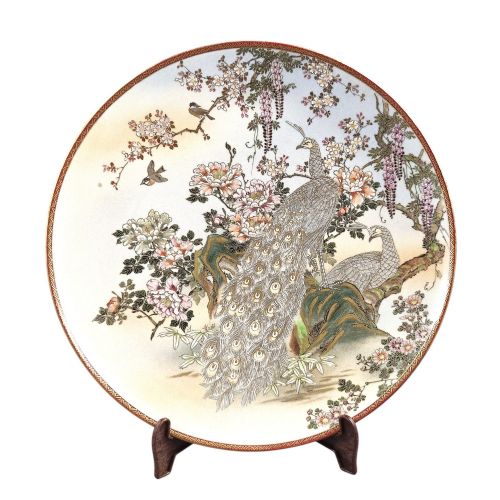


Polychrome Japanese Charger Plate
A polychrome japanese charger plate brings vibrant Meiji and Edo period artistry to any room, combining rich enamels and gold leaf.
Polychrome Japanese Charger Plate
When you search for a polychrome japanese charger plate, you encounter large decorative ceramic and metal vessels made for display. These items date primarily from the nineteenth century, spanning the Edo and Meiji periods.
The pieces appearing on this page include Imari porcelain chargers, Kutani shallow bowls, Satsuma earthenware dishes, and cloisonne enamel plates. Makers rendered subjects such as koi carp, dragons, peacocks, and auspicious symbols upon them.
Most examples measure on a large scale, designed to sit upon cabinets or hang on walls. They reflect the high output of Japanese kilns and workshops intended for export and domestic collections.
How they were made
Potters shaped porcelain, earthenware, and copper bases before applying complex surface decoration. Artisans utilised coloured enamels alongside gold leaf and gold gilt to build intricate patterns.
Cloisonne pieces required thin metal wires soldered to a metal body to create cells for coloured enamel pastes. Firing in kilns fixed the glass powders into hard, glossy finishes.
Painters applied hand-painted pigments over and under glaze on porcelain and earthenware items. Signed works demonstrate the practiced hand of named masters working in regional kilns.
Listings feature items spanning the nineteenth century, including the Edo and Meiji periods, utilising porcelain, earthenware, and cloisonne enamel.
What varies in quality
The standard of a polychrome japanese charger plate depends upon the precision of the hand-painting and the complexity of the enamel work. Finer items exhibit dense, multi-figure compositions with clear detailing on feathers, scales, and robes.
The application of gold leaf and gilt distinguishes standard production from exceptional pieces. Superior items integrate gilding cleanly alongside robust, vibrant enamels that retain sharp outlines.
Signatures by recognised makers elevate specific chargers above unmarked contemporary pieces. The weight and stability of the ceramic or metal base also indicate the ambition of the original workshop.
Meizan mark·Shozo
The Polychrome Japanese Charger Plate Glossary
- Imari
- A style of Japanese porcelain featuring a palette of underglaze blue, iron red, and gold. It originated in Arita and became popular for export during the Edo and Meiji periods.
- Satsuma
- A type of Japanese earthenware characterised by a ivory-coloured, crackle-glazed surface. Artisans decorated these wares with elaborate polychrome enamels and raised moriage designs.
- Cloisonne
- A metalwork technique where flat wires form compartments on a copper base to hold enamel pastes. Firing fuses the glass paste into decorative patterns depicting birds, dragons, and floral motifs.
- Kutani
- A style of Japanese porcelain and pottery known for bold polychrome designs. These pieces often employ heavy red and gold pigments across large shallow bowls and charger plates.
- Moriage
- A decorative ceramic technique using piped slip to create raised, textured dots and lines. This method adds tactile dimension to Satsuma chargers and vases.
Polychrome Japanese Charger Plate: Frequently Asked Questions
How were charger plates used?
Large Japanese chargers were traditionally displayed on stands, hung on walls, or used for formal presentation rather than dining.
Their substantial size and intricate painted scenes made them centrepieces in both Japanese interiors and Western Victorian drawing rooms.
How do I hang a heavy charger?
Displaying these large plates safely requires a sturdy, adjustable spring-loaded wall hanger designed for heavy ceramics or metal.
Ensure the wall fixings match the weight of the specific porcelain or cloisonne piece before mounting.
What is the difference between Imari and Kutani?
Imari wares use a distinct palette centred on underglaze blue, iron red, and gold on hard porcelain.
Kutani pieces rely on broader polychrome enamel schemes, often featuring dense figurative scenes on porcelain or earthenware bodies.
How do I identify the Meiji period?
Meiji period items date from eighteen sixty-eight to nineteen twelve, an era marked by intense artistic export to the West.
These pieces frequently display complex motifs like dragons, peacocks, and detailed signatures from prominent kilns and artists.