
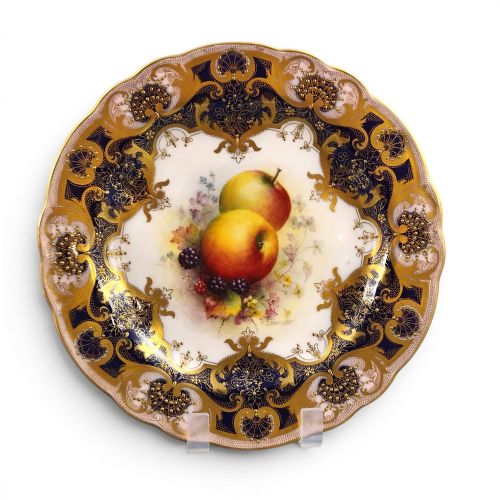


Gold Porcelain Charger Plate
A gold porcelain charger plate brings substantial scale and rich metallic ornament to a room, serving as both a table centrepiece and a wall display.
Gold Porcelain Charger Plate
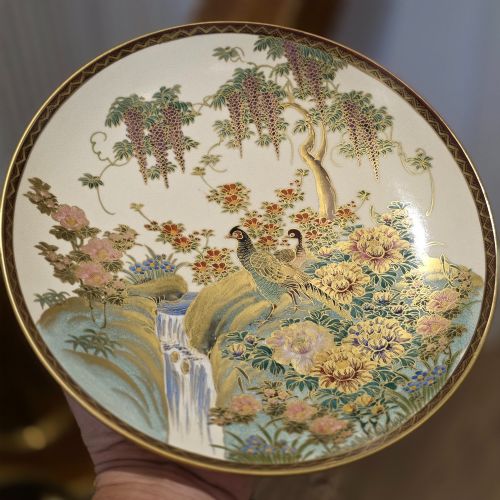
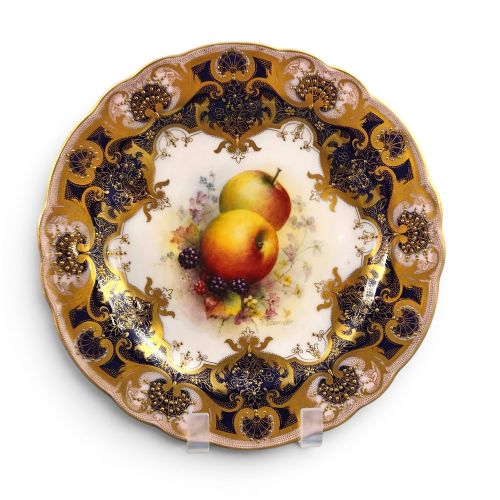
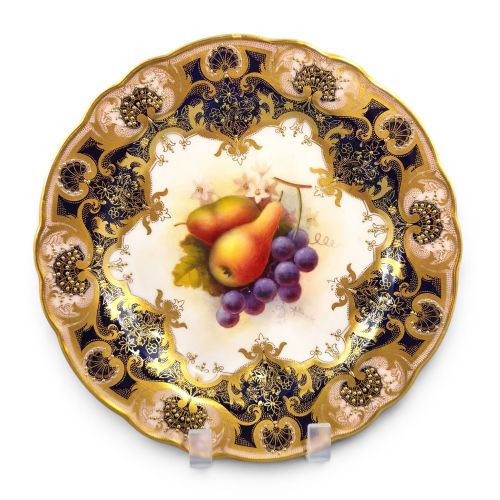
When you search for a gold porcelain charger plate, you are looking at large decorative dishes and cabinet plates created to display ornate painting and gilding. These pieces range from substantial Vienna and Kutani chargers measuring up to sixty centimetres across to smaller cabinet plates from factories such as Royal Worcester and Meissen.
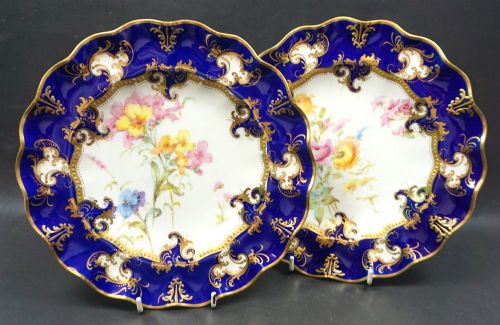
The pieces on this page span the nineteenth and twentieth centuries, incorporating styles from Neoclassical and Rococo Revival to Japanese Meiji and Art Deco periods. Forms include broad flat chargers, rope-edge dinner plates and deep bowls intended strictly for display rather than utility.
Materials and methods
Makers shaped these items using porcelain, earthenware and ironstone bodies, applying hand-painted pigments alongside enamel work. The distinctive metallic finish relies on gold leaf, heavy gilding and gilt accents fired onto the ceramic surface.
Many chargers feature complex narrative scenes, floral arrangements or bird studies painted by named artists, fixed to the ceramic body through multiple kiln firings.
Some nineteenth-century Vienna plates depict epic tragedies such as King Tristan's death, offering rather dramatic company for afternoon tea.
Markers of quality
Quality rests in the precision of the hand-painted artistry and the richness of the gilding. Master painters working for factories like Vienna or Royal Worcester produced finely detailed mythological and botanical scenes that distinguish superior pieces from standard floral patterns.
The weight, diameter and proportion of the porcelain body also signal ambition, with large chargers requiring exceptional skill in the kiln to prevent warping during firing.
Royal Crown Derby·Royal Worcester·Meissen·Pucher Deroche·C.J. Mason·Royal Vienna·Minton·Sevres·Koshida·Meizan·Fukagawa·Wagner
The Gold Porcelain Charger Plate Glossary
- Charger plate
- A large decorative plate traditionally used as an under-plate or displayed upright on a wall or stand.
- Cabinet plate
- A high-quality decorative plate intended for display in a cabinet rather than for dining purposes.
- Gilding
- The application of gold leaf or powdered gold to the porcelain surface to create reflective metallic borders and highlights.
- Pate-sur-pate
- A ceramic decoration technique where liquid clay is built up in successive layers to create a low relief cameo effect.
- Satsuma
- A type of earthenware originating in Japan, typically featuring a crackle-glaze finish embellished with polychrome enamel and gold.
Gold Porcelain Charger Plate: Frequently Asked Questions
What is a gold porcelain charger plate used for?
These large plates were designed primarily for display on dining tables, sideboards or walls, serving as focal points within formal interiors. Their generous scale allowed artists to paint detailed classical scenes or intricate floral patterns across the central well.
Today, collectors use them as decorative wall chargers or place them on stands to showcase the painted artistry and gilt borders.
How can I identify the maker?
Makers often marked their pieces on the underside using underglaze blue stamps, impressed ciphers, or painted factory insignia. Signatures written directly into the painted scene, such as those by Vienna or Royal Worcester artists, indicate specific hand-painted commissions.
Comparing the mark and style against standard factory reference guides helps narrow down the production period and origin.
Are these plates suitable for food use?
Antiquarian cabinet plates and hand-painted chargers are intended strictly for decorative display rather than culinary service. The older enamel colours and raised gold leaf can wear away or contain materials unsuited for modern food contact.
Hand-washing is essential if cleaning is required, avoiding abrasive pads that might damage the gilt edges.