


Meiji Kutani Porcelain Vase
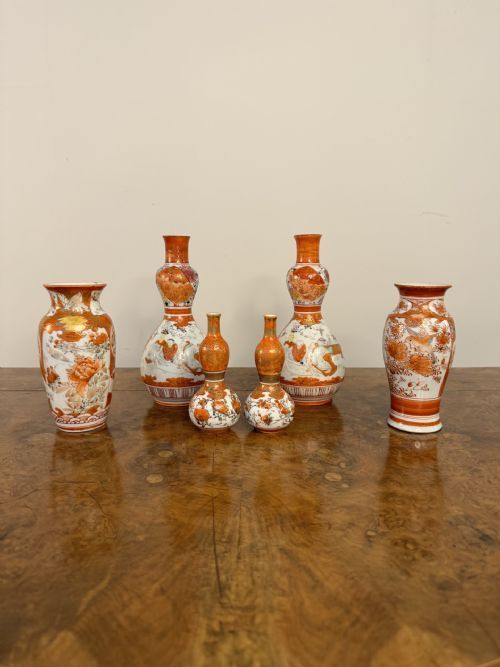
A meiji kutani porcelain vase brings dense enamel colour and rich gold leaf into a room, representing the vibrant output of late nineteenth-century Japan.
Meiji Kutani Porcelain Vase
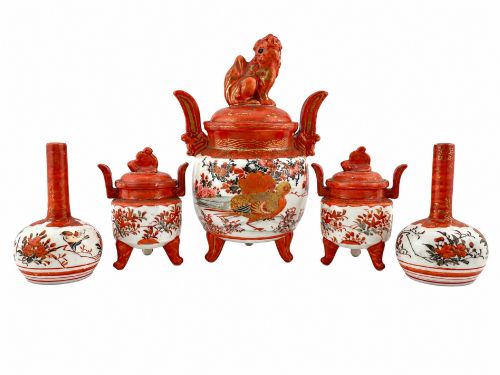
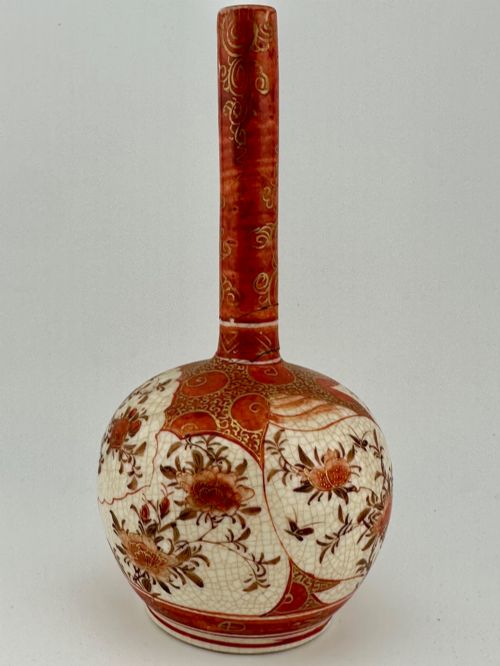
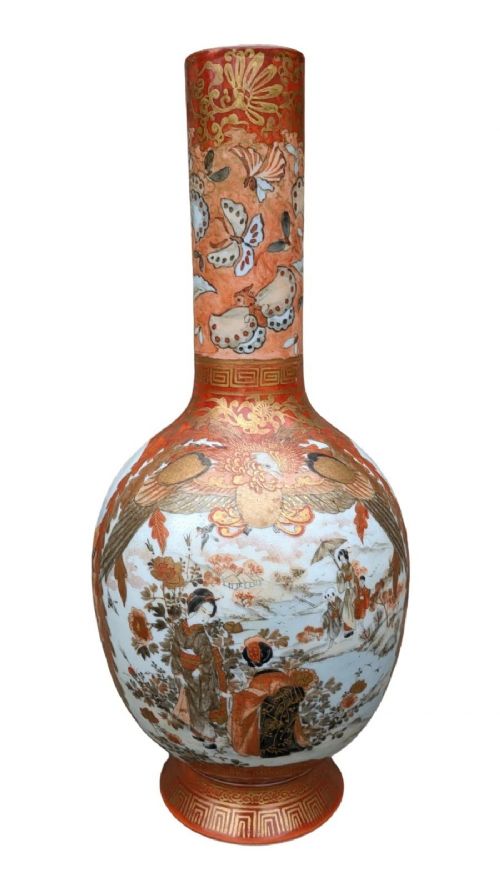
A meiji kutani porcelain vase is a vessel produced in Japan during the Meiji period, typically taking forms such as large floor vases, bulbous bodies with flare necks, or cylindrical shapes. Buyers frequently encounter matched pairs alongside single large display pieces, often decorated with hand-painted motifs including lions, dragons, and figurative scenes.
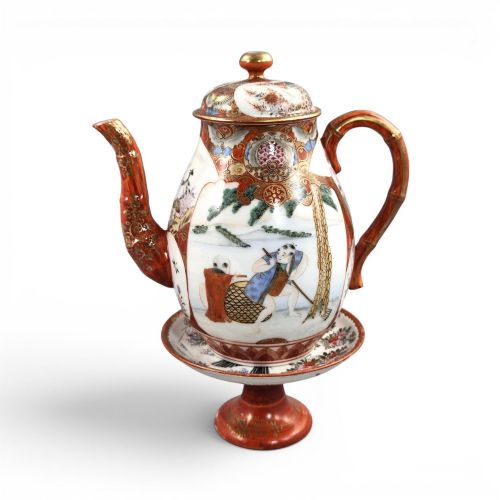
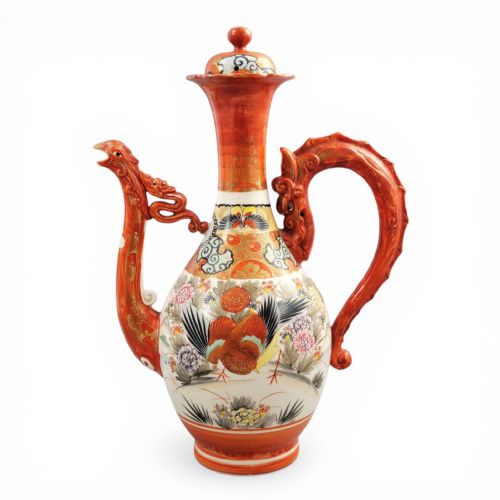
The selection ranges from tall nineteenth-century vessels dated to the 1880s and 1890s down to pieces from around 1900. Alongside standard freestanding vases, the record includes vessels adapted into table lamps, as well as related forms like teapots, decorative ewers, and lidded jars.
How they were made
Potters shaped the ceramic body from porcelain before applying detailed hand-painted designs using heavy enamel colours. Many examples incorporate gold leaf, gilt, and gilding to highlight intricate panels and borders.
Makers built up raised decorative elements through moriage techniques, creating textured surfaces on handles shaped like lions or shishi dogs. Some vessels were subsequently fitted with wood or brass stands for display.
Listings span the nineteenth century into 1900, uniting porcelain, enamel, gold leaf, and brass components.
What varies in quality
Quality depends upon the precision of the hand-painted brushwork and the complexity of the enamel palette. Pieces featuring finely rendered geometric inset panels or detailed pictorial scenes sit above simpler monochrome or repetitive patterns.
The ambition of the form dictates distinction, separating standard bulbous vessels from large, imposing pairs with sculpted lion handles and extensive gilding. The clarity of workshop signatures also marks out finer individual output.
Kinrin Workshop·Juzan
The Meiji Kutani Porcelain Vase Glossary
- Kutani
- A style of Japanese porcelain traditionally associated with the Kaga province, known for rich enamel decoration and heavy use of gold. This ware forms the core of the items seen here.
- Meiji Period
- The era of Japanese history spanning from 1868 to 1912, defined by rapid modernisation and an increase in decorative arts exported to Western markets. Most pieces on this page date from the later decades of this era.
- Moriage
- A ceramic technique where slip is piped onto the surface to create raised, three-dimensional decorative patterns. It frequently outlines flowers, dragons, and borders on these vessels.
- Shishi
- A mythical guardian lion or dog, often modelled as sculptural handles on vases and lidded jars. These figures are a common sculptural feature of nineteenth-century Japanese ceramics.
- Ewer
- A large jug with a wide spout and handle, used historically for pouring water or wine. In this inventory, decorative ewers appear alongside standard vases.
Meiji Kutani Porcelain Vase: Frequently Asked Questions
How do I date a meiji kutani porcelain vase?
Dating relies on stylistic markers and documented production periods spanning the late nineteenth century. Many pieces carry attribution to the 1880s or 1890s based on their export context and enamel palette.
Later items approach the nineteen-hundreds with transitional forms. Comparing the intricacy of the painted motifs helps narrow the decade of manufacture.
Were these vases made for export?
The vast majority of these ceramics were produced specifically for international markets following the opening of Japan in the mid-nineteenth century. Western demand drove the creation of large pairs and ornate decorative chargers.
This export focus explains the prevalence of robust forms designed to survive long maritime journeys. Workshops tailored their output to European and American tastes for elaborate ornamentation.
How should I display a large floor vase?
Large vessels require stable placement away from high-traffic areas to prevent accidental knocks. Many nineteenth-century examples benefit from their original wood stands to distribute weight evenly.
Positioning them where natural light catches the gold leaf and enamel highlights their intricate surface detail. Pairing them symmetrically creates a traditional focal point in a reception room.
What is the difference between a vase and an ewer?
A standard vase serves purely decorative or floral display purposes with a symmetrical body and neck. An ewer incorporates a functional pouring spout and a dedicated handle, reflecting ancient vessel forms adapted for ornamental export.
While both share the same Kutani enamel palette and gilding techniques, the ewer offers a more sculptural silhouette. Both types frequently feature mythical animal motifs like dragons or phoenixes.