






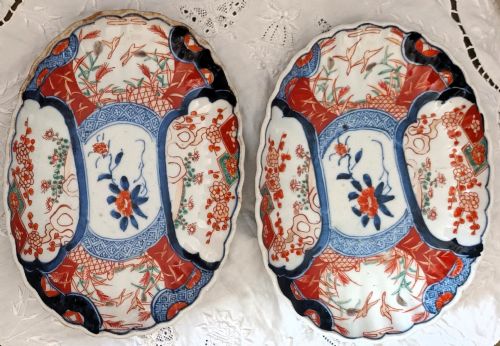
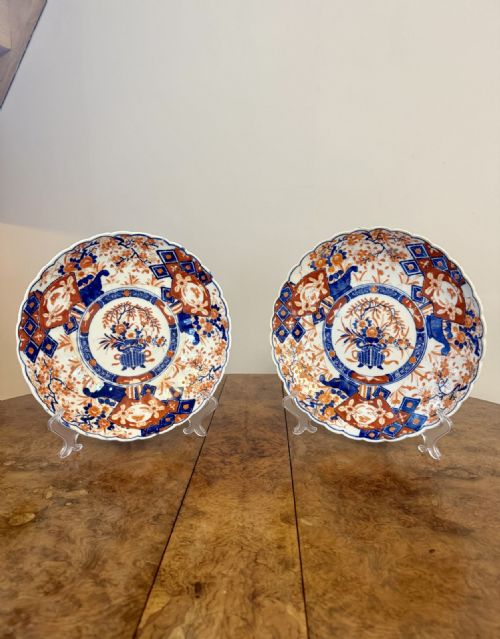
Japanese Imari Porcelain Pair
A Japanese imari porcelain pair brings balanced visual symmetry and traditional cobalt blue and iron red palettes to a mantelpiece or display cabinet.
Japanese Imari Porcelain Pair
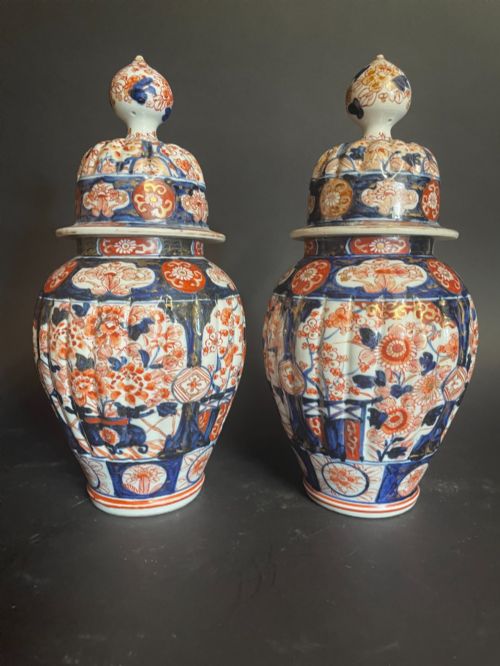
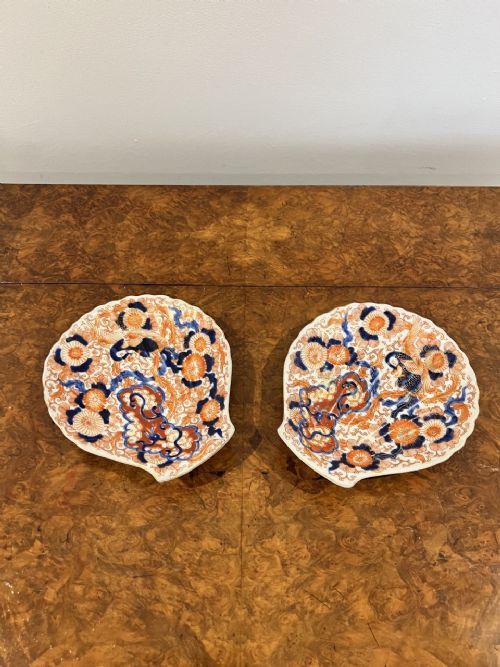
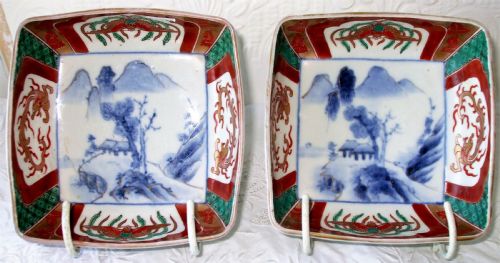
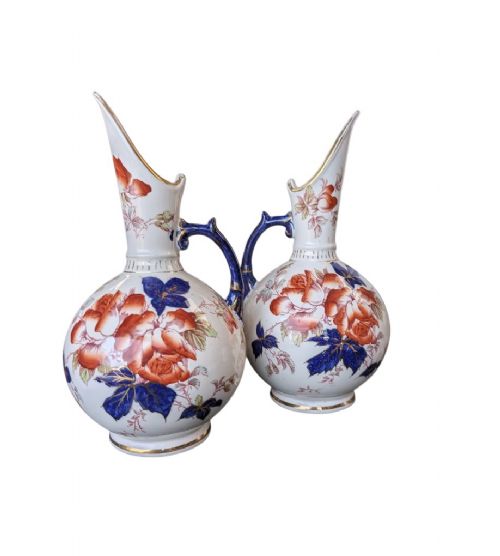
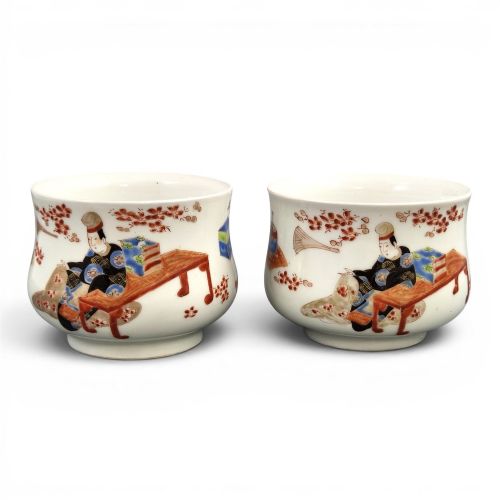
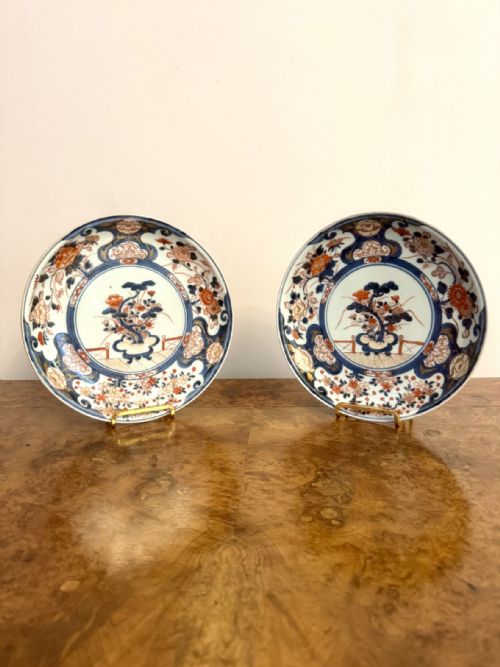
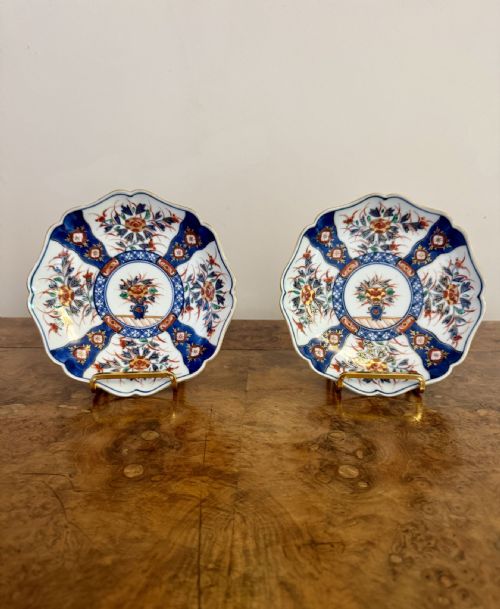
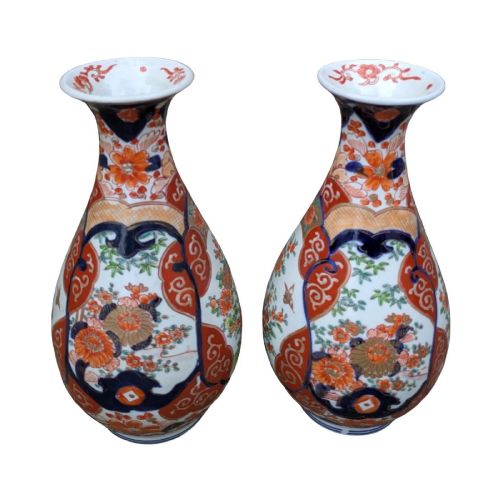
A Japanese imari porcelain pair consists of matching vessels or plates created in the distinct decorative tradition originating from the town of Arita. These matched sets span decorative plates, chargers, lidded jars, and vases designed for symmetrical display.
Most examples encountered on this page date from the Meiji period and the later nineteenth century, though earlier Edo period pieces and twentieth-century Edwardian interpretations also appear.
Makers utilised characteristic formats like scalloped edges, hexagonal contours, and shell shapes to add architectural interest to the traditional painted surfaces.
Materials and Techniques
Potters shaped hard-paste porcelain before applying underglaze cobalt pigment to form the foundational blue elements of the design.
Artisans then added overglaze enamels, predominantly iron red and green, often accented with gilding or gold leaf to complete the vibrant palette.
Listings feature hard-paste porcelain formed into chargers, lidded jars, and vases across the Victorian and Edwardian eras.
Evaluating Quality
The precision and complexity of the hand-painted motifs separate standard decorative wares from exceptional artistic achievements. Crisp brushwork in the cobalt pigment combined with lavish, intact gilding indicates superior craftsmanship.
The symmetry of the forms within a matched pair and the purity of the porcelain body dictate the overall desirability and success of the pieces.
Ginshōtei Gyokushi·Samson of Paris·Fukagawa factory of Tokyo
The Japanese Imari Porcelain Pair Glossary
- Imari
- A style of Japanese porcelain decorated in underglaze blue, iron red, and gilt, named after the port from which the wares were exported. This aesthetic heavily influenced European ceramic production during the seventeenth and eighteenth centuries.
- Arita
- The Japanese town and surrounding valley where porcelain production began following the discovery of suitable clay deposits. It remains the historical epicentre of Japanese ceramic manufacturing.
- Meiji Period
- The era of Japanese history lasting from 1868 to 1912, characterised by extensive international trade and a surge in export ceramics. Many decorative chargers and vases found today originate from this industrious period.
- Edo Period
- The period spanning from 1603 to 1868 when Japanese society was under the rule of the Tokugawa shogunate. Early iterations of these ceramics date back to these earlier foundational years.
- Charger
- A large decorative plate intended primarily for display on a wall or sideboard rather than dining use. These substantial pieces often showcase the most elaborate painted compositions.
- Underglaze
- A decoration applied to ceramic ware before it is glazed and fired in a kiln. This technique protects the pigment beneath a glossy, durable vitreous layer.
Japanese Imari Porcelain Pair: Frequently Asked Questions
How were these pairs originally displayed?
Matched sets of vases and jars were traditionally arranged symmetrically on mantelpieces, cabinets, or console tables in grand interiors. Plates and chargers were often mounted on walls or set into specialised display stands to showcase the painted surfaces.
This deliberate pairing created a sense of visual order and balance within a room, reflecting the aesthetic priorities of both Japanese domestic settings and European export markets.
Are these pieces safe to use for dining?
Most antique examples serve primarily as decorative objects for display rather than functional tableware. The overglaze enamels and delicate gilding can wear away with regular use and washing.
Collectors generally preserve these items in display settings to protect the historical surface decoration from damage and loss over time.
How do I distinguish Meiji period pieces from earlier ones?
Meiji period ceramics, dating from the late nineteenth century onwards, often feature highly detailed, dense ornamentation and vibrant overglaze palettes. Earlier Edo period wares tend to exhibit a more restrained aesthetic with looser brushwork and different potting characteristics.
Examining the weight, the foot ring, and the characteristics of the cobalt pigment helps determine the likely period of manufacture.
What is the significance of the traditional colour palette?
The classic combination of cobalt blue underglaze and iron red overglaze, enhanced with gold, defines the visual identity of these wares. This distinct trio of colours derived from historical Chinese porcelain traditions adapted by Japanese kilns in Arita.
Artists layered these pigments to create rich pictorial scenes depicting landscapes, floral arrangements, and mythical figures.