

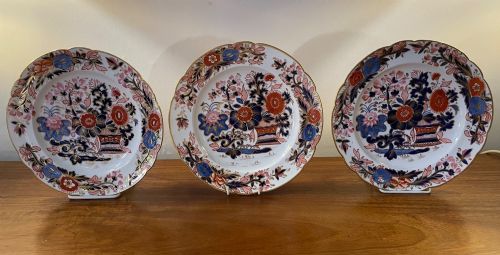



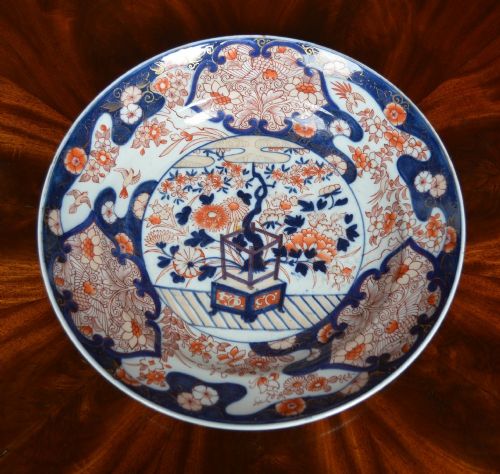

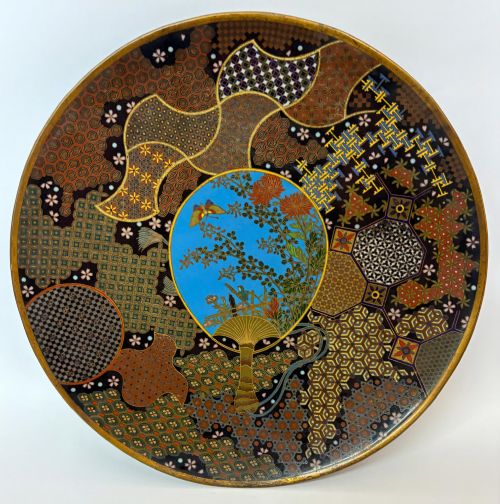

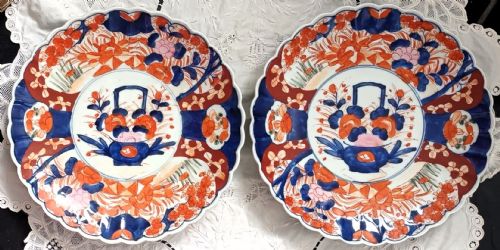
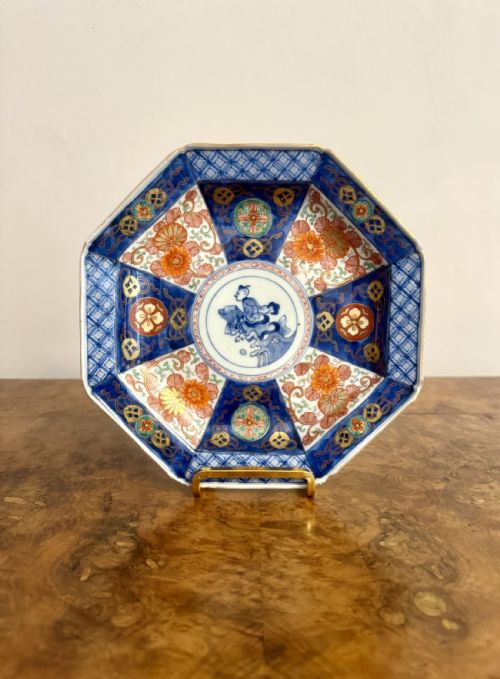
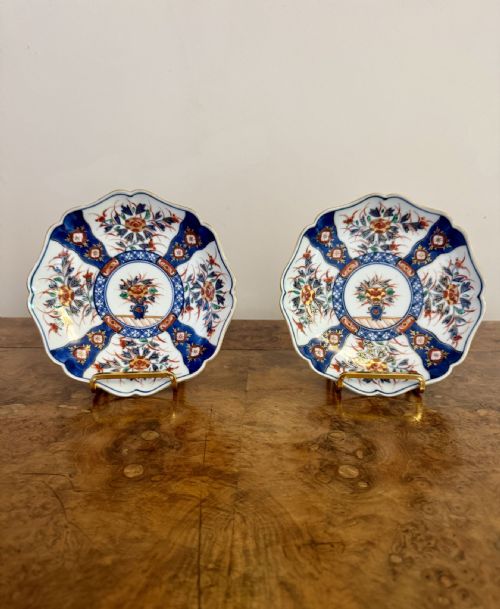
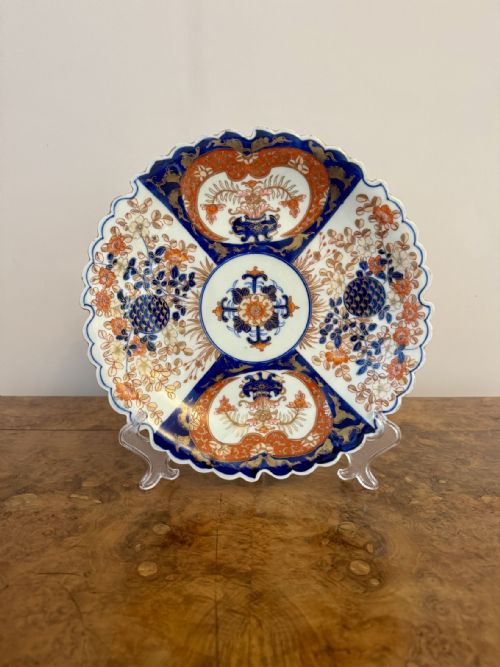
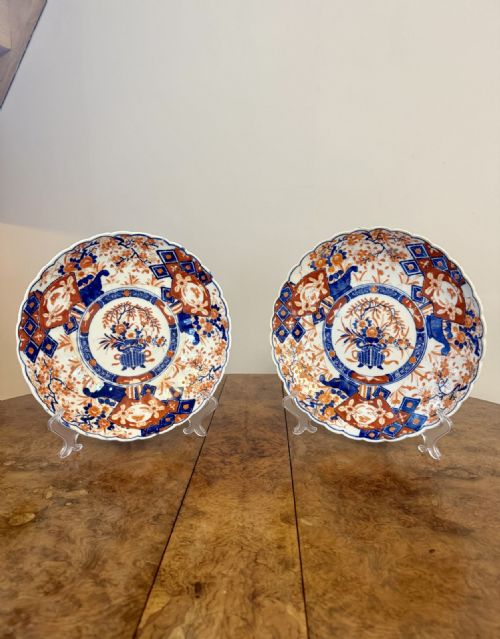


Japanese Floral Display Plate
A japanese floral display plate brings intricate Meiji era craftsmanship into a room, offering rich botanical palettes and traditional decorative motifs.
Japanese Floral Display Plate
A japanese floral display plate typically takes the form of a large charger, decorative dish, or wall plate designed primarily for visual impact rather than dining use. These pieces emerge predominantly from the nineteenth century and the early twentieth century, spanning periods from the late Edo era through the Meiji period.
Collectors encounter various geometric and organic outlines, including round vessels with scalloped edges, hexagonal configurations, and square plates. The listings on this page centre heavily on Japanese Imari wares alongside notable examples of cloisonné enamel work depicting chrysanthemums, birds, and auspicious symbols.
Materials and Technique
Potters and artisans utilised porcelain as the primary body for these items, applying cobalt underglaze to create deep blue foundations beneath subsequent layers of enamel colour. Artisans frequently integrated gold leaf, gilt, and standard gilding to highlight intricate floral and avian motifs across the surface.
Cloisonné pieces rely on copper foundations fitted with thin metal wires that form cells for coloured enamels, which are fired and polished to a smooth finish. Hand painting remains the unifying technique across both ceramic and enamel objects, ensuring individual character in every decorative dish.
The listings span from the Edo period through the Victorian and Edwardian eras, uniting porcelain, copper, and enamel materials.
Evaluating Execution
The division between standard items and superior works rests on the precision and complexity of the hand painted decoration. Masterpiece examples display crisper cobalt underglaze lines, denser application of gold leaf, and more elaborate subject matter such as frogs, butterflies, and detailed botanical arrangements.
Form and edge shaping also determine the distinction within the range, as unusual hexagonal and square silhouettes or heavily scalloped borders demand greater technical skill from the potter. The clarity of the enamel work and the structural integrity of the porcelain body complete the assessment of high grade output.
The Japanese Floral Display Plate Glossary
- Imari
- A style of Japanese porcelain decorated in underglaze blue, iron red, and gold, named after the port from which it was shipped to Europe. This palette dominates nineteenth century decorative plates.
- Charger
- A large ornamental plate utilised for display on walls, tables, or sideboard stands rather than for serving food. These substantial vessels showcase the most intricate artistic designs.
- Cloisonné
- An enamel technique where metal wire is soldered to a copper base to create compartments filled with coloured paste and fired. It produces vibrant, tactile surfaces featuring birds and flowers.
- Cobalt Underglaze
- A blue pigment applied directly to the raw ceramic body before glazing and firing, resulting in deep cobalt tones beneath a clear protective finish. It forms the permanent foundation of traditional blue and white patterns.
- Meiji Period
- The era in Japanese history spanning from 1868 to 1912, noted for opening trade and producing highly detailed decorative arts for international export. Many large display dishes originate from this specific timeframe.
Japanese Floral Display Plate: Frequently Asked Questions
How were these plates used?
These large vessels served primarily as decorative items rather than practical tableware, displayed on walls or set upon tables and sideboards to catch the eye.
Wealthy households utilised them to demonstrate taste, placing chargers in prominent rooms where their hand painted floral and avian motifs could be admired.
How do I hang a heavy charger?
Displaying a large porcelain or enamel dish on a wall requires a dedicated, appropriately sized spring loaded plate hanger that distributes weight evenly across the rim.
Ensure the mounting hardware is securely fixed into wall studs or solid masonry to support the substantial weight of nineteenth century ceramics safely.
How do I tell Meiji period pieces apart?
Meiji period items often exhibit exceptionally fine hand painting, complex compartmentalised designs, and a high degree of technical precision in both porcelain bodies and cloisonné enamels.
Earlier Edo pieces tend toward bolder, more direct brushwork, while the subsequent decades introduced intricate decorative density and varied geometric framing.
Are these plates safe for food?
Antique display dishes featuring gold leaf, extensive surface enamels, and historical glazes are generally unsuited for modern culinary use or dishwashers.
Gentle dry dusting or occasional wiping with a soft, damp cloth preserves the delicate hand painted pigments and prevents damage to the historic surface.