






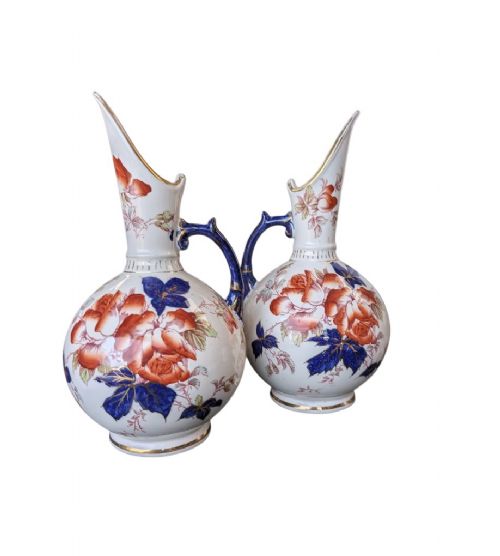

Japanese Floral Ceramics
Japanese floral ceramics bring the rich colour and intricate plant motifs of the Meiji period and nineteenth century straight into the home.
Japanese Floral Ceramics
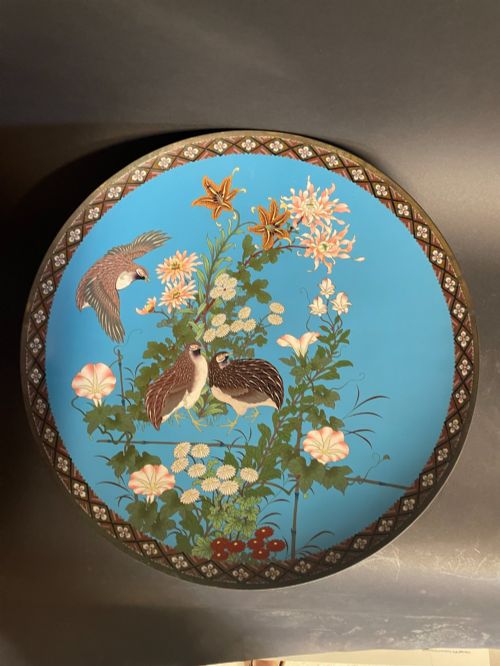
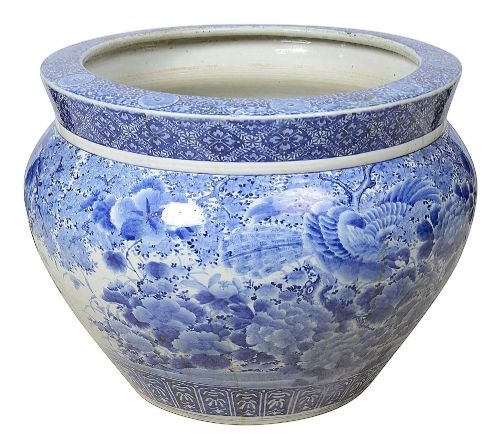
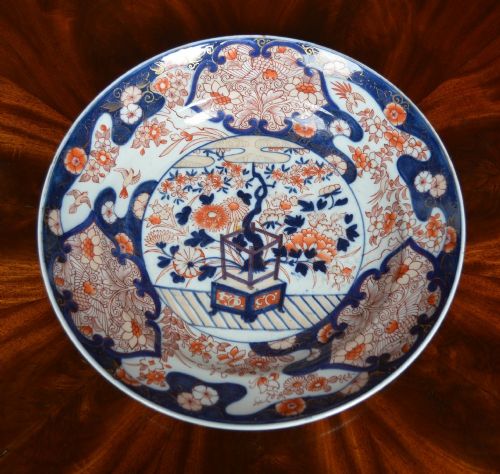
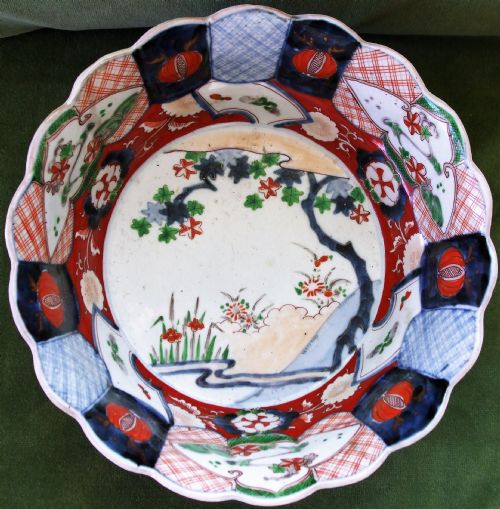
Japanese floral ceramics encompass a broad selection of decorative plates, chargers, bowls, vases, and lidded jars adorned with plant and flower designs. These pieces span the nineteenth century, the Meiji period, and into the early twentieth century, reflecting traditional export production. The most common forms on this page are Imari chargers and plates, alongside Satsuma earthenware vessels.
Buyers encounter everything from small scalloped dishes to large floor-standing vases and jardinieres. The decoration typically combines floral themes with birds, landscapes, and geometric borders across porcelain and earthenware bodies.
How They Were Made
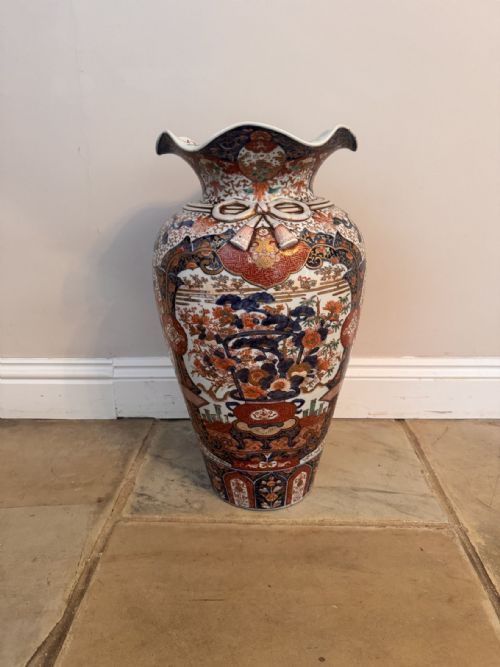
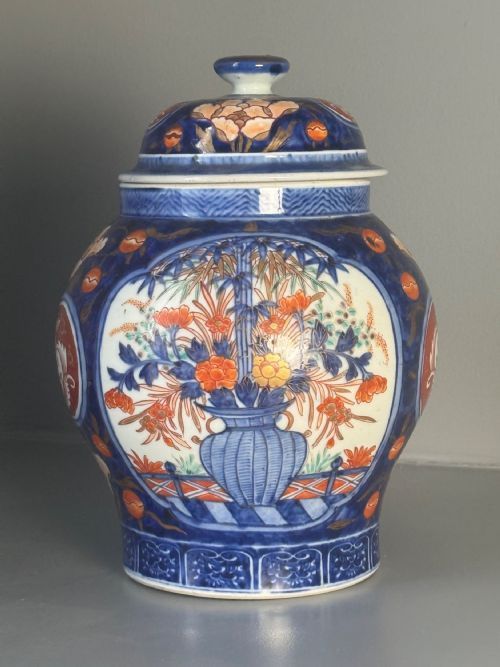
Makers utilised porcelain and earthenware bodies decorated with cobalt underglaze, enamel, and gilt highlights. The classic Imari palette relies on cobalt blue and iron red combined with gold leaf or gilding to create rich surface patterns.
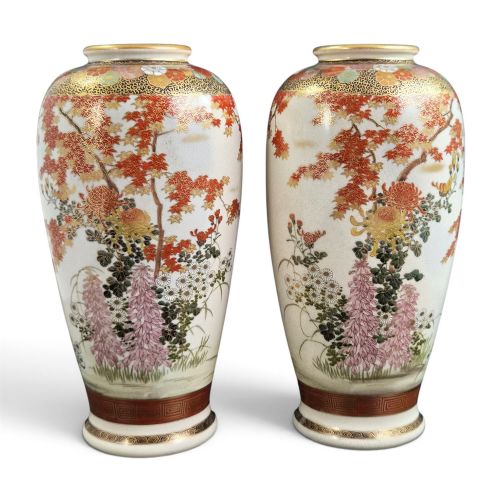
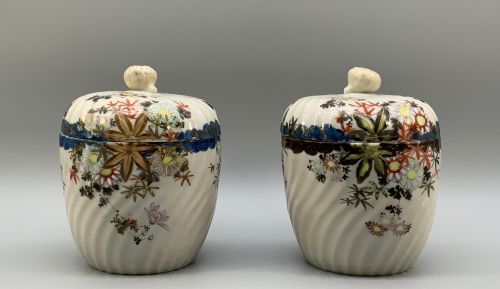
Satsuma wares introduced intricate moriage relief work and finely detailed enamel painting over a crackle glaze. Artisans also employed cloisonne techniques on metal bases for dishes, aligning closely with the aesthetic tastes of the period.
Listings feature periods spanning from the early nineteenth century through the Meiji era to the early twentieth century, utilising porcelain, earthenware, and enamel.
What Varies in Quality
Quality rests upon the precision of the hand-painted brushwork and the vibrancy of the enamel and gilt application. Superior examples display crisp cobalt underglaze and carefully balanced compositions that integrate flora and fauna without clutter.
The crispness of moulded edges, particularly on scalloped plates and chargers, separates standard production from exceptional pieces. Signed works by recognised makers demonstrate a higher standard of individual artistry.
Maruni Kobe·Manpei Kobe·Kozan
The Japanese Floral Ceramics Glossary
- Imari
- A style of Japanese porcelain featuring a palette of cobalt blue, iron red, and gold. It originates from the town of Arita and became widely exported during the Edo and Meiji periods.
- Satsuma
- A type of Japanese earthenware characterised by a ivory crackle glaze and ornate polychrome enamel decoration. Many pieces incorporate raised enamel work known as moriage.
- Charger
- A large decorative plate intended for display rather than dining. These pieces often serve as the focal point of a collection due to their expansive painted surfaces.
- Cobalt Underglaze
- A blue pigment applied to the ceramic body before glazing and firing. This technique protects the colour under a glassy clear layer.
- Moriage
- A ceramic technique using piped clay to create raised decorative patterns. It adds distinct texture beneath enamel and gilding.
Japanese Floral Ceramics: Frequently Asked Questions
How do I date Japanese floral ceramics?
Dating relies on historical periods such as the Meiji era, alongside stylistic indicators and material choices like porcelain versus earthenware.
Changes in export regulations and kiln marks also assist in placing pieces within the nineteenth or early twentieth centuries.
Are these ceramics meant for daily use?
Most antique decorative plates, chargers, and large vases serve primarily for display. Their delicate enamels and gilding are preserved best away from heavy everyday handling.
Smaller bowls and dishes see use in modern interiors, though hand washing remains essential to protect the surface.
What is the difference between Imari and Satsuma?
Imari pieces utilise a hard porcelain body with a blue and red colour scheme often enriched by gold. They emphasise bold painted patterns and scalloped edges.
Satsuma items consist of earthenware with a fine crackle glaze, decorated with dense polychrome enamels and raised relief work.
How should I display large chargers?
Large chargers require sturdy plate stands designed to support heavy porcelain or earthenware weight safely. Placement should avoid direct sunlight to protect the enamel colours and gilt details over time.
Wall mounting requires specialist brackets designed specifically for antique ceramics.