



Japanese Figure Vase
When you handle a japanese figure vase, you hold centuries of ceramic artistry shaped by skilled hands during the Meiji and Taisho periods.
Japanese Figure Vase
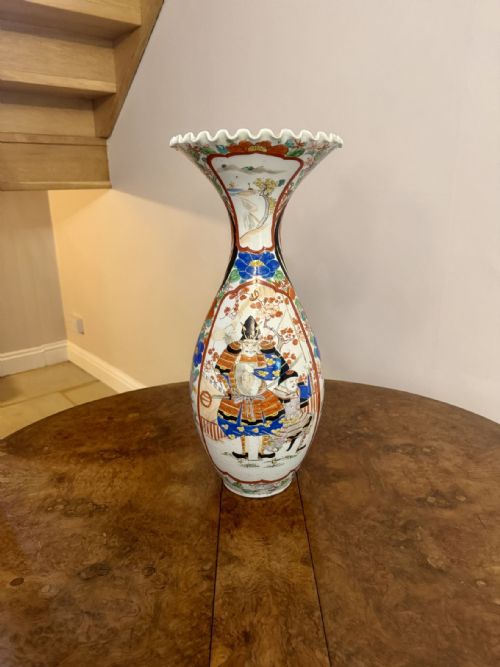
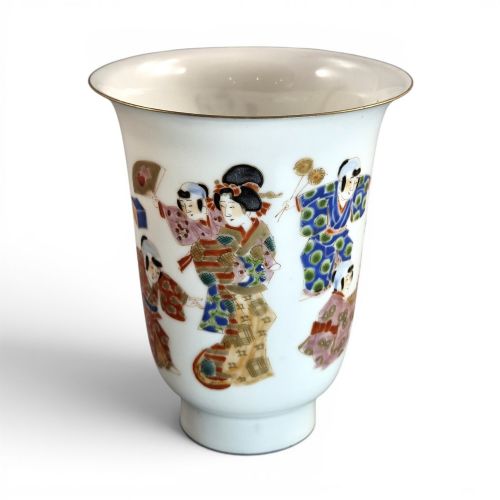
A japanese figure vase is a ceramic vessel depicting human subjects, ranging from court figures and sages to children and warriors. These pieces emerge primarily from the Meiji and Taisho periods, alongside Victorian and Edo eras, reflecting diverse cultural exchanges.
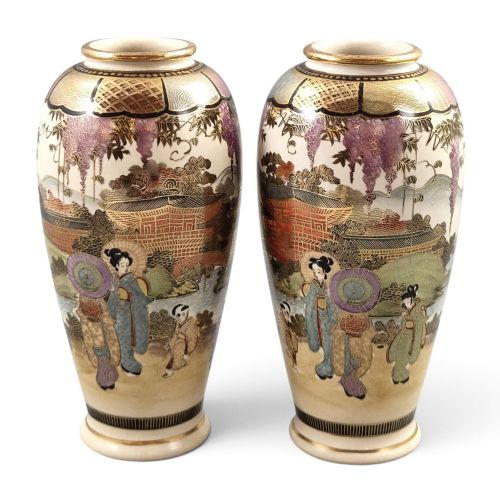
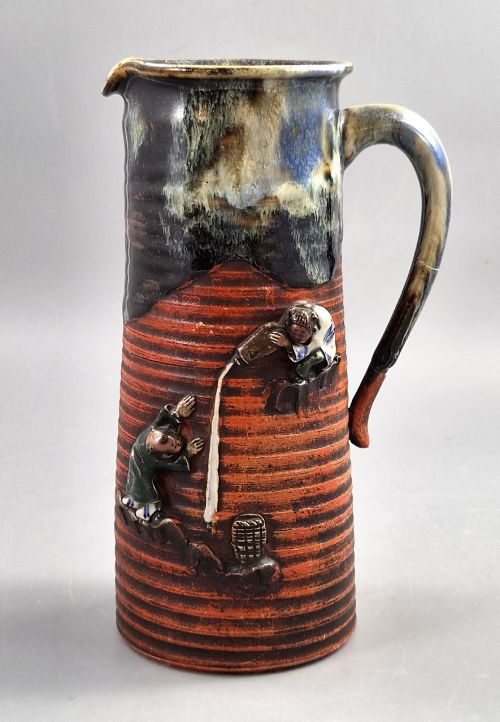
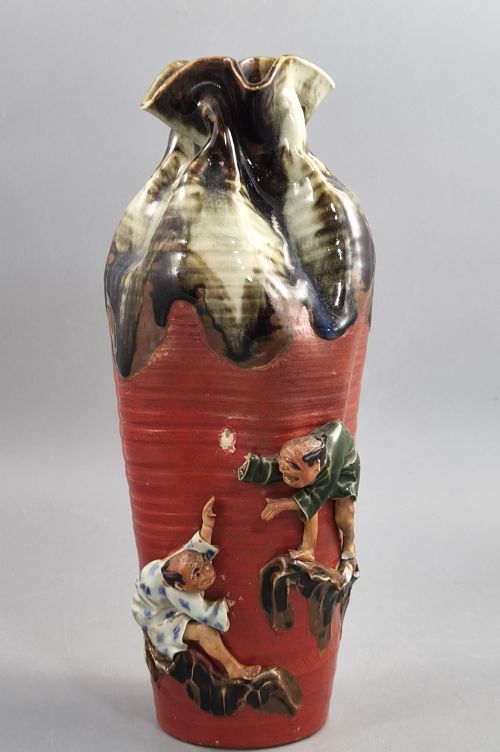
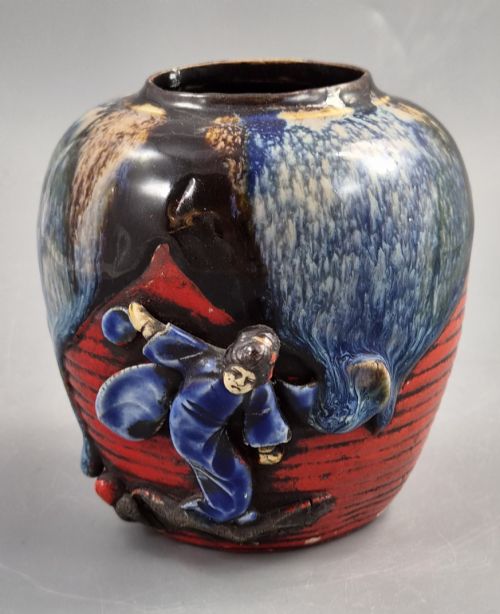
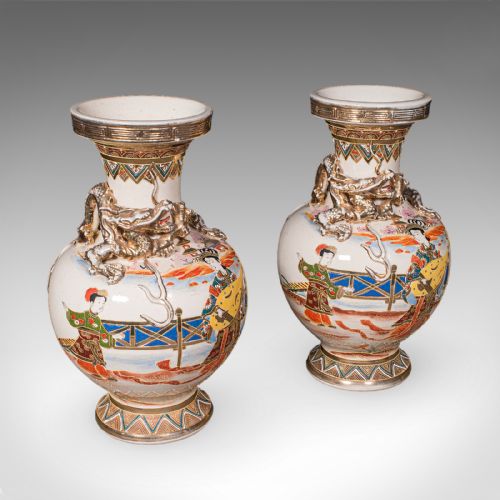
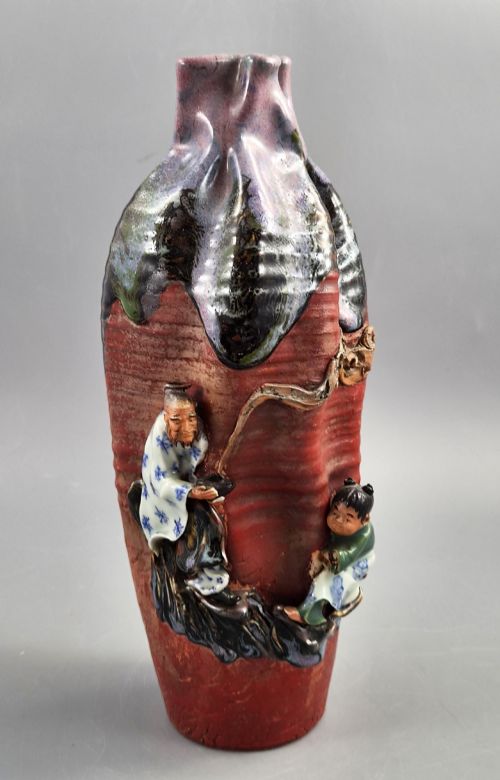
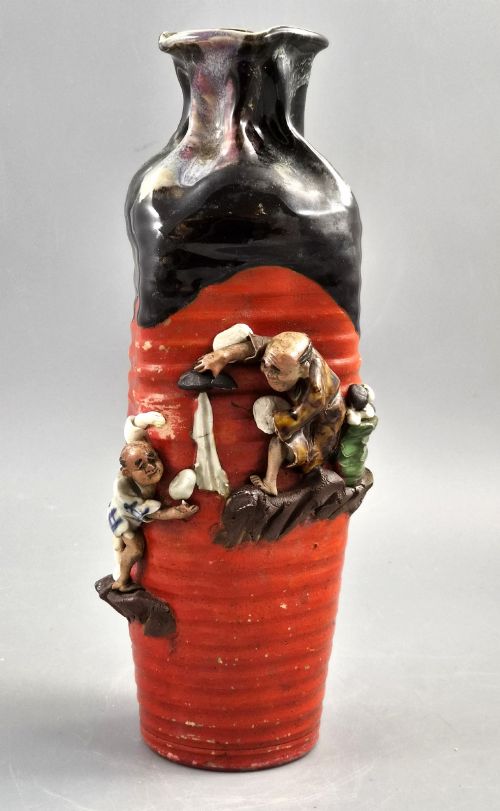
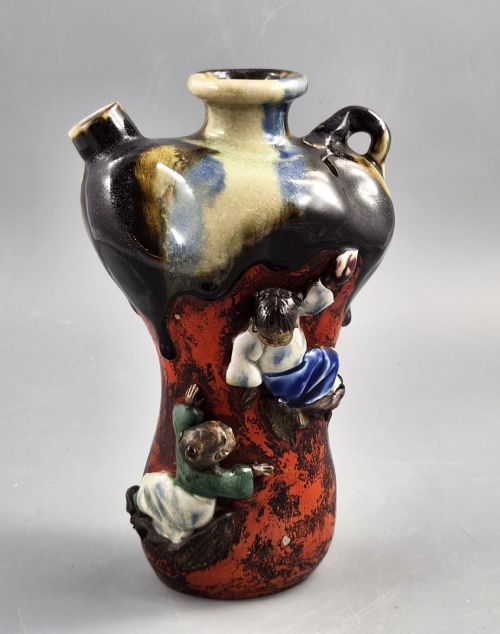
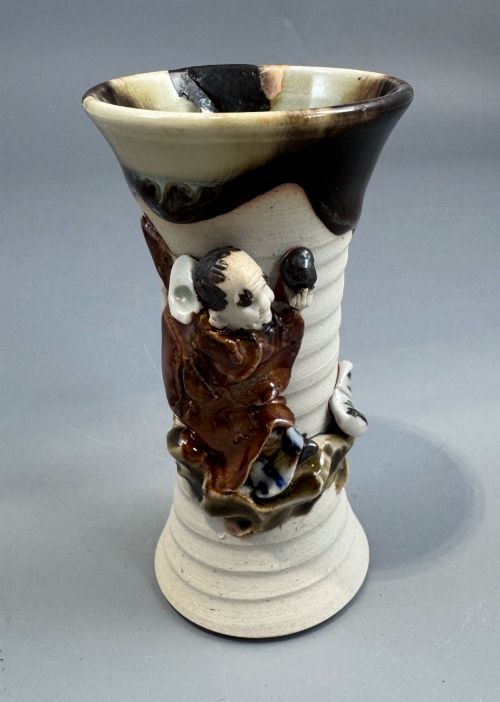
The most common examples encountered on this page belong to the Satsuma and Sumida Gawa traditions. Satsuma pieces often display painted court scenes with moriage detailing, whilst Sumida Gawa works feature distinct applied figures climbing across flambe or oxblood glazes.
Forms vary from tall baluster vases and jars to pitchers and lidded urns. Collectors find polygonal shapes, hexagonal profiles, and cylindrical bodies among the listed inventory.
How they were made
Potters utilised earthenware, stoneware, porcelain, and terracotta to form the body of each vessel. Glazes such as cobalt, lavender, blue, and oxblood were then applied to create rich background textures.
Makers integrated enamel and gold leaf to highlight ornamental details on painted surfaces. Relief decoration was achieved by applying clay figures directly onto the wet or glazed ceramic before firing.
Listings feature earthenware, stoneware, and porcelain bodies decorated with enamel, gold leaf, and reactive glazes.
What varies in quality
The precision and depth of the modelled figures dictate much of the standard across these ceramics. Master works display finely articulated hands, facial expressions, and garments that integrate seamlessly with the vessel body.
Glaze control and firing success distinguish superior pieces from standard production. Rich flambe effects and controlled colour gradients require immense skill from the kiln operator.
Shozan·Inoue Ryosai·Ban-ni·Hiroshi
The Japanese Figure Vase Glossary
- Satsuma
- A type of Japanese earthenware featuring a crackled ivory glaze and elaborate polychrome enamel painting. Often highlighted with gold leaf to depict historical figures and court scenes.
- Sumida Gawa
- A style of pottery originating near Tokyo, known for heavy glazes and high relief figures applied directly to the body. Pieces frequently display pinched rims and unique glazing techniques.
- Moriage
- A decorative technique where slip is piped onto the ceramic surface to create raised patterns and textured details. This method adds significant tactile depth to the vessel.
- Flambe
- A streaked or mottled glaze effect achieved through reduction firing of metallic oxides. It produces rich colour variations such as oxblood and lavender.
- Rakan
- Representations of Buddhist saints or disciples frequently depicted on Japanese ceramics. They appear as sage figures often accompanied by children or dragons.
Japanese Figure Vase: Frequently Asked Questions
How do I identify Satsuma ware?
Satsuma ceramics are recognised by their characteristic ivory-coloured earthenware body covered in a fine network of crackled glaze. Painted decoration typically incorporates dense enamel colours and gold leaf depicting figures.
Many pieces bear artist signatures or workshop marks on the base. The presence of raised moriage work further distinguishes specific Satsuma items.
What is Sumida Gawa pottery?
Sumida Gawa ware stands apart due to its heavy, dripping flambe glazes and three-dimensional applied figures. These vessels often feature rough, unglazed patches contrasted against glossy coloured surfaces.
Artisans such as Inoue Ryosai produced these distinctive pieces during the Meiji and Taisho eras. Their tactile nature makes them instantly recognisable among Japanese ceramics.
How should I display these vases?
Place your vessel in a stable location away from direct sunlight to preserve the delicate enamel and gold leaf decorations. Ensure the supporting surface is level, particularly with tall or heavy baluster forms.
Allow sufficient space around the piece to appreciate the applied relief figures and glaze variations. Avoid high-traffic areas where the raised elements might suffer accidental impacts.
What periods do these pieces span?
The inventory encompasses works primarily from the Meiji and Taisho periods, spanning the late nineteenth and early twentieth centuries. Some examples extend back to the Edo period or nineteenth-century Victorian imports.
Stylistic shifts reflect changing production techniques and export markets during these decades. Each era contributed distinct glazing methods and figurative styles.