
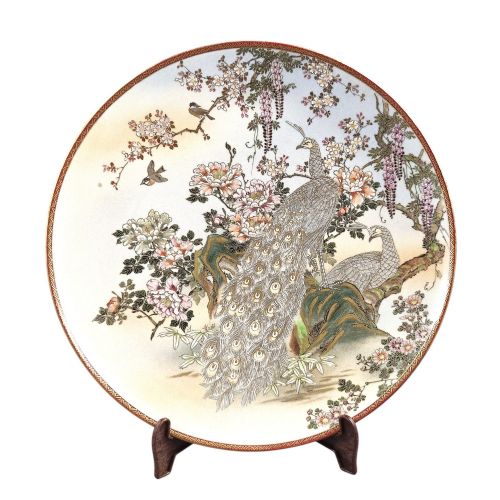


Japanese Enamel Wall Dish
A japanese enamel wall dish brings the vibrant artistry of the Meiji period directly onto the living room wall.

Japanese Enamel Wall Dish
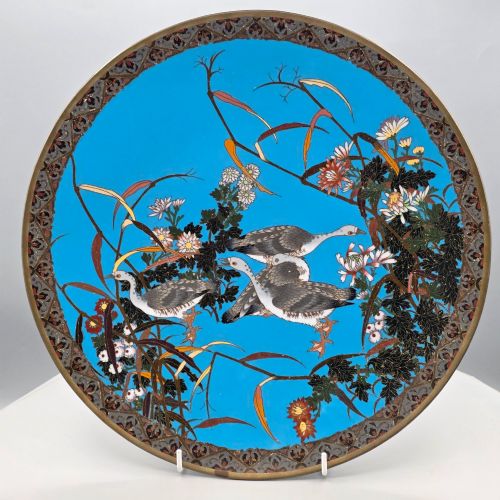
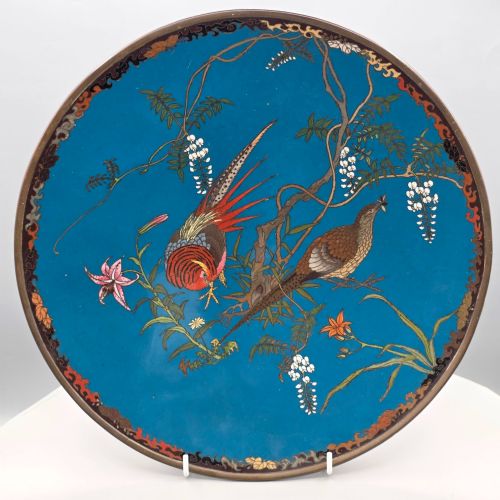
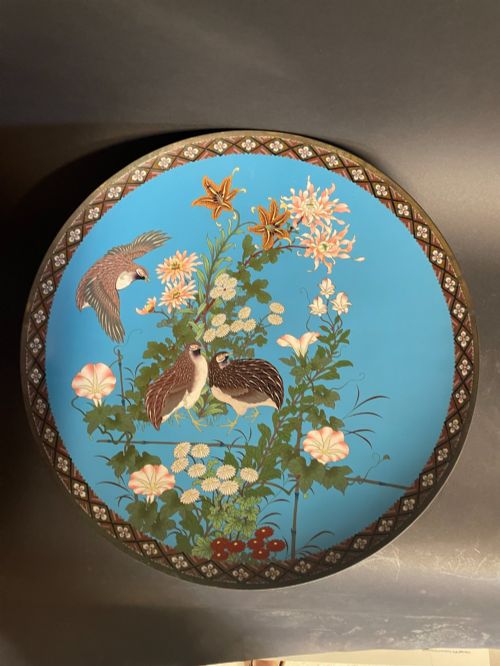
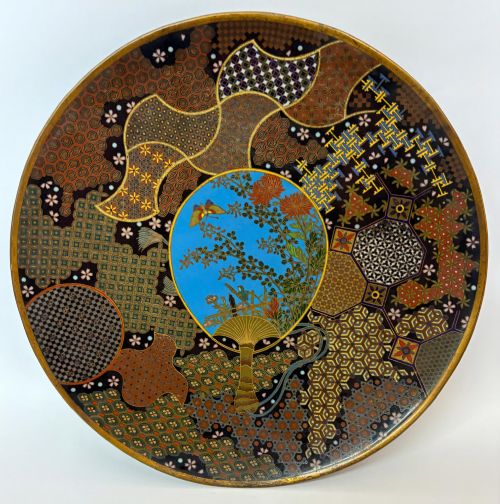
A japanese enamel wall dish encompasses large decorative chargers, plates, and plaques originating primarily from the Meiji and late Edo periods. These wide circular vessels were made to be mounted on walls or displayed on surfaces as striking focal points in a room.
Most examples seen here belong to the late nineteenth century, displaying intricate depictions of birds, dragons, koi, and landscapes. Artisans shaped these pieces from copper or brass bases before applying detailed surface decoration.
Beyond cloisonne enamel, the category occasionally includes porcelain formats such as Kutani and Satsuma wares with painted or moriage detailing. These varied forms demonstrate the immense skill of Japanese workshops catering to both domestic and international tastes during the nineteenth century.
Materials and construction methods
Makers formed the body of a japanese enamel wall dish using hammered copper or brass, creating a sturdy concave foundation for the glass pastes. Thin metal wires, often made of brass or silver, were bent into complex cellular patterns to outline the motifs on cloisonne pieces.
Coloured enamel pastes were packed tightly into these partitioned compartments before being fired in a kiln at high temperatures. The surface was then ground down and polished until smooth, revealing the crisp metal outlines of dragons, phoenixes, or floral arrangements.
Certain variations known as totai shippo utilised porcelain bodies decorated with cloisonne enamel over simulated tree bark textures. Artisans combined ceramic traditions with metalwork techniques, demonstrating considerable technical versatility.
Several Meiji craftsmen hid tiny frogs and leaping koi amongst fierce dragons, proving that nineteenth-century artisans enjoyed surprising casual observers.
Distinctions in quality and execution
The fineness of the wirework largely distinguishes superior pieces from standard production, with master workshops employing microscopic cell sizes to render feathers and scales with photographic precision. Irregularities in the enamel surface or heavy pitting indicate hasty finishing during production.
Complexity of subject matter and composition further separate ordinary dishes from exceptional masterpieces. Pieces featuring multiple distinct motifs, such as leaping koi paired with rushing water or detailed samurai figures, demand significantly greater technical control from the artisan.
Signed works by recognised makers or distinguished regional workshops generally carry higher artistic merit due to the deliberate attention given to balancing colour palettes and executing flawless thermal firings.
The Japanese Enamel Wall Dish Glossary
- Cloisonne Enamel
- A metalwork technique where fine wires are soldered to a copper base to create cells filled with coloured glass paste. This method allows for intricate pictorial designs to be fused permanently through kiln firing.
- Charger
- A large decorative plate traditionally used for display rather than dining. These substantial vessels provide a wide canvas for elaborate artistic scenes.
- Totai Shippo
- A specific Japanese technique where enamel and wire are applied directly onto a porcelain body rather than metal. This unusual method creates textured surfaces resembling natural materials like tree bark.
- Meiji Period
- The historical Japanese era spanning from 1868 to 1912, characterised by rapid modernization and the flourishing of decorative arts for export. Pieces from this time often exhibit astonishing technical refinement.
- Moriage
- A decorative ceramic technique involving the application of thick clay slip to build up raised patterns on the surface. This creates a tactile, three-dimensional effect often seen on Satsuma wares.
Japanese Enamel Wall Dish: Frequently Asked Questions
How do I hang a heavy charger securely?
Displaying a large metal or porcelain dish requires a specialised wall mounting bracket designed to distribute weight evenly around the rim. Adjustable spring-loaded plate hangers work well for standard sizes, while larger pieces benefit from custom-built wooden or brass display mounts.
Ensure the fixing is secured directly into a wall stud or uses appropriate heavy-duty wall anchors to support the considerable weight safely over time.
How do I clean an antique enamel dish?
Maintenance requires only gentle dusting with a soft, dry cloth to remove surface particles without disturbing the delicate metal wires. Avoid using water, chemical cleaners, or abrasive polishes, as moisture can seep into microscopic fissures and compromise the old metal substrate.
Keeping the piece away from direct sunlight and excessive humidity prevents thermal shock and preserves the vibrant colours of the glass paste.
What is the difference between Edo and Meiji pieces?
Items from the Edo period often reflect traditional, restrained aesthetics influenced by feudal society and isolationist policies. They tend to feature classic motifs executed with steady, deliberate craftsmanship.
Meiji period examples emerged after the reopening of trade, showcasing exuberant designs, larger scales, and highly ambitious technical feats intended to impress Western markets.