


Japanese Display Table
A japanese display table brings an exotic eastern accent into western interiors, offering sturdy timber surfaces crafted to showcase fine ceramics and plants.
Japanese Display Table
When you search for a japanese display table, you are looking at low tables, plant stands, and occasional tables made during the nineteenth and early twentieth centuries. These pieces reflect the global trade and fascination with eastern design that swept through Victorian Britain.
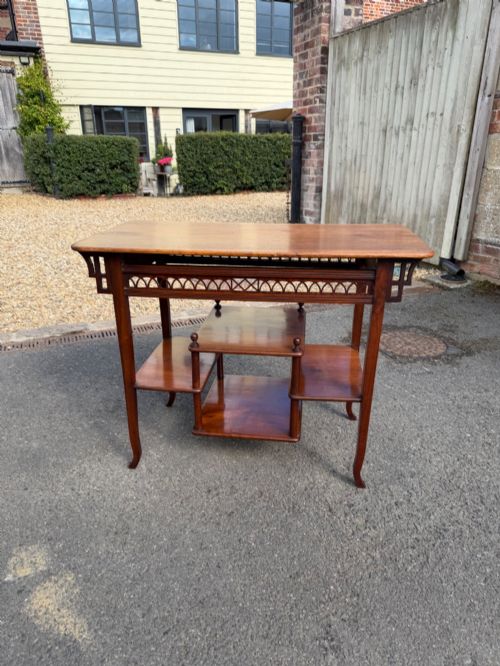
The versions most likely to meet you on this page are carved hardwood stands with marble tops, ebonised elm occasional tables, and bamboo or mahogany pieces created in the Anglo-Japanese and Aesthetic Movement styles. They combine traditional eastern forms with the functional furniture types required by western homes of the period.
Makers such as Liberty of London and designers working in the Japonisme idiom adapted these foreign motifs for domestic drawing rooms and conservatories. You will find items ranging from simple plant pedestals to multi-tiered tables designed specifically to elevate ornamental objects.
How they were made
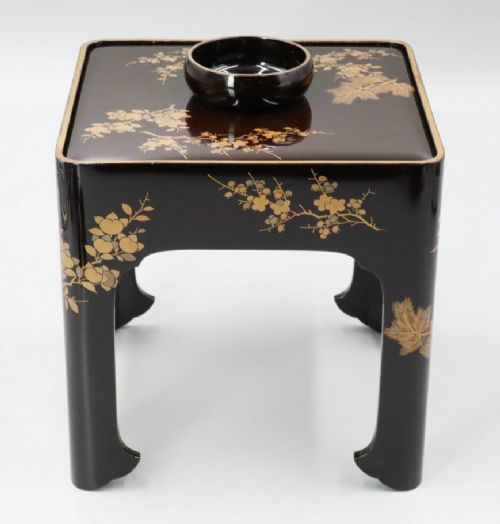
Makers utilised a variety of dense timbers, including rosewood, ebonised wood, mahogany, and carved hardwood, often combining them with inset marble slabs or lacquer panels. These materials provided the structural integrity needed to support heavy planters and decorative vases.
Techniques ranged from intricate hand-carving in imitation of eastern joinery to the application of ebonising treatments that mimicked exotic dark woods. Cabinetmakers also incorporated bamboo frames and crossbanded veneers to achieve the light, linear aesthetic favoured by the Aesthetic Movement.
The inventory spans the Victorian and Edwardian eras alongside the Meiji and Edo periods.
What varies in quality
The distinction between ordinary and exceptional examples lies in the crispness of the hand-carving and the selection of materials, such as heavy marble inserts rather than lightweight substitutes. Superior pieces exhibit balanced proportions and robust joinery that withstands the weight of heavy ornaments without wobble.
Attribution also plays a part, as works associated with known retailers like Liberty of London or identified designers carry greater craftsmanship in their finish and detailing. The integration of decorative elements like lacquered panels and precise ebonising separates standard mass-produced items from finer studio output.
Liberty of London·Gabriel Viardot·Kinkozan
The Japanese Display Table Glossary
- Japonisme
- The influence of Japanese art and design on western culture during the late nineteenth century. This movement inspired European craftsmen to adopt asymmetrical compositions and natural motifs.
- Aesthetic Movement
- A late Victorian design style that prioritised visual beauty over narrative or moral function. Furniture from this movement often embraced Anglo-Japanese influences.
- Ebonised
- Wood treated with a dark stain or finish to imitate ebony. This technique was popular in Victorian furniture to create sharp contrast.
- Meiji Period
- The era of Japanese history lasting from 1868 to 1912, marked by the opening of trade with the west. Many decorative objects and stands exported to Europe date from this time.
Japanese Display Table: Frequently Asked Questions
What is a japanese display table used for?
These tables were primarily designed to elevate and showcase decorative items such as vases, bowls, and potted plants within domestic rooms. Their sturdy surfaces and raised heights allowed owners to display imported oriental porcelain and floral arrangements at eye level.
Over time, they adapted into general occasional tables used beside seating for lamps or small decorative objects. Their compact forms made them versatile additions to Victorian and Edwardian drawing rooms and conservatories.
How do I identify an aesthetic movement table?
Aesthetic Movement tables often feature ebonised wood, bamboo structures, or rich rosewood with minimalist geometric lines inspired by Japanese design. They frequently incorporate lower tiers for additional display space and reject heavy Victorian ornamentation in favour of lighter, more linear silhouettes.
Look for hallmarks of British retailers from the late nineteenth century who championed this style, such as Liberty and Co. The emphasis is typically on craftsmanship and the harmonious integration of eastern motifs into western furniture forms.
What is the difference between meiji and edo period pieces?
The Edo period spans from 1603 to 1868, a time of isolation during which traditional Japanese crafts developed without significant western influence. Pieces from this era often reflect strict domestic artistic traditions and meticulous hand-lacquering techniques.
The Meiji period follows from 1868 to 1912, coinciding with the reopening of Japan to international trade. Items made during this later period were frequently designed specifically for export to western markets, blending eastern motifs with European furniture types.
Where should I place my display table?
These tables suit corners, hallways, or living spaces where they can serve as pedestals for ceramic vases, bronze figures, or potted plants. Their modest footprints allow them to fit into tighter areas without dominating the room.
Ensure the piece is placed away from direct heat sources and strong sunlight to protect historic timber finishes, marble inlays, and delicate lacquerwork from drying out or fading.